India's Massive 1,024 B200 GPU Cluster Boosts AI Sovereignty, Rokid Launches $299 AI Glasses with Hands-Free Payments, and Google Makes Gemini AI Free in Gmail
TL;DR
- NVIDIA B200 GPU clusters deployed by E2E Networks to deliver 184 TB GPU RAM for scalable AI computing in India
- Rokid and Ant International integrate Alipay+ GlassPay into AI smart glasses for hands-free payments across 150M+ merchants
- Google integrates Gemini 3 AI features into Gmail for all users, enabling AI Overviews, Help Me Write, and AI Inbox without subscription
NVIDIA B200 GPU Cluster in Chennai Delivers 184TB GPU RAM for India’s AI Sovereignty
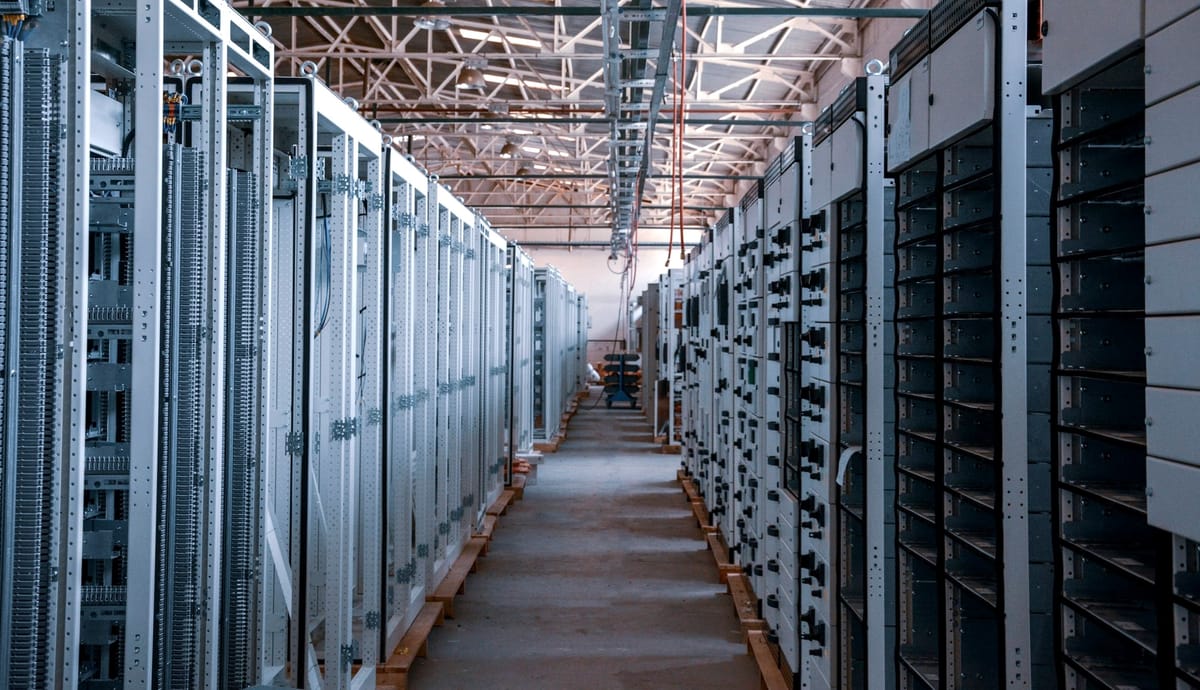
E2E Networks deployed 1,024 NVIDIA B200 GPUs in Chennai, delivering 184TB of aggregate GPU RAM—the first >100TB GPU-RAM cluster in South Asia. Each GPU features ~180GB HBM3e memory, enabling training of models exceeding 10 billion parameters without model sharding.
How does this impact data sovereignty and latency?
The on-premise deployment complies with India’s 2023 Data Protection Rules, eliminating cross-border data transfers for sensitive AI training. Inference latency dropped from >150ms on public clouds to <8ms, enabling real-time applications in fintech, logistics, and media recommendation systems.
What are the technical specifications?
- GPU count: 1,024 NVIDIA B200
- Total GPU RAM: 184TB
- Memory bandwidth per GPU: ~2.5TB/s (est.)
- Interconnect: NVLink 4 + PCIe 5.0
- Cooling: Direct-to-chip liquid cooling
- Power draw: ~350kW total
How does this compare globally?
| Deployment | GPUs | GPU RAM | Location | Distinct Advantage |
|---|---|---|---|---|
| E2E Networks | 1,024 B200 | 184TB | Chennai, India | Highest GPU RAM density in South Asia |
| Odinn Omnia | 224 B200 | 43TB | California, USA | Hyperscale cloud focus |
| Lenovo AI Gigafactory | 800 B200 | ~140TB | Global | Multi-region GaaS model |
| AMD MI355X | 1,024 | 80TB | EU test-bed | Higher MoE throughput, limited access |
E2E’s deployment leads in GPU-RAM density per node, a key advantage for multimodal LLMs and graph neural networks.
What are the strategic implications?
- Market positioning: First Indian provider of B200-scale GPU-as-a-Service, predating global OEMs.
- Supply-chain resilience: Liquid-cooled B200 architecture mitigates HBM3e shortage impacts from late 2025.
- Ecosystem enablement: Supports India’s ₹2 trillion AI-infrastructure budget (FY2026–27) by lowering CAPEX for SMEs.
- Economic impact: Estimated ₹2bn ancillary spend over three years on power, cooling, and maintenance.
What’s next?
- Q2 2026: Launch of pay-as-you-go GPU subscription for Indian SMEs.
- H2 2026: Second 1,024-GPU node expansion to support ≥30B-parameter model training.
- 2027+: Integration with NVIDIA Rubin platform for exaflop-scale AI factories.
Enterprise CIOs should pilot latency-sensitive AI services. Research institutions can leverage on-prem access for compliant model experiments. Policy makers should treat this as a blueprint for national AI sovereignty initiatives.
Rokid and Ant International Launch AI Glasses with Hands-Free Payments for 150M+ Merchants
Rokid and Ant International have integrated Alipay+ GlassPay into Rokid Style and AI glasses, enabling voice- and biometric-authenticated payments without apps or physical cards. The system operates on a display-free frame and confirms transactions through facial recognition, with receipts displayed on-screen.
What is the scale of the payment network?
Alipay+ connects 1.8 billion user accounts across 40+ payment schemes, including WeChat Pay, Paytm, and Visa. The network supports over 150 million merchants in 100+ markets across Asia, Europe, Latin America, and the Middle East. Cross-border settlement volume reached $12 billion in Q4 2025.
What are the hardware and pricing specifications?
Rokid Style glasses feature a 12MP Sony sensor, dual-chip architecture (NXP RT600 and Qualcomm AR1), weigh 38.5 grams, and offer 12 hours of battery life. The device retails at $299, undercutting competitors like Meta Ray-Ban at $579 while maintaining comparable performance.
Where is the technology being piloted?
Initial deployments are active at Changi Airport (Singapore), LAX (United States), and Shanghai Pudong Airport (China), each with over 5,000 participating merchants. Pilots show a 30% reduction in checkout latency and 5–7% incremental sales for merchants.
How does the ecosystem incentivize adoption?
Ant International and Rokid offer an open SDK with a 70/30 revenue share for developers, incentivizing third-party XR applications to embed GlassPay. Over 20,000 developers have registered, with 5,000 enterprise partners in China. The SDK is publicly available as of April 1, 2026.
What privacy and regulatory measures are in place?
Facial recognition occurs on-device, with end-to-end encryption and GDPR-compliant data handling. This design mitigates regulatory concerns tied to biometric data collection in wearable devices.
What is the projected market impact?
Early data suggests Rokid could capture 2% of the AR-wearable market—equivalent to 10 million units—by 2027. The combination of low hardware cost, existing payment infrastructure, and merchant ROI without additional POS investment supports rapid global scaling.
What advantages does this model hold over existing payment wearables?
Unlike Apple Pay or Google Pay, which require smartphone interaction and app selection, GlassPay enables app-agnostic, single-tap payments. International travelers benefit from automatic local currency settlement across 40+ payment methods, eliminating currency and app fragmentation.
What is the transaction cost structure?
GlassPay charges 0.45% per transaction, inclusive of settlement fees, positioning it competitively against traditional card networks and mobile wallets.
What is the timeline for expansion?
- Rokid Style launch: January 5, 2026
- GlassPay demo: January 8, 2026
- Strategic partnership announced: January 9, 2026
- Pilot rollout: February–March 2026
- SDK release: April 1, 2026
- Full merchant coverage target: H2 2026
Google Makes Gemini 3 AI Features Free in Gmail for All U.S. Users
All U.S. Gmail users can access four AI-powered tools without a subscription: AI Overviews, Help Me Write, Suggested Replies, and AI Inbox. AI Overviews summarizes email threads and extracts action items. Help Me Write generates full email drafts from prompts with tone and length controls. Suggested Replies offers one-click responses to routine messages. AI Inbox prioritizes incoming mail and answers natural-language queries like "Show me last month’s invoices."
How do these tools improve productivity?
Internal testing shows a 30% reduction in time spent reading threads longer than 10 messages. Help Me Write reduces keystrokes per reply by 45%, with an average latency of 2 seconds. Suggested Replies cut reply times to under 3 seconds for 70% of routine emails. Early AI Inbox users report a 20–30% decrease in days spent managing an empty inbox.
What remains behind a paywall?
Advanced editing features, including Proofread (grammar, tone, conciseness enhancements), remain exclusive to Google AI Pro and Ultra subscribers. This tiered model preserves revenue from high-volume users while offering core functionality to the broader user base.
How is privacy addressed?
Google explicitly states that Gmail content will not be used to train Gemini models. An opt-out toggle for AI features is available in Settings. This policy response follows regulatory scrutiny and a prior class-action suit related to unauthorized data use.
What is the global rollout plan?
The U.S. launch serves as a pilot. Expansion to English-speaking markets (UK, Canada, Australia) is expected in Q2 2026, with limited Spanish and French pilots to follow. Enterprise-grade controls, including admin policies for data retention and audit logs, are anticipated by Q4 2026.
What future capabilities are planned?
In Q3 2026, multimodal support is expected, allowing users to insert AI-generated images or short video clips directly into emails via Nano Banana and Veo. By early 2027, AI Inbox may introduce "Smart Actions," enabling one-click task execution such as paying invoices or adding events to calendars.
What are the strategic implications?
Google’s move pressures Microsoft and OpenAI to match free AI features or differentiate through deeper ecosystem integration. Internal benchmarks suggest heavy email users save approximately five hours per week. However, human review remains recommended for legal, financial, or medical correspondence to mitigate risks of tone or factual inaccuracies.
What regulatory risks persist?
While Google’s "no training" policy aims to preempt GDPR-style challenges, any data breach could trigger enforcement actions. Robust audit trails and transparent data handling will be essential to maintain compliance and user trust.



Comments ()