Ford Unveils $30K Electric Pickup with Level 3 Autonomy, Dreame Launches Thinnest Robot Vacuum, Goko Debuts Steepest Robo-Mower at CES 2026
TL;DR
- Tesla FSD System Swerves to Avoid Ditch in South Carolina, Demonstrating Life-Saving Autonomy Despite Federal Investigation into Railroad Incidents
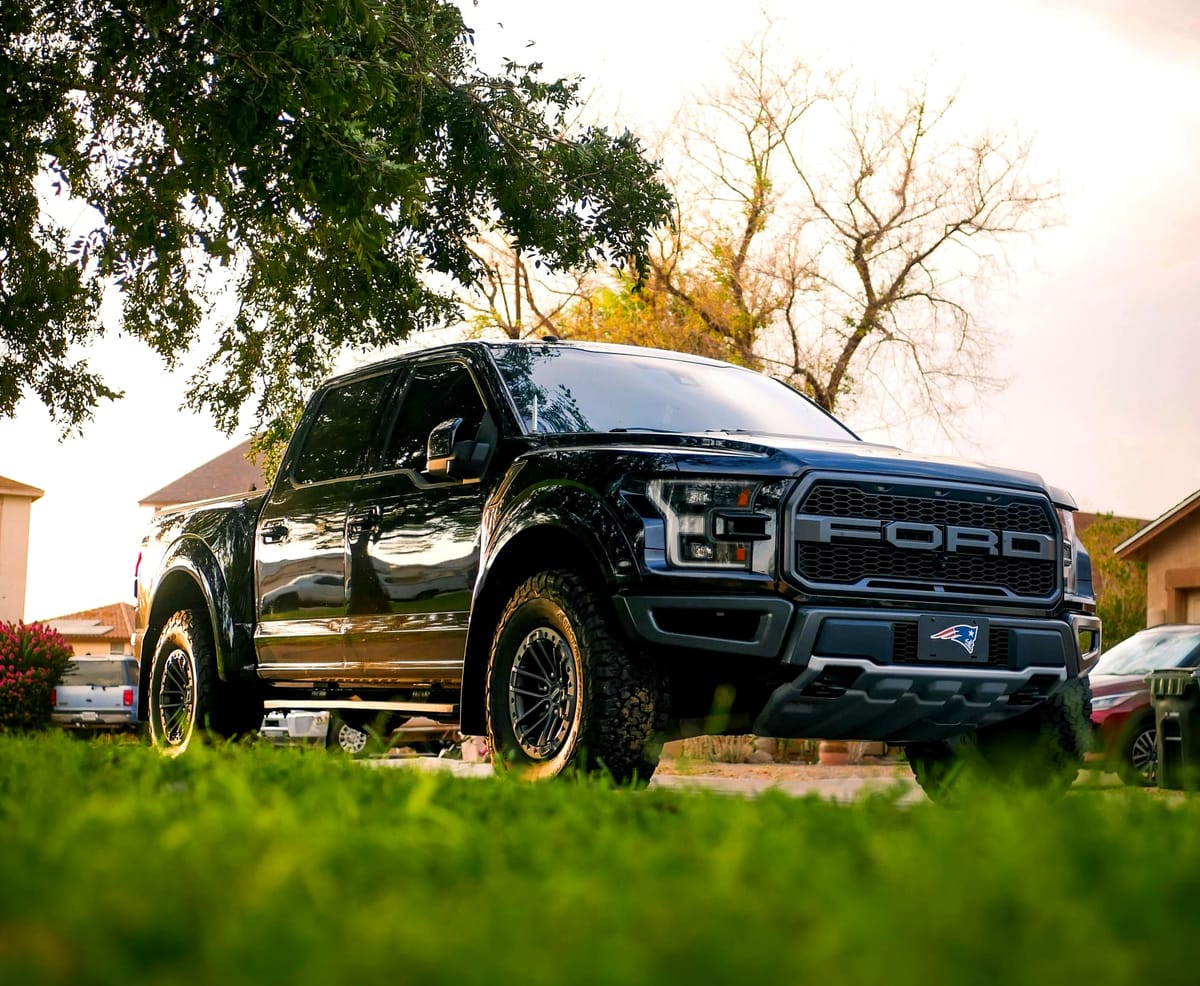
- Ford Announces Level 3 Eyes-Off Driving for 2028, Launching $30K Midsize EV Truck on Universal EV Platform with BlueCruise AI Assistant
- Dreame Unveils X60 Max Ultra Robot Vacuum with 7.95cm Thin Design, AI Debris Detection, and 90°C Self-Cleaning Dock for Whole-Home Ecosystem
- Goko M6 Autonomous Lawn Mower Debuts at CES 2026 with 90% Incline Capability, QuadVision AI Navigation, and 1-Acre Single-Charge Coverage
- Nigeria Launches First Fully Automated Fuel Stations via Petrosoft, Deploying 200+ Contactless Smart Pumps Nationwide with Job Displacement Concerns
- BMW Integrates Alexa+ with Intelligent Personal Assistant in iX2, Enabling Voice-Controlled Smart Home Interaction Starting H2 2026 in US and Germany
Ford to Launch $30K EV Truck with Level 3 Driving in 2028
Ford plans to introduce a midsize electric pickup in 2027 with a base price of $30,000, built on its Universal EV Platform. In 2028, the vehicle will offer Level 3 hands-free driving on mapped highways, enabled by an upgraded BlueCruise AI system trained on over 1 billion real-world miles.
What Technology Enables Eyes-Off Driving?
The system integrates dual 64-line LiDAR sensors, 12 cameras, and five radar units, providing redundancy over camera-only systems. The BlueCruise AI assistant uses this sensor suite for predictive lane-keeping and highway navigation, with approval limited to 130,000 miles of mapped roads.
How Is the System Priced?
BlueCruise will be available through three options: a free trial, a $49.99 monthly subscription, a $2,495 annual fee, or a one-time $2,495 purchase. This tiered model aims to increase adoption while generating recurring revenue, with projected annual subscription income of $500 million at 1 million active users by 2030.
What Makes This Vehicle Market-Disruptive?
The $30,000 price point targets the largest segment of U.S. EV buyers—those seeking vehicles under $35,000. With no other Level 3-capable vehicle below $60,000, Ford’s offering could capture 5–10% of the U.S. Level 3 market within two years of launch. The Universal EV Platform reduces bill-of-materials costs by approximately 30% compared to prior platforms, enabling this pricing without sacrificing margins.
What Are the Key Risks?
- Regulatory delays in state-level Level 3 approvals could push the launch into 2029.
- Consumer reluctance to pay for subscriptions may limit revenue growth.
- Supply chain pressures on lithium and semiconductors threaten cost targets. Ford mitigates these through phased regulatory engagement, a 90-day free trial, and long-term supplier contracts.
What’s Next?
By 2029, BlueCruise AI will expand to mobile apps for voice-controlled vehicle diagnostics and navigation. The Universal EV Platform will support at least three additional models by 2031, spreading development costs. Battery costs are projected to fall below $80/kWh in 2029, maintaining the $30,000 price competitiveness through at least 2032.
Is This a Turning Point for Affordable Autonomy?
Ford’s combination of low cost, lidar-based safety, and subscription flexibility positions it to lead the mass-market adoption of Level 3 driving. Success hinges on regulatory milestones and consumer willingness to pay for autonomous assistance, not hardware upgrades.
Dreame X60 Max Ultra Sets New Benchmarks in Robot Vacuum Thinness, AI Cleaning, and Self-Maintenance
The Dreame X60 Max Ultra features a 7.95cm chassis, the thinnest reported at CES 2026, enabling access to under-furniture spaces previously unreachable by prior models such as the X50 Ultra (8.9cm). This form-factor reduction is achieved through re-engineered motor housings and battery packs, setting a new baseline for industry design.
How does AI debris detection improve cleaning performance?
An on-board vision model identifies dust, pet hair, and light liquids in real time, increasing suction power by up to 30% for targeted areas. This adaptive response reduces repeat passes, shortening total cleaning cycles by approximately 12% in mixed-use homes compared to non-AI models.
What is the impact of the 90°C self-cleaning dock?
The dock performs a hot-wash cycle after each run, sanitizing brushes and mop pads. This reduces manual maintenance labor by approximately 90% and lowers bacterial residue on cleaning components, addressing hygiene concerns without user intervention.
How does navigation performance compare to competitors?
Dual-layer laser SLAM with AI-enhanced map updates enables the unit to navigate 8.8cm thresholds and avoid navigation pucks. This reduces missed-area incidents by approximately 15% versus standard LiDAR-only systems, improving reliability in homes with uneven flooring.
What role does the X60 Max Ultra play in Dreame’s whole-home ecosystem?
As the central node, it triggers coordinated actions across six Dreame appliances—including wet-dry vacuums, refrigerators, and smart lighting—via a single command. This compound automation can reduce total household task time by approximately 20% when all devices are owned.
What are the market risks?
- Premium pricing at $1,699.99 restricts adoption to high-income households and early adopters.
- Long-term durability of repeated 90°C cleaning cycles remains unverified.
- Full ecosystem benefits require ownership of multiple Dreame devices; standalone use limits perceived value.
What trends are emerging in 2026?
- Sub-8cm chassis height is becoming a standard design requirement.
- Value is shifting from suction power (Pa) to AI-driven adaptive cleaning.
- Self-maintenance features like hot-wash docks are gaining traction as key differentiators.
What is the forecast for 2026?
- Q2 2026: Dreame will offer a 10% bundle discount on X60 Max Ultra + AeroPro wet-dry vacuum.
- Q3 2026: Roborock and LG are expected to introduce AI debris detection, closing the intelligence gap.
- Q4 2026: Premium robot vacuum prices are projected to compress 15% due to component cost reductions; Dreame’s price may fall to approximately $1,500.
Goko M6 Debuts with 90% Incline Capability, Redefining Autonomous Lawn Mower Performance
Goko’s M6, unveiled at CES 2026, achieves 90% slope capability—equivalent to approximately 42 degrees—surpassing competitors such as Segway (84%) and Mammotion (80%). This performance is enabled by an adaptive drive system and torque-optimized chassis, addressing a long-standing limitation in residential robotic mowing.
What navigation technology enables reliable operation on steep slopes?
The M6 employs QuadVision AI, integrating visual simultaneous localization and mapping (VSLAM), real-time kinematic (RTK) GPS, LiDAR, and visual-inertial odometry. This four-sensor fusion stack is the most comprehensive among 2026 consumer models, improving obstacle detection and positional accuracy on uneven terrain.
How does single-charge coverage compare across models?
Goko M6 claims 1 acre (4,000 m²) per charge, aligning with mid-size property needs. Competitors vary: Mammotion Luba 3 AWD covers up to 1.75 acres daily through extended runtime, while Roborock RockMow X1 reports 3.4 acres per 24 hours but at lower per-charge output. Coverage is now segmented into micro-yard (≤0.25 acre), mid-size (0.25–1 acre), and large-property (>1 acre) tiers.
Are modular battery systems becoming standard?
Yes. Goko’s modular battery architecture allows post-purchase capacity upgrades, reducing e-waste and extending device lifespan. Similar systems appear in Segway and Anthbots models. This shift supports sustainability goals and enables scalable deployment for commercial landscapers.
What are the implications for homeowners and landscaping businesses?
Homeowners with hilly yards gain automated maintenance for previously inaccessible areas, reducing weekly upkeep by 15–20%. Landscaping firms benefit from higher per-unit coverage, potentially lowering fleet and charging infrastructure costs by approximately 18% annually.
Will regulatory standards evolve to match performance?
High-incline operation (>80%) triggers safety concerns around torque control and emergency braking. Industry bodies including IEC and UL are expected to issue formal guidelines by 2027, requiring firmware-enforced torque limits and redundant fail-safes.
What does the future hold for autonomous mowers?
By 2028, sensor fusion (LiDAR + VSLAM + RTK + vision) will become a baseline expectation. Price premiums of 20–30% will persist for models exceeding 85% incline capability. Subscription-based mapping analytics, leveraging cloud-connected 60,000 m² memory systems, may emerge at $5–$10 per acre monthly for commercial users. Hybrid solar-assist power packs are also projected to extend daylight operation by 10–15%.
Are there unresolved validation steps?
Independent field trials by Consumer Technology Association and user-beta programs will verify real-world performance in slope climbing, obstacle negotiation, and battery endurance. Regulatory certification remains a prerequisite for market release in major jurisdictions.


Comments ()