Alaska Airlines Orders 110 New Boeing Jets as Qatar Airways Leads Starlink Inflight Wi-Fi Rollout
TL;DR
- Alaska Airlines orders 105 Boeing 737-10s and 5 787-10 Dreamliners to expand global fleet, with deliveries beginning in 2027 and FAA certification expected mid-2026
- Qatar Airways becomes first airline to deploy Starlink Ku-band LEO satellite connectivity on Boeing 787 Dreamliners, enabling 200+ Mbps inflight internet for 1.4K+ commercial aircraft by 2025
- U.S. Air Force secures congressional funding to proceed with E-7 Wedgetail replacement for aging E-3 Sentry AWACS, with initial operational capability targeted by 2030 to enhance battle management and electronic warfare
- Joby Aviation acquires 700,000 sq ft Dayton, Ohio facility to scale eVTOL production to four aircraft/month by 2027, supported by $894M Toyota investment and FAA certification underway
- Italy approves €112.6M investment to build NATO’s first F-35 Lightning II training center outside the U.S. at Trapani-Birgi Air Base, with IOC expected December 2028 and joint Leonardo-Lockheed Martin facility
- FAA delays safety continuum guidance until mid-2026 amid harmonization challenges with EASA, while NTSB issues urgent recommendations for post-maintenance stall test procedures after five Hawker 800XP/900XP fatalities
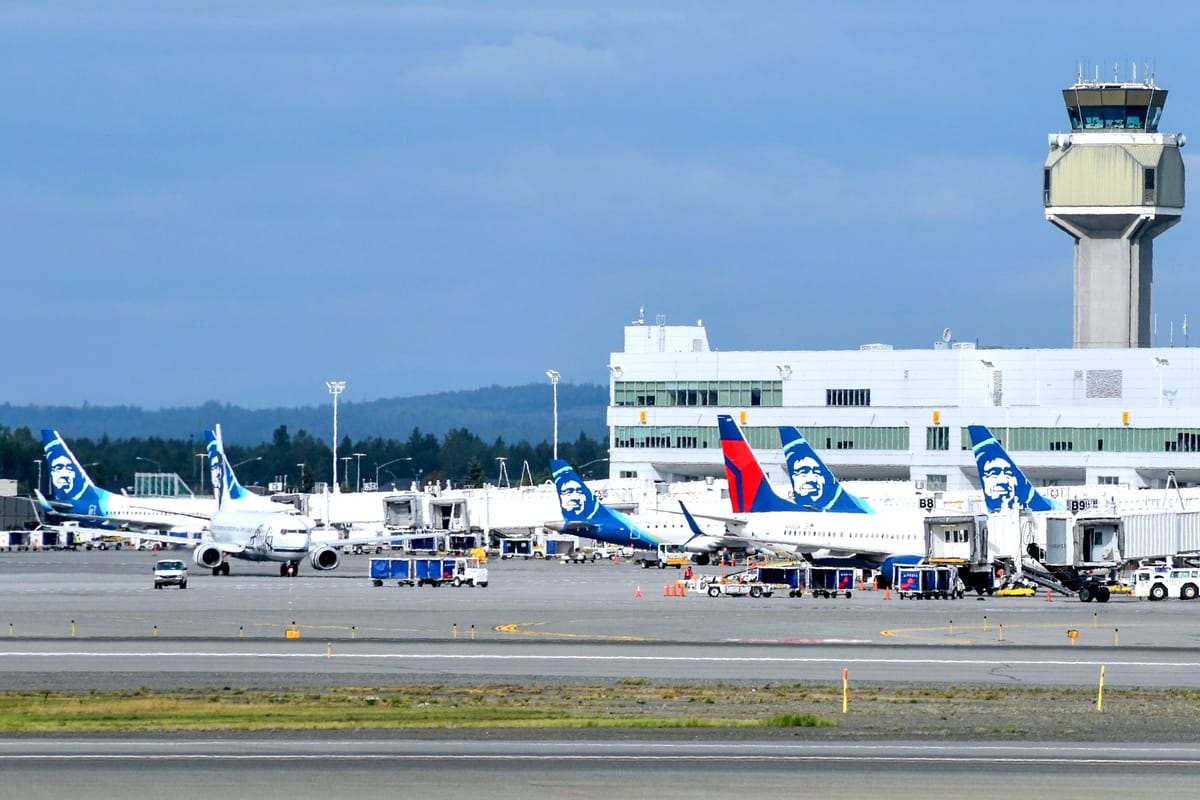
Alaska Airlines Orders 105 Boeing 737-10s and 5 787-10s to Expand Global Network by 2030
Alaska Airlines has ordered 105 Boeing 737-10 aircraft and five 787-10 Dreamliners, with deliveries beginning in early 2027. The order includes options for 35 additional 737-9 and 737-7 aircraft, potentially increasing total fleet size to approximately 550 by 2035.
What is the certification timeline for the 737-10?
FAA certification of the Boeing 737-10 is expected in Q2 2026. Delay beyond this date would impact the 2027 delivery schedule and the planned rollout of long-haul routes by 2030.
How will the fleet modernization affect operational efficiency?
The 737-10 reduces fuel burn by 4.5% per seat compared to the 737-800, translating to an estimated $0.12 lower operating cost per available seat mile. The 787-10 adds long-haul capacity with similar efficiency gains. By 2035, the full fleet is projected to achieve a 5% reduction in operating cost per ASM versus 2024 levels.
What routes are targeted for expansion?
By 2030, Alaska plans to launch 12 new long-haul international routes, including nonstop services to London Heathrow, Rome, Seoul, and Tokyo. These routes will reduce reliance on Seattle hub connections and align with oneworld alliance expansion goals.
How does the Hawaiian Airlines acquisition factor into this order?
The 2025 acquisition of Hawaiian Airlines provides immediate long-haul network infrastructure and passenger demand. The five 787-10s will supplement Hawaiian’s existing A330 and 787-9 fleet, enabling seamless integration into Alaska’s global network.
What are the key risks to execution?
- Moderate risk of FAA certification delay for the 737-10, mitigated by Boeing-FAA coordination and potential delivery shifts to late 2027.
- Moderate supply-chain constraints for fuselage and engines, offset by staggered delivery scheduling.
- Low-moderate integration risk from Hawaiian’s fleet and labor systems, managed through a joint task force.
What is the projected fleet impact?
| Metric | 2026 | 2030 | 2035 |
|---|---|---|---|
| Total aircraft | ~413 | ~475 | ~550 |
| 737-10 in service | 0 | 105 | ~140 |
| 787-10 in service | 0 | 5 | 5 |
| Net seats added | — | ~30,000 | ~36,000 |
The expansion will raise Alaska’s available seat miles by approximately 6% annually through 2030, supporting load factor targets of 85% or higher.
Qatar Airways Deploys Starlink Ku-Band on 787s, Setting New Standard for Inflight Connectivity
Qatar Airways has become the first airline to install SpaceX’s Ku-band LEO satellite system on Boeing 787 Dreamliners, delivering sustained download speeds exceeding 200 Mbps. The system uses dual electronically steerable antennas within an aerodynamic shroud, reducing drag and enabling installation in under four hours per aircraft.
How does the technology perform?
Test flights have recorded average downlink speeds of 210 Mbps, with cumulative data throughput reaching 30 petabytes. Passengers consume approximately 1.4 GB of data per flight, primarily for 4K streaming and video conferencing. The on-board network supports Wi-Fi 6 with QoS routing to manage simultaneous high-bandwidth usage.
What is the scale of the rollout?
Qatar Airways has equipped three 787s and plans to extend the system to 1,400 commercial aircraft globally by the end of 2025. The deployment includes Boeing 777 and Airbus A350 fleets. The installation model is plug-and-play, enabling rapid retrofit without major line maintenance delays.
How is the industry responding?
American Airlines, Air New Zealand, and United Airlines have announced or launched Starlink-based connectivity. Boeing’s ESA-shroud design is becoming the de facto standard for retrofits. By 2027, over 70% of major wide-body fleets are projected to offer ≥200 Mbps LEO connectivity.
What are the economic implications?
Ku-band LEO delivers 30% lower cost per Mbps than legacy Ka-band systems from Viasat and Inmarsat. This cost advantage is accelerating fleet-wide migration. Qatar Airways can monetize premium connectivity through tiered services, corporate packages, and live-streamed content, capturing a share of the projected $4–6 billion inflight connectivity market by 2028.
What future developments are expected?
By 2028, over 2,500 aircraft are projected to be equipped with LEO connectivity. SpaceX has indicated future upgrades targeting 500 Mbps. Installation times may fall below two hours with automated kits. Regulatory alignment from FAA and EASA is streamlining certification for new aircraft types. Multi-orbit (GEO-LEO hybrid) solutions are expected to dominate 80% of new contracts by 2027.
What strategic actions are needed?
Airlines must plan for next-generation ESA upgrades, deploy data analytics platforms compliant with GDPR and CCPA, and bundle services to maintain pricing competitiveness against legacy providers. The shift toward LEO connectivity is irreversible and reshaping passenger expectations and airline revenue models.



Comments ()