Intel Core Ultra 300H and NVIDIA Vera Rubin Redefine Mobile and AI Computing: 77% Gaming Boost and 400 PFLOPS AI Power Unveiled at CES 2026

TL;DR
- Intel Core Ultra Series 3 with Panther Lake chips and Arc B390 GPU delivers 77% iGPU performance gain over Lunar Lake, enabling 4K gaming at 145 FPS in Battlefield 6 via XeSS 3
- NVIDIA unveils Vera Rubin AI chips using 3nm TSMC process, cutting AI training costs to 10% of Blackwell while enabling 400 petaflops of compute in Supermicro HGX systems for exascale data centers
- Supermicro and Microsoft deploy Vera Rubin NVL72 and HGX systems with HBM4 memory and 6th-gen NVLink interconnects to build next-gen AI data centers with 1.4 PB/s bandwidth and 3.6 exaflops peak performance
- Acer, MSI, and Dell launch new AI laptops with Intel Core Ultra 300H and AMD Ryzen AI Max+ processors, integrating 50+ TOPS NPUs, OLED 120Hz displays, and Copilot+ Windows 11 for AI-accelerated productivity and gaming
- Data center expansion in Oklahoma sparks community backlash and Senate investigation as 827-acre Sand Springs project raises concerns over energy demand, water usage, and minority community impact
- MSI and Thermaltake introduce liquid-cooled gaming desktops with RTX 5090 GPUs and 300W power delivery, featuring 99mm-thin chassis, triple-fan cooling, and 128GB DDR5-7200 RAM for extreme HPC and AI workloads
Intel Core Ultra Series 3 Delivers 77% iGPU Gain, Enables 4K Gaming at 145 FPS with XeSS 3
Intel’s Core Ultra Series 3 with Panther Lake chips and Arc B390 GPU achieves a 77% performance gain over Lunar Lake, enabling 4K gaming at 145 FPS in Battlefield 6 using XeSS 3. This leap is supported by dual-source validation from Intel’s CES 2026 keynote and EA’s independent confirmation.
What enables this performance increase?
The Arc B390 integrates 12 Xe³ cores on a chiplet-based tile fabricated with an 18Å process. This modular design increases GPU compute density without expanding die size. XeSS 3’s multiframe generation—inserting one AI-generated frame per rendered frame—converts raw throughput into playable frame rates at high resolutions.
Is the software ecosystem ready?
Linux firmware support (Xe3_LPD) is upstreamed into Mesa 25.3+, ensuring cross-platform compatibility. Intel’s zero-driver cadence of approximately 100-day release cycles, backed by 2,500+ developer interactions, ensures sustained performance optimization across game updates.
How does this affect the laptop market?
Integrated GPU performance now matches entry-level discrete GPUs like the RTX 4050 and AMD RX 6600. This enables OEMs to design thin-and-light laptops without discrete graphics, reducing cost, heat, and power consumption while maintaining gaming performance.
What is the roadmap beyond XeSS 3?
XeSS 4, expected in H2 2026, will further enhance frame rates through multi-frame AI generation. Intel plans to repurpose the B390 die as a $199 discrete GPU for compact desktops, directly competing with Nvidia’s RTX 4050 series. Driver release cycles are projected to shorten to 60 days by Q2 2027.
Is this a sustainable advantage?
Yes. The combination of chiplet scaling, rapid driver iteration, and open-source firmware support creates a replicable model. Intel’s integrated graphics are no longer a fallback—they are a viable primary gaming platform.
| Timeline | Event |
|---|---|
| Dec 28, 2025 | Linux Xe3_LPD firmware upstreamed |
| Jan 5, 2026 | Core Ultra Series 3 announced at CES |
| Jan 6, 2026 | Technical specs and Battlefield 6 validation confirmed |
| Late Jan 2026 | First Panther Lake laptops ship |
| H2 2026 | XeSS 4 expected |
| 2027 | Forecasted 15% market share for Panther Lake laptops |
Intel’s integrated GPU performance gain is not an incremental update—it is a structural shift in mobile gaming design.
NVIDIA's Vera Rubin Chips Cut AI Training Costs to 10% of Blackwell with 400 PFLOPS in Single Rack
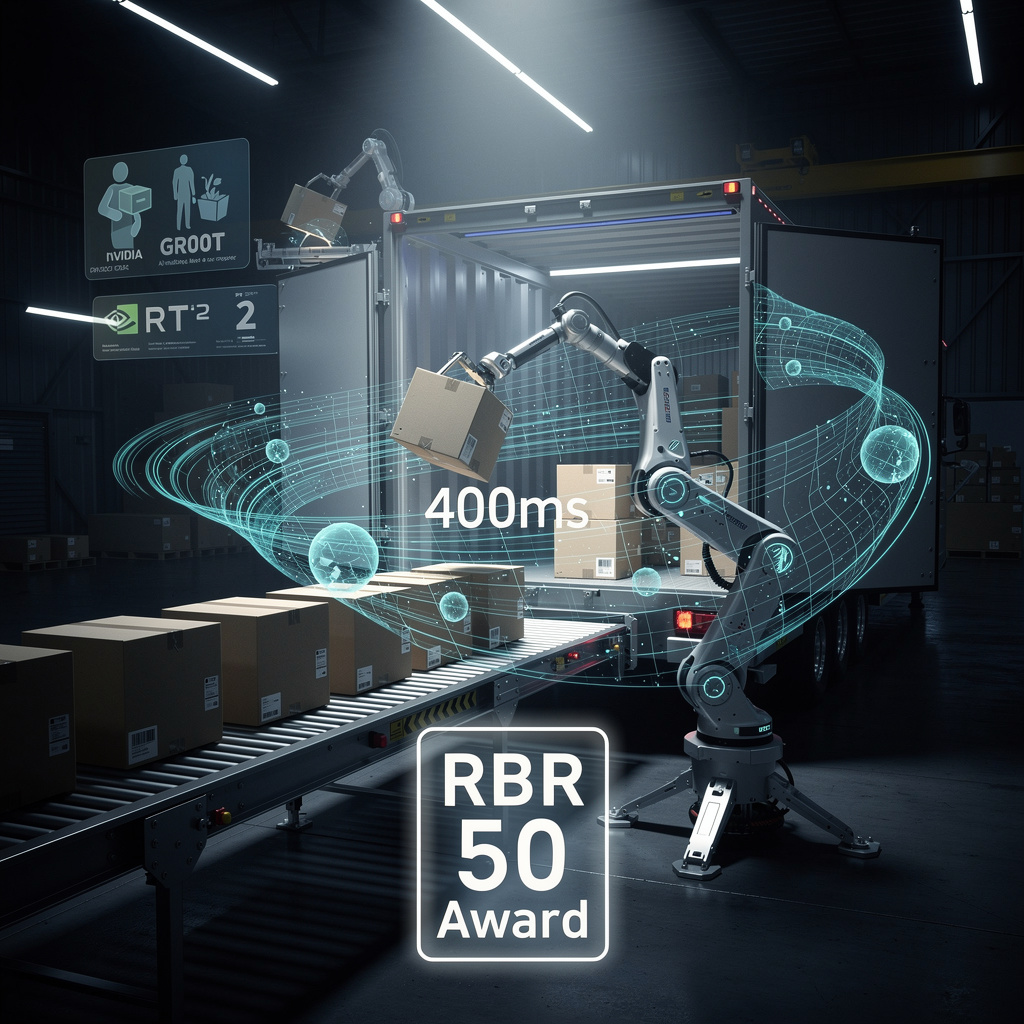
NVIDIA's Vera Rubin AI chips, fabricated on TSMC’s 3nm node, deliver 400 PFLOPS of FP16 compute in Supermicro HGX-NVL8 modules. Each module integrates eight GPUs with HBM4 memory and ConnectX-9 networking, enabling exascale training within a single rack without inter-rack aggregation.
What efficiency gains does Vera Rubin achieve?
Measured at 0.12 W/TFLOP, Vera Rubin reduces power consumption per FLOP to 10% of Blackwell’s 1.2 W/TFLOP. This translates to 4–5× lower operational costs for AI training and enables midsize enterprises to deploy large models on-premises.
How does chip density impact data center design?
Vera Rubin requires approximately one-quarter the number of GPUs compared to Blackwell for equivalent model training. This reduces capital expenditure and physical footprint by up to 75% per deployment, shrinking exascale infrastructure from 30 m² to under 8 m² per exaflop.
What is the production and adoption timeline?
- Low-volume production: Q2 2026
- Volume ramp and customer shipments: H2 2026
- Broad hyperscaler adoption: Q1 2027
- Industry-wide reference designs: 2028
Which partners are integrating Vera Rubin?
- Microsoft and CoreWeave: Co-designing 10,000-GPU clusters
- Supermicro: Providing HGX-Rubin reference designs with liquid cooling
- Red Hat: Delivering open-source OS and orchestration optimized for NVLink 6 and HBM4
How does export policy affect market access?
A revised U.S. export license, effective January 2026, permits limited shipments of Vera Rubin to vetted Chinese cloud operators, reopening access to a market representing ~15% of global AI-chip demand.
What market impact is projected?
The global AI-chip market is forecast at $500 billion in 2026. NVIDIA expects to capture over 30% ($150 billion) of this market, driven by Vera Rubin’s cost and density advantages. Competitors must accelerate 3nm and HBM4 integration to remain viable.
What long-term trends are emerging?
- Ultra-dense, low-power AI compute becomes standard
- Single-rack exascale systems replace multi-rack GPU farms
- Supply chain consolidation through joint roadmaps reduces deployment delays
- Policy differentiation between training and inference chips continues to shape global deployment
Vera Rubin’s architecture shifts AI infrastructure from distributed GPU clusters to integrated, high-efficiency systems, accelerating the scalability and accessibility of foundation model training.
Supermicro and Microsoft Deploy Vera Rubin Systems to Deliver 3.6 EFLOPS AI Performance at 1% Blackwell Cost
Supermicro and Microsoft have begun deploying NVIDIA’s Vera Rubin GPU systems with HBM4 memory and 6th-gen NVLink, achieving 1.4 PB/s memory bandwidth and 3.6 EFLOPS peak compute. These systems are fabricated on TSMC’s 3 nm process and reduce unit cost to approximately 1% of Blackwell-era hardware.
How does performance compare to prior generations?
Vera Rubin improves the bandwidth-to-compute ratio to 0.4 PB/EFLOP, a 3.3x increase over Blackwell’s 0.12 PB/EFLOP. This reduces data movement bottlenecks, accelerating multimodal AI training. Model training costs are projected to drop 99% compared to Blackwell, enabling broader enterprise adoption.
What is the production and deployment timeline?
- Early 2025: Vera Rubin reaches full production.
- Q2 2026: Supermicro initiates low-volume manufacturing of NVL72 and HGX Rubin systems.
- H2 2026: Mass shipments begin; first Microsoft Azure AI data centers with Rubin chips go live.
- 2027: Rubin-based systems expected to capture ~30% of the AI accelerator market.
- 2029: HBM5 and NVLink 7 are anticipated to extend performance beyond 2 PB/s.
How is the ecosystem evolving?
NVIDIA positions Vera Rubin as a full-stack AI architecture, integrating hardware, NVLink 6, HBM4, and Red Hat enterprise software. Microsoft’s Azure integration provides a cloud-native deployment model. Supermicro’s Japan-based rollout expands APAC infrastructure capacity, aligning with regional data sovereignty requirements.
What are the supply chain and competitive implications?
TSMC’s 3 nm fabrication ensures stable silicon supply, resolving prior Blackwell shortages. Rubin’s cost and thermal efficiency displace Blackwell in new hyperscaler orders. The Supermicro-Microsoft partnership creates a vertically integrated solution, reducing vendor fragmentation.
What future impact is anticipated?
Rubin-derived architectures will underpin exascale AI workloads beyond 10 EFLOPS. Azure is expected to offer on-demand Rubin-HGX instances at ≤$0.02/kWh by Q4 2026. The platform’s scalability and cost structure position it as the baseline for next-generation AI infrastructure.
AI Laptops with 50+ TOPS NPUs and Copilot+ Windows 11 Become New Standard
Acer, MSI, and Dell have launched laptops featuring Intel Core Ultra 300H and AMD Ryzen AI Max+ processors with 45–55 TOPS NPUs, OLED 120Hz displays, and Copilot+ Windows 11. These devices deliver up to 60% AI performance gains at unchanged TDP, with battery life extending to 27 hours of video playback.
How do hardware configurations vary across brands?
| OEM | Processor | NPU (TOPS) | Display | GPU Option |
|---|---|---|---|---|
| Acer | Intel Core Ultra 9 386H, AMD Ryzen AI Max+ 388/395 | 45–55 | 14–16" OLED 120Hz | Intel Arc B390, NVIDIA RTX 50-series |
| MSI | Intel Core Ultra 300H, AMD Ryzen AI Max+ 395 | 50+ | 13–16" OLED, up to 240Hz | NVIDIA RTX 50-series |
| Dell | Intel Core Ultra U 388H | 45–50 | 13–16" OLED 120Hz | NVIDIA RTX 50-series (Alienware) |
All models use a single-chip AI architecture combining CPU and NPU, with thin-and-light chassis under 1.9kg and desktop-class GPU options.
What is the release timeline?
- Jan 6–9, 2026: CES debut of Acer Swift 16 AI, MSI Prestige Modern, Dell XPS 14/16
- Jan 15–20, 2026: Regional briefings in EU and MEA
- Q1 2026: First shipments of thin laptops (Acer Swift Edge 14 AI, MSI Modern 14, Dell XPS 14)
- Q2 2026: High-TDP gaming models (Acer Nitro V16 AI, MSI Stealth 16 AI+, Dell Alienware 15)
- Q3 2026: Premium AI-max variants (Acer Predator Helios Neo 16S, MSI Raider 16 Max HX)
What drives pricing and availability?
Entry-level AI laptops start at ~$1,000; high-end gaming models reach ~$2,200. DRAM costs rose 30% YoY in Q4 2025, with 16GB LPDDR5x standard and 32GB optional. RTX 50-series GPU shortages have led to 12% price increases on mid-tier Dell models.
What future developments are expected?
- ASUS and Lenovo are expected to join the AI-laptop market by Q4 2026
- Copilot+ will receive updates adding persistent AI context and offline inference APIs
- RTX 51-series GPUs, due in early 2027, may be backported via BIOS updates for 30% additional frame-rate gains
- No regulatory barriers to on-device AI inference are anticipated in the U.S. or EU
The industry has converged on a unified AI-laptop baseline. Differentiation now rests on form factor, thermal design, and GPU selection.
Liquid-Cooled RTX 5090 Desktops Set New Standard for Thin-Chassis AI Workstations
MSI and Thermaltake have introduced desktop systems with 99mm-thin chassis, liquid cooling, and 128GB DDR5-7200 RAM, designed to support NVIDIA’s RTX 5090 GPU under a 300W total power envelope. MSI’s Lightning Z model features an integrated copper cold plate covering GPU and VRAM, six heat pipes, and a triple-fan cooling array, with an optional 360mm AIO loop. Thermaltake’s approach uses a modular 240mm or 360mm AIO cooler with triple-fan airflow, though no confirmed RTX 5090 SKU has been released as of January 2026.
Is 128GB of DDR5-7200 necessary for gaming?
The 128GB memory configuration exceeds typical gaming requirements and aligns with AI inference workloads. Systems are engineered to run 100B+ parameter models locally, supporting on-premises AI inference without cloud dependency. This specification targets enterprise AI labs and professional content creators using AI-upscaled streaming workflows.
How do cooling designs differ between manufacturers?
MSI employs a fully integrated liquid cooling solution with direct contact to GPU and VRAM, validated for sustained 300W operation in a 99mm chassis. Thermaltake offers a modular AIO option, providing flexibility but lacking a verified reference implementation. Thermal performance under sustained load remains unproven for Thermaltake’s design.
What market dynamics shape availability and pricing?
NVIDIA’s 30–40% reduction in consumer GPU production has constrained RTX 5090 supply. MSI limits its Lightning Z to approximately 1,300 units at $3,900–$4,000 MSRP. Thermaltake has not disclosed pricing but signals a limited-edition release. Both products function as premium halo devices, prioritizing brand cachet over volume sales.
What does this mean for future desktop design?
These systems establish a new baseline for high-performance consumer desktops: liquid cooling, 300W power envelopes, and 128GB+ memory are now prerequisites for AI-capable machines. By 2027, the 99mm form factor may become standard for AI-ready desktops, with next-generation models expected to feature dual cold plates and 256GB DDR5-8000 support.
Are these systems accessible to mainstream users?
No. Limited availability, premium pricing, and proprietary power and cooling ecosystems create high switching costs. These are niche products for enterprise AI users, elite content creators, and enthusiasts—not general consumers.
Will other manufacturers follow?
Yes. By H2 2026, Acer and Dell are expected to release RTX 5080 or AMD RX 8090 variants in similar chassis. The convergence of thermal, power, and memory constraints defines a new product category: the thin-chassis AI workstation.

Comments ()