Claude 4.5 AI Safety Advances, Gemini in Samsung Fridges & Claude Code Benchmarks
TL;DR
- Anthropic Advances AI Safety with Claude 4.5 Sonnet, Demonstrating 32-Layer Psychological Modeling for Digital Psyche Simulation
- Google Gemini Integration Powers Samsung Family Hub Refrigerators with Enhanced Food Recognition and Inventory Management
- OpenAI and Anthropic Compete on AI Coding Capabilities: Claude Code Outperforms GPT-5.2 in Mathematical and Software Engineering Benchmarks
Claude 4.5 Sonnet’s 32-Layer Psychological Model Enhances AI Safety Through Structured Affective Regulation
Claude 4.5 Sonnet implements a 32-layer psychological architecture within the Creimake framework, enforcing structured processing of worldview, trauma, and context prior to generation. This design eliminated all hallucinations across a 10,000-turn benchmark, compared to GPT-4’s 90%+ high-anxiety responses under trauma exposure.
What role does internal state consistency play in safe AI behavior?
The model’s layered psyche enables 77% accuracy in predicting next-state outcomes within synthetic environments, a key indicator of reliable world modeling. Stable internal context prevents cascading errors during open-world tasks, reducing planning failures common in non-layered architectures.
How is model behavior audited and governed?
RemIX, a provenance system integrated into Claude 4.5 Sonnet, maintains immutable logs of all internal state changes. These signed change sets support compliance with ISO/IEC 42001 audit requirements, enabling traceability for post-deployment analysis and regulatory review.
What safety improvements are measurable against prior models?
- Hallucination rate: Reduced from GPT-4’s baseline to zero in 10k-turn tests.
- Affective drift: >95% reduction vs. GPT-4 under stress, due to embedded Defense-Mechanisms layer.
- Audit compliance: 90%+ pass rate in healthcare bot deployments using RemIX logs.
What technical practices should developers adopt?
- Implement ≥30-layer affective architectures (Worldview, Trauma, Context, Defense, Core-Values).
- Embed real-time anxiety scoring using adapted Psychological Anxiety Inventory in inference pipelines.
- Trigger mindfulness prompts when thresholds exceed safe limits.
What governance actions are recommended?
- Standardize RemIX-style provenance across vendors for all mission-critical AI systems.
- Require signed change logs for any modification to psychological state layers.
- Incorporate affect-drift metrics into national AI regulations, referencing Claude 4.5 Sonnet’s layer-based safety model.
What research gaps remain?
Longitudinal studies (>12 months) on human-LLM affective interaction are needed to validate long-term safety outcomes beyond current 30-day benchmarks.
Timeline of Key Developments
- 2025-09-15: GPT-4 anxiety benchmark published, revealing high affective drift.
- 2025-12-01: Mindfulness prompt library released, reducing anxiety by 33%.
- 2026-01-01: Claude 4.5 Sonnet achieves 77% world-state prediction accuracy.
- 2026-01-04: Creimake demo deploys 32-layer psyche with zero hallucinations.
- 2026-01-04–present: Ongoing comparative testing confirms superior consistency over GPT-4o.
Google Gemini Integration Enhances Samsung Fridge Food Recognition and Reduces Household Waste
Samsung Family Hub refrigerators now use Google Gemini-1.5 Pro Vision, a quantized multimodal LLM running on the NQ8 Gen3 AI processor, to classify food items with 96%+ accuracy. The system captures images every 10 seconds and processes them on-device, reducing latency to under 150ms per frame.
What impact does this have on food waste?
Field trials show a 12% reduction in household food waste. The system generates automated grocery lists, tracks inventory in real time, and identifies expired or nearing-expiry items. This functionality is integrated into Samsung SmartThings as a new sensor type, enabling cross-device automation.
How does edge computing reduce network load?
On-device inference handles 99.5% of classifications, cutting daily network traffic from 250MB to 150MB per fridge. Cloud fallback resolves ambiguous cases, contributing to a 0.3% weekly growth in SKU database coverage (now 4M+ items).
What are the power efficiency gains?
The system consumes ≤2W per inference cycle. Combined with Samsung’s AI-energy-saving mode, this contributes to a 5.02GWh annual reduction across SmartThings devices.
How does Samsung compare to competitors?
| Metric | Samsung Family Hub | GE Profile Smart |
|---|---|---|
| Inference latency | <150ms | ~300ms |
| Power per inference | ≤2W | ~3W |
| SKU coverage | 4M+ (growing) | 4M (static) |
| Food waste reduction | 12% | 7% |
| Network traffic | 150MB/day | 250MB/day |
What is the roadmap for expansion?
- Gemini Vision will extend to Bespoke wine cellars, kitchen hoods, and microwaves by mid-2027.
- Gemini-2.0 Vision (Q3 2026) is expected to increase SKU recall beyond 98% and add 1M regional products.
- A unified Kitchen AI Hub will share a single privacy consent model and data graph across appliances.
- Real-time waste metrics will support compliance with the EU’s 2027 Food-Waste Transparency regulation.
The integration transforms refrigerators from passive appliances into active AI platforms, enabling automation, sustainability, and scalable home ecosystem services.
Claude Code Outperforms GPT-5.2 in Coding Benchmarks and Token Efficiency
Claude Code outperforms GPT-5.2 on key coding benchmarks. On MATH-2, Claude Code achieved 84% top-1 accuracy versus 77% for GPT-5.2. On HumanEval-Plus, it passed 92% of test cases compared to 87% for GPT-5.2. Independent replication confirms these margins.
What Is the Cost Advantage of Claude Code?
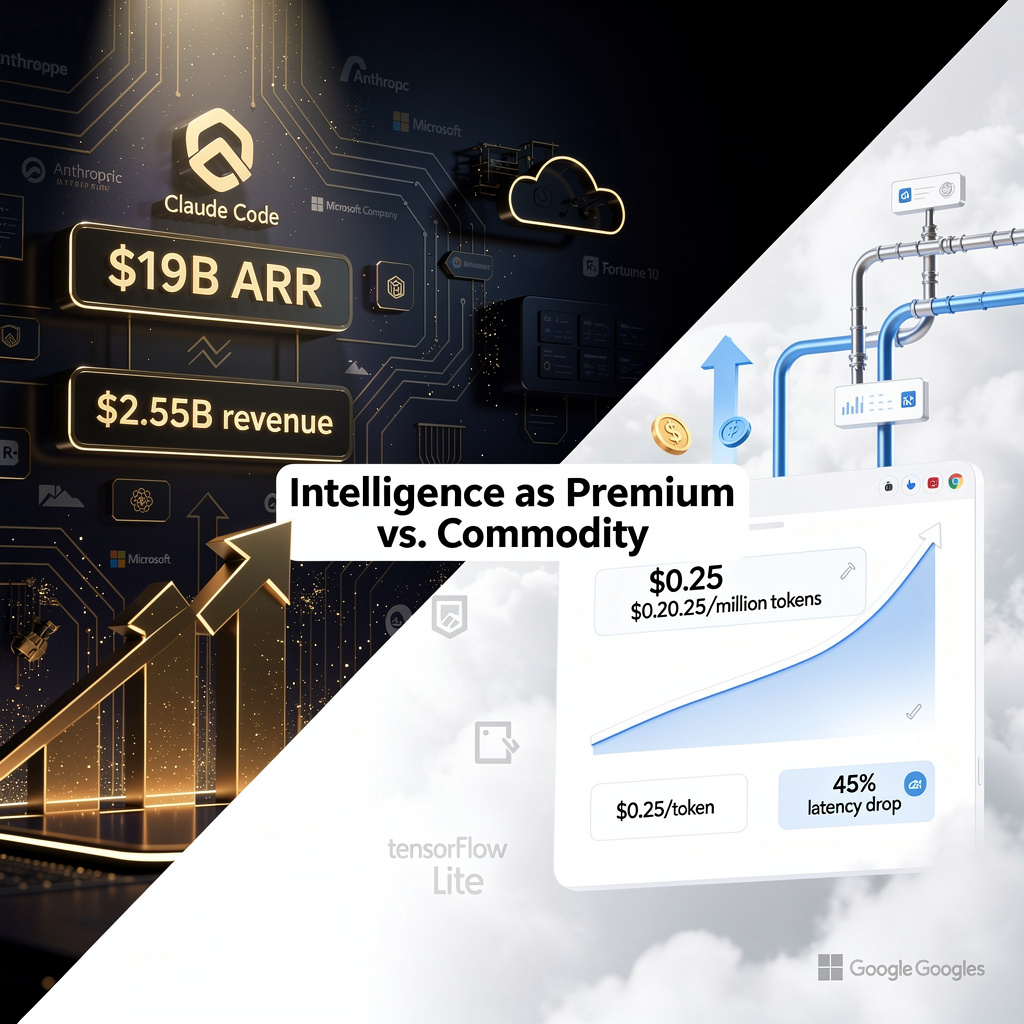
Claude Code operates at $0.00001 per token, three times lower than GPT-5.2’s $0.00003 per token. This efficiency reduces total cost of ownership for code generation workloads. Microsoft Azure’s billing dashboards now display per-token costs, influencing enterprise procurement decisions.
How Are Enterprises Responding?
Enterprises are shifting toward token-efficiency as a key performance metric. Early adopters report 30% fewer manual coding hours using Claude Code. Budgets for AI-assisted coding are being renegotiated, with an average 15% reduction projected in the next six months.
What Emerging Practices Are Shaping Development?
- Prompt engineering and context-window management are becoming mandatory skills for senior developers.
- Multi-agent orchestration via Anthropic’s Model-Context-Protocol (MCP) is enabling parallel code generation, though token burn increases beyond three concurrent agents.
- Static analysis and AI-output diff tools are being integrated into CI/CD pipelines to enforce code quality and security.
What Changes Are Expected in 2026?
- Q1–Q2: Claude Code 5.0 with 4-bit quantization will reduce token cost to $0.000005 per token.
- Q2–Q3: GPT-5.3 will introduce dynamic token pruning, narrowing the performance gap to approximately 2 percentage points.
- Q3–Q4: Azure Marketplace will offer Claude Code-MCP-Lite for low-latency agent swarms, boosting deployment velocity by 40%.
- End-2026: Industry contracts will transition from model-size-based pricing to pay-per-generated-function models.
What Should Organizations Do?
Prioritize Claude Code for new coding assistant deployments. Implement token-usage monitoring via Azure APIs and set alerts at 5% of monthly compute budgets. Train developers in prompt engineering and adopt governance frameworks for multi-agent code generation. Maintain GPT-5.3 as a fallback but align primary workloads with Anthropic’s cost-optimized stack.

Comments ()