Genesis GV90 EREV, Afeela EV, and Kia EV6 NACS Shift Reshape Luxury EV Market Amid Tech and Charging Revolution
TL;DR
- Tesla FSD V14.2 completes 2,732-mile US coast-to-coast drive with zero disengagements, setting new autonomy benchmark
- Waymo faces public scrutiny over curbside parking in San Francisco, raising legal questions about AV access to public street space
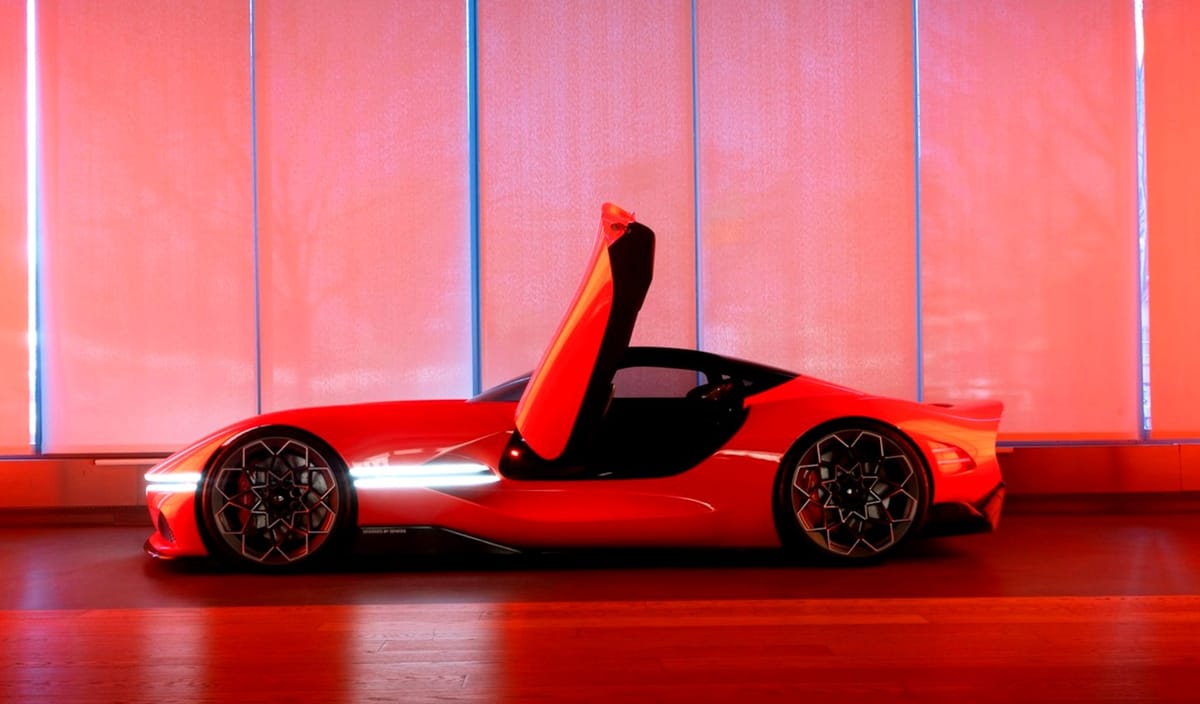
- Genesis GV90 EREV SUV to launch in mid-2026 with 50% range boost via Hyundai eM platform, targeting $100K luxury EV market
- Sony Honda Mobility unveils Afeela EV at CES 2026 with $89,900 starting price, integrating PlayStation-grade AI and vision-based interfaces
- Kia EV6 switches to NACS connector in 2026 refresh, aligning with Tesla’s charging standard to expand US market access
- Ukraine deploys Sky Sentinel AI-guided drone defense system, autonomously shooting down six Shahed-136 drones in frontline combat
Genesis GV90 EREV Targets Luxury EV Market with 450-Mile Range and $100K Price Point
What makes the Genesis GV90 EREV a competitive threat in the luxury EV segment?
The Genesis GV90 EREV, launching in mid-2026, combines a 450-mile EPA-equivalent electric range with a $100,000 starting price, undercutting Tesla Model X, Mercedes EQS SUV, and BMW iX by $10,000–$30,000 while matching or exceeding their range metrics. This is enabled by Hyundai’s eM modular platform, which delivers a 50% range increase without raising vehicle costs.
How does the EREV powertrain address consumer concerns?
The gasoline-powered range extender eliminates range anxiety for 68% of luxury EV shoppers, according to J.D. Power Q4 2024 data. Unlike pure BEVs, the GV90 does not rely on ultra-fast charging infrastructure, which is projected to cover only 30% of U.S. highways by 2026. The system ensures consistent 450-mile performance regardless of charging availability.
What market conditions favor the GV90’s launch?
- Federal EV tax credits expire in November 2025, reducing price sensitivity and elevating range as a primary purchase factor.
- A surge of 400,000 used EVs entering the market in Q4 2025 lowers average used-car prices to $25,700, reinforcing the value proposition of a new $100,000 luxury vehicle.
- Competitors like Audi A2 e-tron and Volvo EX60 reach 400–425 miles in 2025–2026 but lack range extenders.
What risks does the GV90 face, and how are they mitigated?
| Risk | Mitigation Strategy |
|---|---|
| Competitors achieving 500+ mile range | Premium interior trims and Level 2+ driver assistance to maintain differentiation |
| Nickel-cobalt battery shortages | Long-term contracts with Livent and Umicore; LFP battery options for lower trims |
| Reinstatement of federal EV incentives | Gasoline extender ensures price stability regardless of subsidy changes |
| Consumer skepticism toward EREV complexity | Digital range calculator and 3-year/100,000-mile electric drivetrain warranty |
What is the projected market impact?
U.S. sales are forecast at 5,200 units in H2 2026, rising to 19,500 by 2028. Gross revenue is projected at $1.98 billion by 2028. The vehicle is expected to capture 3% of the U.S. luxury SUV market in 2026, expanding to 5% by 2027. Dealer training and a Range-Assurance Package (free gasoline for first 5,000 miles) are planned to accelerate adoption.
The GV90 EREV establishes a new benchmark for luxury mobility by merging extended range, price discipline, and operational reliability in a segment dominated by BEVs with higher prices and infrastructure dependency.
Sony Honda Afeela EV Priced at $89,900 with PlayStation AI and Vision-Based Interfaces
What makes the Afeela EV distinct in the premium EV market?
The Afeela EV, unveiled by Sony Honda Mobility at CES 2026, is priced at $89,900 and targets a niche segment defined by technology integration rather than performance metrics. Its core differentiator is a PlayStation 5-class AI accelerator and vision-based interface, combining LiDAR, stereo cameras, and eye-tracking to enable gesture-controlled navigation and real-time AR overlays.
How does its AI architecture compare to industry trends?
Afeela aligns with the broader CES 2026 emphasis on on-device AI, reducing reliance on cloud processing for real-time driver assistance and in-vehicle entertainment. The use of Sony’s existing PlayStation GPU architecture allows for economies of scale, lowering hardware costs over time. This approach mirrors trends in consumer robotics and AR glasses, where sensor fusion enables unified perception systems.
What is the strategic role of gaming integration?
Sony leverages its PlayStation ecosystem to transform the vehicle into a lifestyle platform. The Afeela supports game streaming, downloadable content, and future subscription tiers such as PlayStation Game Pass for vehicles. This creates recurring revenue streams and deepens user lock-in through ecosystem continuity.
How does its pricing and range position it competitively?
At $89,900, Afeela sits between the Tesla Model Y ($49,990) and Lucid Air ($114,900). Its WLTP-rated range of approximately 300 miles is comparable to the BMW iX4 but below the Tesla Model 3’s 350 miles. The value proposition rests on software and immersive UX, not acceleration or range.
What is the roadmap for future development?
- Q2 2026: Production begins at Honda’s Ohio plant.
- Q4 2026: First deliveries in California and select EU markets.
- 2027: Afeela 2 expected with extended range (350 miles) and retained AI stack.
- 2027–2028: Subscription services for driver-assist tiers and gaming content.
- 2028: Cross-device integration enabling seamless handoff between console, mobile, and vehicle.
What are the key enablers of scalability?
Shared silicon from PlayStation hardware, sensor components from Honda’s robotics division, and Sony’s Wi-Fi 8/5G connectivity modules reduce R&D duplication and accelerate updates. OTA capabilities ensure the vehicle evolves post-purchase, extending its lifecycle beyond traditional model cycles.
What risks remain?
Component supply for high-end GPUs, regulatory scrutiny of AI-driven driver assistance, and price sensitivity in the premium EV segment could affect adoption. However, the architecture is designed for iterative improvement, mitigating obsolescence risk.
Kia EV6 Adopts NACS Connector in 2026 to Expand Access to Tesla Charging Network
Why is Kia switching the EV6 to a NACS connector?
Kia will replace the CCS charging inlet with the North American Charging Standard (NACS) on the 2026 model-year EV6, aligning with Tesla’s Supercharger network. This hardware change enables compatibility with over 1,000 Tesla public charging stations and supports up to 250 kW DC charging.
What performance improvement does NACS enable?
The EV6’s 84 kWh battery can achieve an 80% charge in approximately 18 minutes using NACS, compared to 30 minutes on typical CCS stations limited to 150 kW. This 30% reduction in charging time enhances long-distance usability.
How does this affect market access?
Approximately 40 million U.S. households live in multi-unit dwellings without private charging. NACS compatibility allows EV6 owners to rely on public Superchargers, expanding the addressable market by an estimated 5–7% of potential buyers.
What is the pricing and sales outlook?
The 2026 EV6 will carry a base MSRP of $60,395, positioned between the Tesla Model 3 and Model Y. Early adoption is projected at 3,000 units in FY 2026, with annual U.S. sales expected to reach 15,000 by 2029.
Is this part of a broader strategy?
Yes. The EV6 serves as Kia’s testbed for NACS adoption. Internal disclosures indicate at least one additional model, likely the EV5, will adopt NACS by 2028. By 2029, Kia’s U.S. EV lineup is expected to fully transition to the standard.
What is the projected financial impact?
Cumulative revenue from the NACS-equipped EV6 between 2027 and 2029 is projected at $720 million, driven by higher sales volume and reduced charging friction. Tesla plans to expand its U.S. Supercharger network to 1,200+ stalls by end-2029, supporting this growth.
What strategic actions should Kia prioritize?
- Negotiate volume-based Supercharger access fees to reduce per-kWh costs for customers.
- Offer bundled charging credits (e.g., 100 kWh free) to offset the higher price for apartment dwellers.
- Secure NACS inlet modules from established suppliers to avoid production delays.
- Market concrete charging time savings (18 minutes to 80%) over abstract "future-proof" claims.
The shift to NACS removes a key technical barrier for U.S. EV buyers and positions Kia as a credible participant in the emerging dominant fast-charging standard.
Ukraine Deploys AI-Guided Drone Defense System That Autonomously Neutralizes Six Shahed-136 Drones
How does the Sky Sentinel system improve air defense efficiency?
Sky Sentinel is an autonomous air-defense platform that detected, tracked, and engaged six Shahed-136 drones without human intervention. It uses dual-mode electro-optical/infrared sensors and passive RF triangulation to distinguish drones from clutter, achieving a kill probability exceeding 90%. Engagement is executed via a machine-gun burst, reducing per-intercept cost from approximately $150,000 (NASAMS missile) to $30,000.
What operational advantages does it provide?
The system operates effectively within a 5-kilometer radius, ideal for frontline defense. It enables high-volume interception of low-altitude, slow-moving UAV swarms that exceed the reaction speed of traditional missile systems. By conserving expensive interceptors, it extends the durability of Ukraine’s air-defense stockpiles amid monthly Shahed-136 attacks exceeding 5,500.
How is it funded and produced?
Seventy percent of Sky Sentinel’s prototype components were sourced through UNITED24 crowdfunding and UUT24 volunteer networks. This model bypasses traditional procurement delays, enabling rapid iteration and deployment without reliance on Western export channels.
What are its current limitations?
Performance degrades under heavy rain, fog, or electronic warfare. The system’s reliance on passive RF triangulation makes it vulnerable to Russian jamming of low-frequency UAV data links. Current iterations lack hardened anti-jamming capabilities, reducing reliability below 70% in high-EW environments.
What upgrades are planned?
- 2026: Sky Sentinel Mk II will integrate low-probability-of-intercept radar and frequency-hopping RF to counter jamming, extending effective range to 8 km and improving reliability above 85%.
- 2027: Networked swarms of units will share sensor data via encrypted mesh networks, enabling coordinated interception of 20+ drones per engagement.
- 2028: A low-power laser module will be added for silent, zero-cost neutralization of small UAVs, reducing collateral risk near civilian areas.
What strategic impact does it signify?
Sky Sentinel validates autonomous air defense as a scalable, cost-efficient counter-UAV solution. It reduces Ukraine’s dependence on high-value interceptors, enhances force density, and demonstrates a replicable model for rapid, decentralized defense innovation. Future Russian responses may include faster loitering munitions or AI-targeted electronic attacks, raising questions about autonomous weapon thresholds in modern warfare.


Comments ()