Zelensky Warns of Escalating War as Russia Hits Infrastructure, Killing 14,000 Civilians; Ukraine Strikes Back with Drone Campaigns
TL;DR
- Ukraine’s Zelensky Warns of Escalating War Risks as Russia Targets Critical Infrastructure, with 14,000 Civilian Deaths Reported by UN
- Trump Administration Deploys Record 2.5 million Deportations Amid Federal Fraud Investigations into Somali-Owned Minnesota Daycare and Healthcare Fraud
- Russia Faces Military Stagnation as Ukrainian Drone Strikes Destroy Oil Refineries and Command Hubs, Killing Over 120 GRU Troops in Zaporizhzhia
- Italy Arrests Nine for Financing Hamas via Charities, Seizing €8 Million in Assets After October 7, 2023 Attack That Killed 1,200 Israelis
- China Accused of Weaponizing AI to Manipulate Taiwan Elections via Sentiment Mapping and Social Media Influence Operations
- Myanmar Junta Holds Sham Elections Amid Civil War, With 3.6 Million Displaced and 4,800 Candidates Competing in 330 Townships Under Military Control
Ukraine War Risks: Critical Infrastructure Attacks & 14,000 Civilian Deaths Signal Escalation
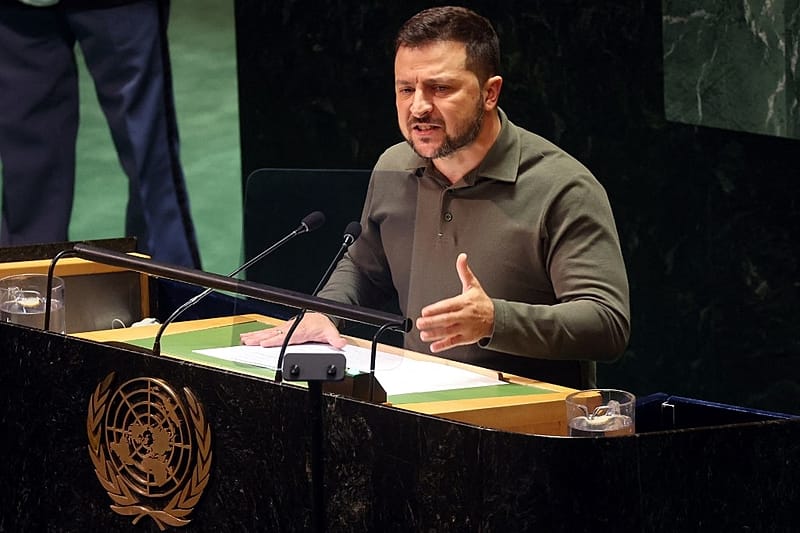
Ukraine’s Zelensky has warned of escalating war risks as Russia intensifies critical infrastructure attacks, with a UN-verified 14,000 civilian deaths since 2022. Recent strikes—Kyiv missile-drone barrage (1M+ without power/heat) and Sloviansk residential attack (1 killed, 27 injured)—aim to undermine winter civilian resilience.
What Do Russia’s Recent Strikes Reveal About Its Strategy?
Russia’s strategy has four patterns: Escalated energy/heating targeting—ISW/DTEK data shows >2 daily power asset hits, cutting electricity/heat for 1M+ Kyiv residents. Coercive diplomacy: Dec 28’s major drone wave followed Zelensky’s Starmer call and Trump meeting. "Punishment" strikes: Russian MoD admits reserve shortages, slowing 2026 ground offensives for remote attacks. Weaponizing casualties: The UN’s 14k death figure fuels Kyiv/Western security guarantee demands.
Why Do These Attacks Raise Urgent Risks?
Per-incident lethality has returned to 2022-2023 peaks (Sloviansk: 1 killed, 27 injured). Grid hardening is critical—DTEK took hours to restore 1M households, risking hypothermia/water shortages. The Zaporizhzhia NPP remains a latent risk: Artillery on repair crews endangers 5k staff. Diplomatically, Zelensky links 14k deaths to "broader escalation," which may pressure NATO if weekly deaths exceed 5-10.
What Can We Expect in Jan-Mar 2026?
Sustained drone grid strikes (4-6/day, spikes during diplomacy) due to manpower constraints. Civilian deaths may hit 30-40 monthly (direct attacks + heating loss). International response: Escalated sanctions on Russian drone/logistics if deaths >20 weekly; potential NATO air-defence aid. Ground offensives will slow to ≤0.5km/day, focusing on remote "punishment" strikes.
What Should Be Done to Mitigate Risks?
- Deploy mobile substations and battery-backed micro-grids in Kyiv, Donetsk, Luhansk; pre-position fuel/spare parts.
- Expand satellite ISR to detect drone launch sites, integrating with Ukrainian air-defence command.
- Anchor peace talks on the UN’s 14k death metric; require Russia to sign a UN-supervised Critical Infrastructure Protection Covenant.
- Coordinate EU/US secondary sanctions on drone component suppliers (trigger: ≥20 weekly civilian deaths).
- Scale winter relief (blankets, portable heaters) for 1M households; deploy mobile medical units in at-risk areas.
Trump’s 2.5M Deportations and Minnesota Somali-Owned Fraud: A Policy Link?
The Trump administration’s announcement of 2.5 million deportations since returning to office coincides with aggressive federal fraud investigations into Somali-owned daycare and healthcare operations in Minnesota. Analysis of FBI reports, and congressional hearings reveals a web of connections between immigration enforcement, financial crime prosecution, and political rhetoric—raising questions about whether the two issues are being intentionally linked.
Is the Deportation Surge Framed Around a Somali Community Fraud Narrative?
- Deportation scale: 2.5 million illegal immigrants removed (ICE/DHS).
- Fraud scope: $250 million COVID-era food aid scheme (Feeding Our Future), $110M–$120M daycare/healthcare fraud (Quality Learning Center), and $9B–$10B in broader Medicaid/CCAP losses linked to Somali-owned entities (FBI/prosecutors).
- Narrative alignment: The administration’s deportation campaign coincides with framing the Somali community as a “locus of fraud,” reinforcing justification for stricter immigration enforcement.
How Are Fraud Investigations and Deportations Sharing Federal Resources?
- Timeline: Early 2025 FBI launches Feeding Our Future probe; December 2025 search warrants at Ultimate Home Health Services, 78 indictments (57 convictions), $48M restitution recovered.
- Resource consolidation: An FBI surge in Minnesota—including personnel and investigative bandwidth—supports both fraud crackdowns and immigration enforcement, indicating a unified federal effort.
Are Politicians Using Fraud to Pressure State Officials and Harden Immigration Policy?
- Political actions: Suspension of Temporary Protected Status (TPS) for Somali nationals; calls to prosecute Minnesota Gov. Tim Walz (from Elon Musk, JD Vance, Rep. Tom Emmer); House Oversight Committee hearings (June 2025).
- Rhetorical alignment: High-profile figures tie fraud narratives to immigration policy, amplifying pressure on state leaders and normalizing punitive enforcement.
What’s the Disparity Between Fraud Losses and Deportation’s Societal Cost?
- Financial vs. human impact: While fraud losses ($250M–$120M) are substantial, they represent a fraction of the societal costs of 2.5 million deportations—including family separations and labor market disruptions.
- Prioritization question: The administration’s focus on immigration enforcement, relative to recovered fraud funds ($48M), suggests political emphasis may outweigh proportionality to financial harm.
What Emerging Trends Could Shape Future Policy?
- Escalating scrutiny: Investigations expanding to Medicaid, CCAP, and non-emergency medical transport, with potential losses now estimated at $9B–$10B.
- Legislative momentum: Congressional committees shift from fact-finding to proposing oversight reforms for state-funded social services.
- Hardened immigration policy: TPS suspensions and the “Laken Riley Act” signal a precedent of tying immigration control to alleged fraud narratives.
What Are the Real-World Impacts for Communities and States?
- State fiscal pressure: Minneapolis/St. Paul may face property tax adjustments to offset unrecovered fraud losses.
- Community trust: Heightened mistrust between Somali-American residents and law enforcement, risking reduced cooperation in future investigations.
- National precedent: The coupling of mass deportations with targeted fraud prosecutions could become a model for future administrations linking immigration control to financial crime.
These intersections raise unavoidable questions: Are fraud investigations and deportation efforts being used to reinforce each other, or are they unrelated? The data suggests the former—and the consequences for communities, policy, and trust may linger long after the headlines fade.
Ukrainian Drone Strikes Intensify Russia’s Military Stagnation: Data Insights
How Have Ukrainian Drones Eroded Russian Critical Infrastructure?
- December 26–28 attacks: 30+ FP-1/FP-2 kamikaze drones struck the 14th GRU Brigade command hub in Zaporizhzhia, killing 51 troops, wounding 74, and neutralizing ~50% of the brigade’s strength.
- Additional strikes hit Crimea radar/boat storage, Donetsk GRU bunkers, Chornomorske/Makiivka pipelines (cutting fuel flow by 15% for 48 hours), and the Syzran oil refinery (7–8.9 Mt crude/2.5 Mt diesel annual capacity, temporary shutdown).
- Valday radars in Crimea destroyed, reducing low-altitude air defense coverage by 30%; sea-drone launchers disabled.
What Operational Vulnerabilities Do the Attacks Expose?
- Elite attrition: >120 GRU specialists (intelligence, signals, special ops) killed/wounded in 24 hours, straining recruitment pipelines (annual attrition ~320 personnel).
- Energy disruption: Repeated refinery/pipeline strikes limit fuel for mechanized units, forcing reroutes and increasing supply line exposure.
- Air defense erosion: UAV interception rates fell from 70% (early Dec) to 45% (Dec 28), enabling higher penetration and a "positive feedback loop" for further attacks.
- Escalating tempo: ≥12 drone sorties/day across five occupied regions, signaling Ukrainian confidence in UAV effectiveness.
How Do These Strikes Undermine Russia’s Strategic Goals?
- Command-intelligence lag: Zaporizhzhia decapitation delays GRU target verification, slowing artillery fire adjustment.
- Frontline sustainment dip: Syzran outages reduce diesel availability, cutting operational tempo for tank-heavy formations.
- Prolonged stagnation: Q1 2026 projections show 10–15% monthly GRU specialist losses, 20–30% higher UAV sorties, and limited air defense restoration (30% radar replacement by May 2026), reinforcing a "military stagnation" narrative.
Italy’s Hamas Charity Financing Crackdown: €8M Seized, Nine Arrested
Italy’s December 2025 arrest of nine for financing Hamas via charities—seizing €8 million in assets—directly ties to the October 7, 2023, attack that killed 1,200 Israelis. A two-year probe by Italian financial police, with Dutch and Eurojust help, uncovered a network diverting €7 million from Italian donors to Hamas-linked entities.
How Did Italy Trace Funding to Charities?
After 2023’s assault, authorities monitored suspicious transfers flagged by Dutch/Eurojust. By December 2025, anti-mafia units arrested ringleader Mohammed Hannoun in Genoa/Milan, seizing €8 million (including €1.08 million in a pro-Palestinian office) and uncovering €7 million diverted over two years—via charities claiming humanitarian aid.
What Exposed the Cross-Border Money Trail?
Funds moved through Italian NGOs, personal accounts, and cash deliveries, detected via Eurojust-coordinated monitoring. Israeli intelligence provided key leads, with Dutch/EU agencies corroborating a multi-layered laundering network—showing multilateral intelligence fusion is now critical to disrupting militant finance.
Why Is the Crackdown Splitting Opinions?
Prime Minister Meloni called it a ‘national security safeguard’; Israeli officials (Katz, Netanyahu) praised it and pledged more cooperation. Pro-Palestinian activists protested in Milan, labeling raids ‘repressive.’ The EU backed stricter AML rules, but the divide highlights counter-terrorism as a political football: leaders use arrests to boost credibility, activists fight overreach.
What’s the Takeaway for Future Anti-Finance Efforts?
The operation shows three trends: multi-jurisdictional AML is now the main tool to stop militant funding; charity fronts exploit humanitarian narratives, but forensic tools have scaled (seizing €8M+); and legal precedents are forming—via Italian anti-terror laws and EU coordination. Sustaining this needs ongoing EU vigilance and transparent justice to block re-emergent channels.
Myanmar Junta’s ‘Elections’ Amid Civil War: Disenfranchising the Displaced, Consolidating Control
Myanmar’s recent junta-run elections, framed as a "return to democracy," are anything but. With 3.6 million people displaced, 65 townships excluded from voting, and a candidate pool stacked with pro-military allies, the process is a tool of control—not representation.
How Geographic Exclusion Erases Electoral Legitimacy?
The elections covered just 80% of Myanmar’s 330 townships, with 65 (20% of the total) shut down due to "insecurity"—coincidentally, the same areas where most internally displaced persons (IDPs) reside. The Union Election Commission (UEC) openly acknowledged "almost one-fifth of lower-house constituencies cannot vote during the war." By limiting voting to military-controlled zones, the junta ensures the electorate is drawn from safe, compliant areas, not the conflict-affected regions where the war’s impact is deepest.
Why the Candidate Field Guarantees a Pre-Determined Legislature?
With 4,800 candidates competing, the race is rigged from the start. The military’s proxy party, the Union Solidarity and Development Party (USDP), dominates with 22% of candidates, while the main civilian opposition—the National League for Democracy (NLD)—remains banned, its leaders incarcerated. Worse, 25% of lower-house seats are reserved for serving military officers, ensuring a permanent bloc in favor of the junta. The result is a legislature designed to uphold military rule, not reflect public will.
How Humanitarian Crisis Directly Disenfranchises the Vulnerable?
The 3.6 million IDPs displaced since 2021 are not just victims of war—they’re also electoral casualties. Displacement clusters align almost exactly with the 65 non-voting townships, meaning millions cannot cast a ballot. Add over 1 million Rohingya refugees abroad, denied the vote entirely, and the election becomes a tool of systematic disenfranchisement: the most marginalized groups are excluded from shaping their future.
What Role Do Legal Restrictions Play in Suppressing Dissent?
To mask the sham, the junta enacted an Election Protection Law criminalizing criticism—leading to over 200 prosecutions for social media posts and leaflets. Independent journalists were outnumbered by voters at polling stations and faced intimidation, while Facebook, Instagram, and X were blocked nationwide. These measures aren’t about fairness; they’re about controlling the narrative. With no independent monitoring, the junta can inflate turnout figures in secure areas, pretending to represent a nation that can’t vote.
What Do International Reactions Reveal About Global Perception?
The world has rejected the election as a farce. The UN Human Rights Office called it "a failure of basic standards," while Western governments (U.S., EU, UK) imposed sanctions on junta officials and USDP leaders. Even China and India, usually pragmatic, acknowledged it as a "potential stabilising signal" but stressed the need for ceasefires—hinting at quiet skepticism. The near-universal condemnation isolates the junta, while regional powers’ engagement exposes a reality: the elections are a facade to project stability to foreign investors, not a step toward democracy.
In the end, Myanmar’s "elections" are a testament to how autocrats weaponize process to mask power. By excluding the displaced, stacking the candidate pool, and suppressing dissent, the junta has proven that the vote is not about people—it’s about control. The international community must refuse to normalize this sham: accountability means standing with the displaced, not the dictators.


Comments ()