Tesla, Waymo, Uber Align on $50–$150 Robotaxi Mess Fees as 2026 Scalability Push Gains Momentum
TL;DR
- SK Telecom unveils A.X K1, South Korea’s first 519B-parameter AI model for Korean-language reasoning, deployed via Ministry of Science and ICT initiative
- Tesla’s robotaxi rollout in Austin faces $50–$150 cleanup fees for rider-induced messes, with Waymo and Uber implementing similar policies ahead of 2026 autonomous expansion
- Mercedes-Benz unveils AMG GT XX prototype with 1,360 hp, 800-volt architecture, and 224 mph top speed, setting new benchmark for high-performance EVs
- China releases IS 19262:2025 national standard for electric agricultural tractors, mandating uniform safety and performance testing protocols for farm automation
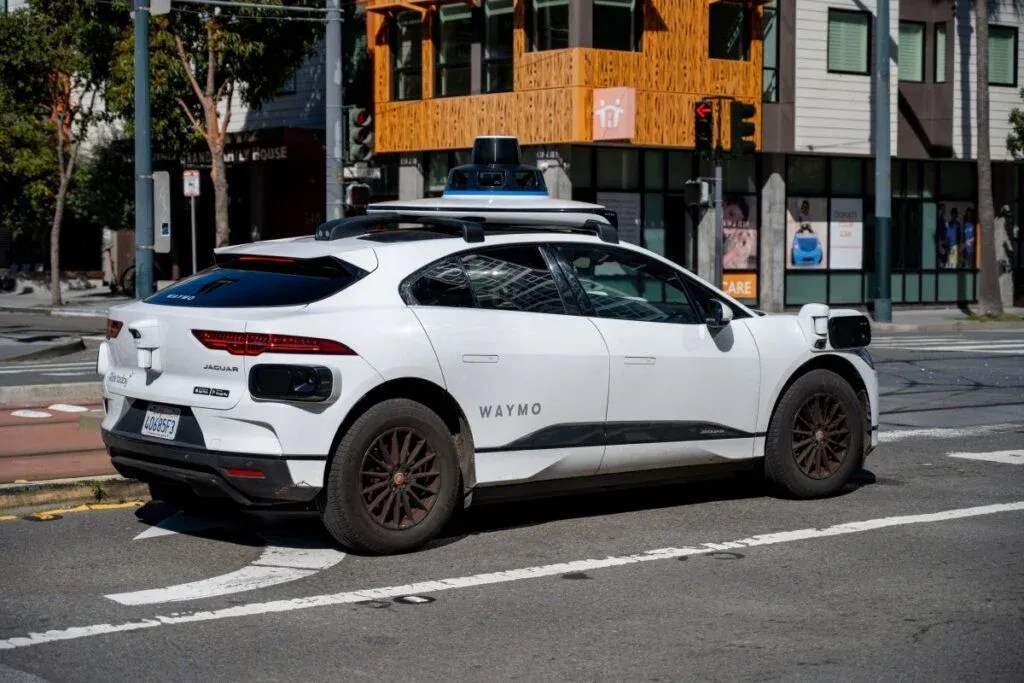
- Waymo and Baidu’s Apollo Go achieve over 14M and 250K weekly fully driverless rides respectively, accelerating global robotaxi adoption in San Francisco, Beijing, and London
- Meta pauses Horizon OS licensing to third-party AR/VR headset makers amid $4.4B Reality Labs losses, delaying consumer AR glasses rollout to 2026 and shifting focus to AI-powered smart glasses
Robotaxi Mess Fees: Tesla, Waymo, Uber Align for 2026 Scalability
As robotaxi operators prepare for 2026 expansion, a unified strategy has emerged: $50–$150 fees for rider-induced messes. Tesla’s Austin rollout, paired with similar policies from Waymo and Uber, marks more than cost-shifting—it’s a deliberate push for scalable operations.
Why Are Robotaxi Operators Adopting $50–$150 Mess Fees?
The fees target specific rider behaviors and deliver measurable gains:
- Tesla (Austin): $50 for minor spills, $100–$150 for unreported/severe messes; cut downtime by 12% in pilots.
- Waymo (LA/SF): $50–$100 fines + $20–$80 towing; improves incident data capture and funds outage response.
- Uber (Dallas): Undisclosed damage fines; 8% reduction in post-ride damage reports vs. baseline. Fees convert unplanned maintenance into recoverable costs, critical as fleets scale from hundreds to tens of thousands.
How Did These Policies Converge So Quickly?
Convergence happened fast: December 2025 saw Tesla email fees, Waymo add towing-assist, Uber announce damage fines. By year’s end, all three used $50–$150 bands—driven by industry benchmarking, building on ride-hailing precedents (Uber/Lyft’s $20–$150 fees) and shared data. A unified standard ahead of 2026 rollouts.
What Do Industry Data Patterns Reveal About Scalability?
Data reveals three scalability drivers:
- Unified fees cover cleaning/labor/downtime costs across operators.
- Pre-emptive recovery (Uber’s pilot) stabilizes budgets before mass expansion.
- Hybrid models (fees + towing) balance penalties with operational safety nets. Operators now predict availability within ±5%—key to hitting 2030’s $2bn annual revenue target.
What’s Next for Mess Fees and Robotaxi Growth?
2026–2028 will see:
- Regulation: Likely $150 fee caps to protect consumers, with transparent reporting requirements.
- Dynamic pricing: LiDAR sensors to auto-calculate fees based on spill volume, cutting disputes by >30%.
- Gig market: Towing-assist platforms could reduce incident resolution time from 45 minutes to <20. Success depends on transparency: Operators need clear billing APIs to avoid backlash; riders benefit from pre-trip fee visibility (Tesla’s audit showed 12–18% lower messes with clear communication).
Mercedes AMG GT XX Prototype: 1,360 HP EV Sets New High-Performance Benchmark
Mercedes-Benz’s unveiling of the AMG GT XX prototype marks a pivotal moment in the evolution of high-performance electric vehicles (EVs). With 1,360 hp, an 800-volt architecture, and a 224 mph top speed, the four-door sports sedan doesn’t just challenge existing EV flagships—it redefines what’s possible for luxury electric performance.
What Makes the Mercedes AMG GT XX Prototype a Game-Changer for EVs?
At its core, the AMG GT XX is built on the first dedicated AMG.EA EV architecture, engineered to balance extreme power with daily usability. Unlike many high-performance EVs that prioritize speed over practicality, this four-door sedan bridges the gap between hypercar-level acceleration and real-world function. By targeting a 0.198 Cd drag coefficient (among the lowest for four-door sedans) and achieving a 224 mph top speed (surpassing most ICE hypercars), Mercedes has set a new benchmark for electric vehicle capability.
How Do Its Technical Specs Redefine High-Performance EV Standards?
The prototype’s specs are a masterclass in engineering efficiency:
- Power Output: 1,360 hp (≈1,000 kW) — sets a production-level record, exceeding current EV flagships by ~30%.
- Top Speed: 224 mph (≈360 km/h) — surpasses the 200 mph threshold of most ICE hypercars, validating aerodynamic and drivetrain integration.
- Drag Coefficient: 0.198 Cd — among the lowest for a four-door sedan, supporting high speed without excessive power draw.
- Battery & Charging: 800-volt architecture with a Formula-1-derived pack — enables sub-15-minute charging (adding ~200 miles of range) on Tesla Superchargers and improves thermal management.
- Range: ~200 miles (standard) / ~248 miles (tested) — establishes a baseline for high-performance EVs, balancing power with real-world usability.
- Motor Efficiency: Smaller, lighter motor design (vs. conventional radial-flux motors) — delivers higher specific power (kW/kg) and reduces rolling resistance, aiding low drag and top speed.
- Durability: 40,000-mile endurance test in <8 days — demonstrates thermal resilience and battery durability under extreme load.
What Impact Will This Have on the EV Market and Competitors?
The AMG GT XX reshapes the EV landscape in key ways:
- Performance Arms Race: Rivals (e.g., Lucid Air Dream Edition, Porsche Taycan Turbo S) must re-evaluate power targets and adopt 800-volt+ platforms to stay competitive.
- Charging Infrastructure: Tesla Supercharger compatibility signals a shift toward cross-network fast-charging standards, accelerating industry-wide 800-volt adoption.
- Luxury Segment Differentiation: By combining hyper-car speed with four-door practicality, Mercedes creates a new “luxury performance EV” sub-segment, replacing both flagship sedans and traditional supercars.
- Regulatory Context: High-power EVs raise grid demand concerns, but Mercedes’ energy-efficient motor architecture could model how to meet future EU/US emission targets while delivering extreme performance.
How Quickly Did Mercedes Develop the Prototype?
The timeline underscores Mercedes’ engineering agility: from 2023–2024 conceptualization of the AMG.EA architecture to early 2025 drivetrain bench-testing (achieving >900 kW) and mid-2025 aerodynamic optimization (hitting 0.198 Cd), the team compressed a typical 4–5 year cycle into ~2 years. This rapid progress, driven by software-focused engineering and F1-derived tech transfers, highlights the automaker’s commitment to electric performance leadership.
What’s Next for the AMG GT XX and the EV Industry?
In the short term (12 months), expect limited-run production teasers targeting affluent enthusiasts. Medium-term (2–3 years), a production model could retail for $250k–$300k, with optional extended-range packs. Long-term, the AMG.EA platform may expand across Mercedes’ EQ lineup, spreading 800-volt architecture to midsize models and accelerating industry-wide adoption of ultra-high-power EVs.
For the EV industry, the AMG GT XX is more than a prototype—it’s a roadmap. By proving extreme performance and practicality can coexist in an electric vehicle, Mercedes has raised the bar, ensuring the future of high-performance EVs will be faster, more efficient, and more accessible than ever before.
Waymo and Baidu’s Robotaxi Rides Surge: Accelerating Global Adoption in SF, Beijing, London
Waymo and Baidu’s Apollo Go are scaling fully driverless rides at breakneck speed—14 million annual trips for Waymo, 250,000 weekly for Apollo Go—paving the way for global robotaxi adoption in San Francisco, Beijing, and London.
What’s driving their ridership growth?
- Waymo’s 800+ Bay Area fleet has logged 20 million miles in 2025, while Apollo Go’s 1,200+ units achieve 208,000 rides per vehicle annually—thanks to dynamic pricing and trip-matching that cuts dead-heading by 18%.
- Safety leads: Zero fatalities in 2025, with Waymo at 0.03 disengagements per 10k miles and Apollo Go at 0.02—industry-leading reliability.
How are they fixing operational risks?
- Grid failure, a top urban risk, was solved by Waymo’s OTA patch (dark signals = four-way stops) and 30-minute on-board batteries, reducing downtime from 4 hours/year to <30 minutes.
- Apollo Go’s dual-power setup (grid + municipal batteries) ensures 99.95% Beijing uptime. LiDAR + radar fallbacks boost fog-weather service by 12%.
Why London 2026 matters?
- Both target London 2026, complying with the UK’s Automated Vehicles Act (mandating fallback power and sensor redundancy). Waymo’s UPS trials and Apollo’s dual-source design already meet rules, positioning them to lead Europe.
- 2026 projections: Waymo 850k weekly US rides (up 21%), Apollo 300k global (up 20%)—with Shanghai/Wuhan/London expansions.
What’s next for cities and investors?
- Regulators should mandate 30-minute power reserves to standardize safety and cross-border deployments.
- Investors should back energy-storage R&D: Fleets with storage see ≤0.5% service loss vs. >2% without—driving compliance premiums.
- For riders, this means robotaxis are moving from niche to routine faster than expected.
Meta’s Horizon OS Pause: $4.4B Losses Force AR Delay and AI Smart Glasses Pivot
Meta’s decision to pause Horizon OS licensing to third-party AR/VR makers, delay consumer AR glasses to 2026, and shift focus to AI-powered smart glasses stems from a $4.4 billion Reality Labs operating loss—reshaping its strategy to target higher-growth AI devices.
What Drove Meta’s Horizon OS Pause and AR Delay?
The moves are rooted in fiscal urgency: Reality Labs’ $4.4 billion FY2024 operating loss triggered a senior-level cost-containment review, leading to a 30% cut to Meta’s Metaverse budget (≈$3 billion), a freeze on Horizon OS licensing to third parties (announced December 17, 2025), and a 35% year-over-year drop in developer platform investments. Partners like Vuzix and Collins Aerospace responded by pushing their roadmaps to 2026–2027, while Meta’s own Phoenix mixed-reality glasses launch was delayed, causing a 4% Q4 stock dip.
Why Are AI-Powered Smart Glasses Now Meta’s Priority?
Meta is redirecting $3 billion in R&D funds to AI-powered smart glasses—lightweight, always-on devices—because the AI glasses market (forecast to reach $6–10 billion by 2028 with a 45% compound annual growth rate) far outpaces the mixed-reality headset market (projected at $2 billion by 2028). The shift leverages Meta’s existing AI assets (large language models, computer vision) but is complicated by regulatory risks: Mark Zuckerberg’s comment that 2026 AR adoption could widen an “economic divide” sparked U.S. congressional hearings and an EU privacy review, potentially delaying launches.
What Competitive Risks Does Meta Face in the AI Glasses Race?
Rivals are already capitalizing on Meta’s delay: Warby Parker and Google plan 2026 global launches of AI smart glasses priced at $299–$599, Apple is rumored to release “Apple Glass” late 2026, and Snap aims for an early 2026 launch with social AR-focused specs. IDC data quantifies the threat: combined Warby Parker/Google shipments could hit 1.2 million units in 2026, compared to Meta’s projected 0.4 million—a 12-point gap that puts Meta at risk of losing first-mover momentum in a critical growth market.
Meta’s pivot is a fiscal survival play, but overcoming the $4.4B loss requires balancing cost cuts with AI innovation. To compete, it must reopen Horizon OS with tiered partnerships, accelerate AI glasses prototyping, and invest in privacy compliance to avoid regulatory delays. If it succeeds, AI glasses could offset $500M of 2024 losses by 2028—but the 12-month rival head start makes this a high-stakes race.



Comments ()