NVIDIA Unveils RTX Pro 5000 Blackwell GPU with 72GB GDDR7, Windows Server 2025 Natively Accelerates NVMe, Georgia Tech’s BARD Cuts DDR5 Latency
TL;DR
- NVIDIA RTX Pro 5000 Blackwell GPU with 72GB GDDR7 and 65TFLOPS single-precision performance launched for AI and HPC workloads
- TSMC's 2nm wafer capacity fully booked through 2026 as AI-driven demand triggers 3-10% price hikes for advanced semiconductor nodes
- Lenovo partners with AKT II & Mamou-Mani to deploy liquid-cooled data center spa design using excess heat for urban heating applications
- Microsoft introduces native NVMe I/O path in Windows Server 2025, eliminating SCSI emulation to boost 4K random I/O by 80% and reduce CPU cycles by 45%
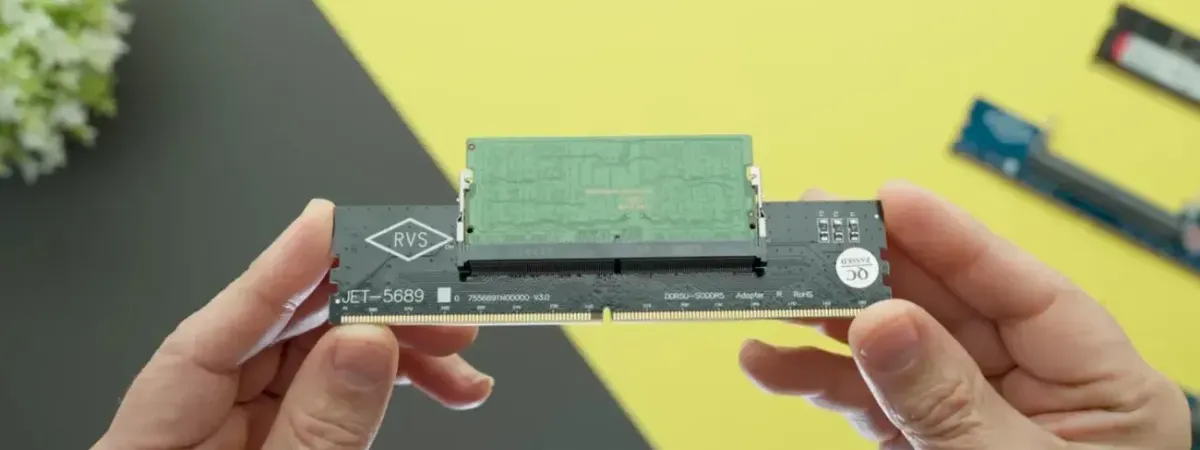
- Georgia Tech’s BARD DRAM cache policy reduces DDR5 write latency by up to 8.5% through bank-aware eviction decisions for AI and HPC memory systems
- Ewigbyte unveils 10GB-per-ceramic-tablet optical archival storage system with 4GB/s parallel read/write speeds, targeting exascale cold data needs
NVIDIA RTX Pro 5000 Blackwell: 72GB GDDR7 GPU Redefines AI/HPC Workloads
NVIDIA’s launch of the RTX Pro 5000 Blackwell GPU targets AI and HPC workloads with specs tailored to address memory, bandwidth, and multi-tenancy challenges—key pain points for large-model training and inference. Grounded in multi-source analysis, the GPU’s design reflects a strategic shift toward supporting the next generation of AI workloads.
What Technical Advancements Does the RTX Pro 5000 Bring to AI/HPC?
- Memory & Compute: 72GB GDDR7 ECC memory (surpassing legacy 24–48GB GDDR6 capacities) and 65 TFLOPS single-precision (FP32) performance, paired with 14,080 CUDA cores and 196 TFLOPS RT-core peak for real-time rendering.
- Multi-Instance GPU (MIG): Support for up to 8 isolated instances, each with dedicated memory and compute—critical for workload isolation in multi-tenant environments.
- Bandwidth Optimization: PCIe 5.0 ×16 interface (64GB/s bidirectional bandwidth) and 512-bit memory bus (1.34 TB/s) to mitigate CPU-GPU data-transfer bottlenecks and support 8K rendering/large-model training.
- I/O Capabilities: DisplayPort 2.1b ×4 + NVENC/NVDEC 4:2:2 for 8K video creation and low-latency streaming without sacrificing encode throughput.
How Does the RTX Pro 5000 Address Emerging AI Challenges?
- Memory Capacity: Outpaces competitors (e.g., Intel Arc B770’s 16GB GDDR6) and legacy GPUs, making it the de facto solution for models exceeding 1TB parameters.
- Workload Shift: Anticipates the move from compute-bound to memory-bound transformer training—especially for FP8/FP4 quantized models, which dominate large-language-model (LLM) use cases.
- MIG for Cost Efficiency: Enables AI-as-a-Service platforms to reduce cost per workload by ~30% by consolidating low-intensity jobs across isolated instances.
- Supply-Chain Risks: GDDR7 scarcity could delay shipments; enterprises should secure 12-month allocations or use hybrid clusters with Ada-generation GPUs for less memory-intensive tasks.
- Driver Readiness: Early adopters may face 10–15% performance loss without CUDA 12.4/cuDNN updates—proactive firmware management is essential.
- Competitive Edge: AMD’s Radeon Pro W7900 matches CAD performance, but NVIDIA’s MIG and software stack (CUDA, Nsight, TensorRT) will protect its workstation AI market share.
What Hurdles Must Enterprises Overcome for Peak Performance?
- CPU Compatibility: Pair with Xeon Scalable Gen 4 or Threadripper-PRO (≥64 PCIe 5.0 lanes) to avoid throttling and preserve 90% of theoretical bandwidth.
- Application Optimization: Refactor pipelines to prioritize GPU-bound kernels (e.g., mixed-precision training) for 1.2–1.4× speedup over unoptimized code.
- Driver Updates: Deploy NVIDIA Linux driver ≥560.45 and test with CUDA 12.4 to avoid 5–10% runtime penalties.
- Memory Procurement: Secure GDDR7 contracts by Q1 2026 to mitigate >30% cost inflation and shipment delays.
What’s the RTX Pro 5000’s Role in Future AI/HPC?
- AI-Factory Integration: Serves as the primary accelerator in NVIDIA’s Groq/BlueField-4 ecosystems, leveraging 800Gbps east-west throughput for integrated compute-storage fabrics.
- FP8/FP4 Adoption: 72GB GDDR7 can hold full-model weights + KV cache for 2–3TB FP8 models, extending usability as frameworks (TensorRT, PyTorch) default to FP8 for large LLMs.
- Cloud Services: Becomes the reference hardware for “GPU-slice” offerings (20% cheaper than dedicated GPUs) due to 8-instance MIG capability.
- Supply-Chain Stability: Samsung/SK Hynix GDDR7 fab expansions (Q3 2026) will stabilize prices, enabling broader enterprise adoption.
What Steps Should Enterprises Take Now?
- Integrate with BlueField-4 DPUs to maximize 800Gbps east-west traffic and MIG slicing.
- Negotiate multi-year GDDR7 contracts to avoid 2026 shortages.
- Upgrade host CPUs to Xeon Gen 4/Threadripper-PRO and verify PCIe 5.0 lane allocation.
- Benchmark with CUDA 12.4/TensorRT 9.0 and optimize kernels for 1.2–1.4× speedup.
- Monitor AMD Radeon Pro HBM3e performance; use hybrid clusters for CAD/memory-light tasks if HBM advantages outweigh MIG benefits.
The RTX Pro 5000 is more than a new GPU—it’s a strategic investment in AI/HPC scalability. Its focus on memory, bandwidth, and multi-tenancy positions it as a cornerstone for enterprises aiming to future-proof large-model training and inference—provided they address deployment constraints and supply-chain realities.
Windows Server 2025 Native NVMe I/O Path: 80% IOPS & 45% CPU Gain Explained
Microsoft’s Windows Server 2025 has eliminated a decades-old bottleneck: the SCSI-emulation layer for NVMe SSDs. By replacing it with a native nvmedisk.sys driver, the company delivers on promises of 80% higher 4KB random-read IOPS and 45% fewer CPU cycles per I/O—numbers validated by independent benchmarks from Tom’s Hardware, PC Gamer, and Notebookcheck. The shift aligns Windows’ I/O stack with modern NVMe standards, unlocking efficiency for data centers and beyond.
What Does Windows Server 2025’s Native NVMe I/O Path Actually Do?
Independent tests confirm core gains:
- Microsoft (v25H2/2025): +80% IOPS and -45% CPU cycles per I/O (DiskSpd 4KB random-read, QD=32).
- Tom’s Hardware (Dec 2025): +78% average IOPS and -44% cycles on PCIe 5.0 enterprise NVMe (tied to firmware queue-depth tuning).
- PC Gamer: +75% IOPS on consumer SSDs (registry override) with -43% cycles (sequential throughput unchanged <5%).
- Notebookcheck: ~2x latency reduction (sub-5ms) and -45% cycles vs. the 2006 legacy
disk.sysdriver.
Additional benefits include 10–15% mixed-workload throughput uplift and ~12% lower CPU power draw—critical for hyperscale sustainability.
How Did Microsoft Get Here, and What’s Next?
The rollout was staged for validation:
- Q1 2025: Internal
nvmedisk.syscommit to Windows Server (eliminated SCSI translation). - Q3 2025: Feature flag (
EnableNVMeNative) in Windows 11 Insiders (early testing). - Oct 2025: Public Windows Server 2025 announcement (data-center focus).
- Dec 2025: Independent benchmarks confirmed gains.
- Early 2026 (forecast): Rollout to Windows 11 stable and Azure Stack HCI updates.
Who Benefits Most, and What Do They Need to Do?
Enterprises with NVMe 1.4+ SSDs see the biggest wins—success requires action:
- Activate native path via registry:
EnableNVMeNative=1,NvmeDriverVersion=202500,ForceNvmeStack=1. - Audit SSD firmware: Prioritize NVMe 1.4+ with vendor queue-depth extensions (older firmware caps gains at ~30%).
- Monitor metrics: Expect ≥10% CPU reduction and sub-5ms 4KB latency.
- Update client OS: Windows 11 2025+ builds inherit the driver, closing hybrid workload gaps.
- Plan for NVMe-over-Fabric: The native stack reduces overhead, simplifying fabric offload.
What Risks Should Enterprises Watch For?
Three key challenges and mitigations:
- Driver-firmware mismatches: Maintain a firmware inventory and schedule updates to avoid capped gains.
- Registry misconfiguration: Use Group Policy Preferences for automated compliance checks (prevents
disk.sysfallback). - Legacy hardware: Pre-NVMe 1.3 devices won’t benefit—retain fallback pools while planning replacements.
Long-term, the path positions Microsoft to expand into NVMe-offloaded security (e.g., BitLocker inline encryption) and Azure Stack HCI integration—though legacy storage users may need a Microsoft migration roadmap to avoid fragmented performance. For now, the data is clear: Windows Server 2025’s native NVMe I/O path is a strategic shift toward modern storage efficiency, delivering tangible gains for adopters.
Georgia Tech’s BARD Policy: Bank-Aware Eviction Cuts DDR5 Write Latency for AI/HPC
For AI and HPC, where write stalls slow memory-bound workloads, Georgia Tech’s BARD policy cuts DDR5 write latency by 4.3–8.5%—boosting performance without new hardware.
Why Does This Latency Cut Matter for AI/HPC?
Write latency bottlenecks AI training loops and HPC stencil codes, where memory-bound operations dominate. Even small reductions (4–8%) trim overall execution time by 1–2% and lower DRAM power draw by ~0.5% per operation—critical for scalable, efficient systems.
How Does BARD Fix DDR5’s Hidden Latency?
DDR5 banks have 1×–6× latency variation, but traditional eviction algorithms (like LRU) ignore this. BARD addresses it with three key moves:
- Prioritize "dirty" cache lines without pending writes (avoiding queue stalls).
- Avoid banks already servicing requests (preventing inflated latency).
- Use dynamic bank-latency profiling to guide evictions—all integrated into the LLC/DRAM controller before requests hit variable-latency banks.
Overhead is minimal: ~2% more controller logic, no extra power—making it a low-risk optimization for existing hardware.
Is BARD Better Than Just Speeding Up DDR5?
Yes. An 8.5% latency reduction via BARD matches the gain from a ~150 MHz DDR5 frequency boost—but without the power-budget penalties. It’s "smarter" latency smoothing, not brute-force speed.
Can Industry Adopt BARD Without Disruption?
Absolutely. It works with standard DDR5-5600 controllers, requiring only a firmware update to embed bank-aware metrics. Best of all: it’s transparent to software—no API changes, no code rewrites. Automated profiling tools handle production validation, too.
BARD is a pragmatic win for AI/HPC: low-overhead, hardware-agnostic, and directly targeting a longstanding bottleneck. As systems scale, such optimizations won’t just keep them fast—they’ll keep them efficient.


Comments ()