U.S. Conducts Double-Tap Strikes on Venezuelan Boats Amid Senate Probe Over Legal Legitimacy and War Powers

TL;DR
- EU fines X $140M for violating Digital Services Act by failing to curb disinformation and ensure transparency, sparking global free speech debate
- U.S. military conducts double-tap strikes on Venezuelan drug boats in Caribbean, sparking legal challenges and Senate scrutiny over JAG Corps compliance
- Trump administration moves to expand nuclear energy with executive orders accelerating reactor licensing, amid $22B in clean energy project cancellations
- Philippines uncovers 11 distinct corruption types in 51 cases, with kickbacks (15.1%) and election fraud (11.8%) most prevalent in political system
- U.S. Supreme Court hears case on presidential power to remove heads of independent agencies, testing Humphrey’s Executor precedent and rule of law
- Puerto Rico passes law extending government document release timelines from 10 to 20 business days, criticized as democracy-backsliding by press and civil rights groups
U.S. Double-Tap Strikes on Venezuelan Boats: Legal Scrutiny and Senate Questions
The U.S. military’s double-tap strikes on Venezuelan drug boats in the Caribbean have evolved from a single tactical operation into a broader strategic campaign, drawing sharp legal challenges and Senate scrutiny over Justice Advocate General (JAG) Corps compliance.
What Defined the Strike Campaign’s Timeline and Impact?
- September 2, 2025: First kinetic strike (laser-guided GBU-69) on a "narco-terrorist" boat killed 9 of 11 occupants; two survivors clung to wreckage.
- 45 minutes later: A second "double-tap" strike (AGM-176 Griffin missile) killed the two survivors as they attempted to flip the hull—an incident captured in leaked video.
- September–December 2025: 22 total boat strikes in the Caribbean and Eastern Pacific, with 87 reported deaths, disrupting at least one 25,000-pound cocaine shipment.
- November 2025: Treasury and State Department sanctions on drug cartels (Cartel de los Soles, Tren de Aragua) and six Venezuelan oil tankers, including freezing assets of Maduro allies and seizing 1.8 million barrels of crude.
- December 10, 2025: Coast Guard/Navy seized the Skipper tanker (2 million barrels of crude), alleged to funnel oil to Iran-linked networks—cited as the administration’s "largest ever" such seizure.
- December 14, 2025: Senate hearing (Senators Mark Warner, Mike Johnson) demanded JAG documentation of execution orders and vessel drug verification, amid bipartisan war-powers concerns.
Why Are Legal and Congressional Questions Growing?
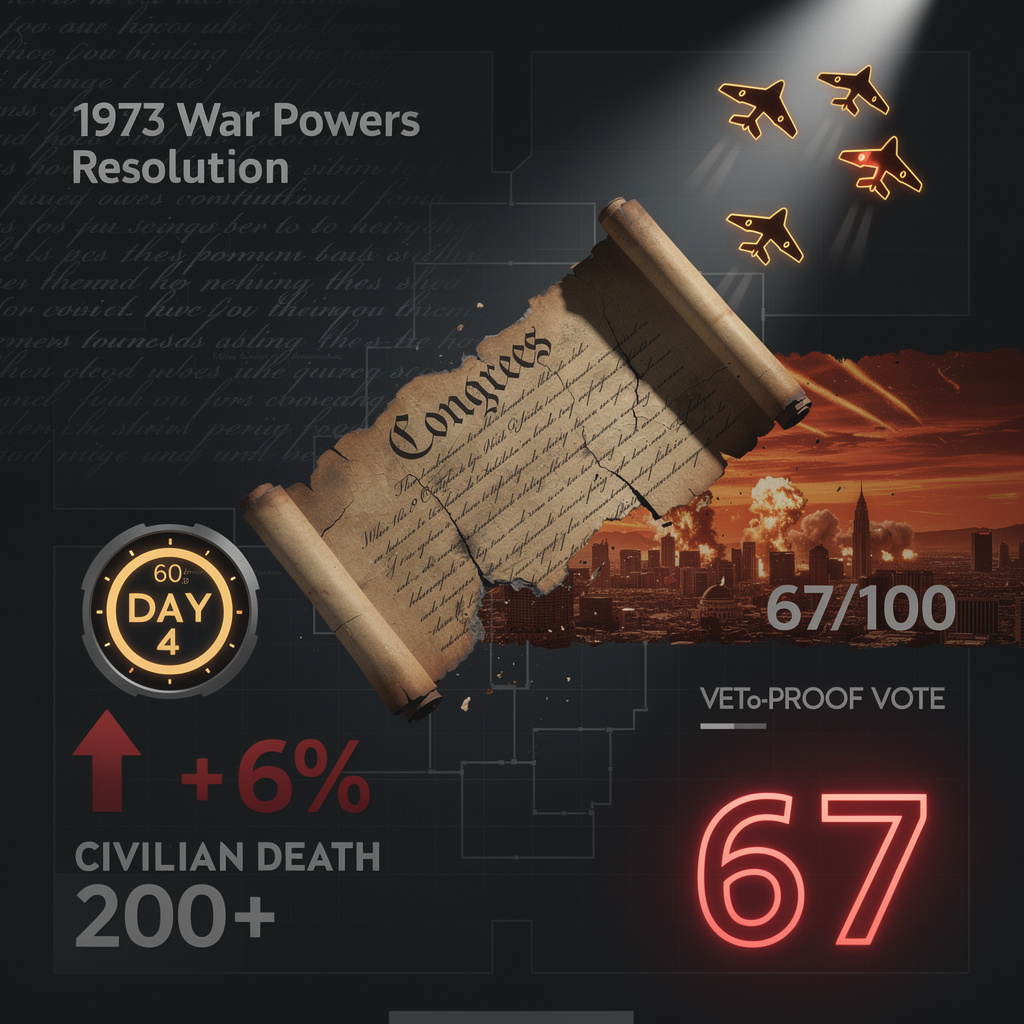
The campaign has exposed an "executive-legislative disconnect": No formal War Powers Resolution was passed before strikes, and JAG compliance is under fire for relying on unpublicized Office of Legal Counsel (OLC) memos. Democratic senators warn of International Humanitarian Law (IHL) violations—survivors of the initial strike were "hors de combat" (outside combat) under Geneva Conventions Articles 46/47, making their killing unlawful. Republicans, including Rand Paul, echo constitutional concerns, arguing presidential authority to use force without congressional approval is limited.
What Are the Competing Legitimacy Claims?
- Administration: Frames strikes as lawful self-defense against "non-international armed conflict" with narcotics-terrorist groups, citing OLC memos and denying "kill-them-all" orders.
- Democratic Senators: Demand redacted but verifiable JAG execution orders to confirm vessel drug loads, fearing war-powers violations.
- Republicans: Mixed—some support robust action, others label strikes "summary executions" due to lack of congressional oversight.
- Human Rights NGOs (Amnesty, ACLU): Condemn the double-tap as "extrajudicial killing," demanding full video release and an independent IHL review.
- International Actors (Russia, Iran): Denounce seizures as "piracy," using the incidents to politicize broader U.S.-Venezuela tensions.
What Does the Future Hold for the Campaign?
- Congressional War Powers Resolution: 60% likelihood—possible House passage with a 60-day reporting requirement for future strikes; Senate vote uncertain.
- More Double-Tap Strikes: 80% likelihood—2–3 additional strikes by year-end, targeting vessels linked to the Skipper shadow fleet.
- Land-Based Escalation: 30% likelihood—presidential hints at ground action, but legal/logistical hurdles (e.g., IHL, congressional approval) persist.
- International Legal Challenges: 50% likelihood—NGOs may file complaints at the ICC or U.S. federal courts, potentially forcing OLC memo declassification.
- Oil Market Impact: 20% likelihood—short-term Brent price spikes ($0.30–$0.50/barrel), no sustained disruption.
Without clearer statutory authority and transparent JAG documentation, the U.S. risks domestic political pushback and international condemnation. Prompt, bipartisan solutions—like a "War Powers Transparency Act"—are critical to sustaining the operation’s legitimacy.
Puerto Rico’s 20-Day Document Rule: Efficiency or Democratic Backsliding?
Puerto Rico recently extended government document release timelines from 10 to 20 business days, a change press and civil rights groups label democratic backsliding. Enacted in <2 months with minimal public input, the law adds delays, sanctions, and restrictions—raising questions about transparency and accountability.
How Quickly Did the Law Move Through Legislature?
The bill progressed rapidly: Senate passage (18-9, mid-October) → House approval (29-24, late October) → governor’s signature (December 14)—all within <2 months. A single, short-notice public hearing allowed limited stakeholder input, despite civil society submitting a veto appeal.
What Quantitative Shifts Did the Law Introduce?
- 100% longer processing window (10→20 business days).
- Optional 1-month extension for requests over 300 pages or older than 3 years (new).
- New sanctions: monetary fines and administrative penalties for non-compliance (previously voluntary).
- Reduced hearings: from a historical minimum of 2 to 1 short-notice session.
Who Supports and Opposes the Measure?
- Press coalitions: Oppose, arguing it undermines watchdog functions and enables "democracy backsliding."
- Civil rights NGOs: Oppose, citing violations of the constitutional right to information and a precedent for secrecy.
- Governor/administration: Support, framing it as "administrative efficiency" and "protection of sensitive data."
- Majority legislators: Support, claiming it reduces confusion in public records requests. Opposition is unified across press and civil rights groups; support aligns with government party lines.
What Key Patterns Emerge?
- Rushed process: Prioritization of the bill over thorough public scrutiny (compressed timeline, short hearing).
- Systemic delay: Longer deadlines plus optional extensions formalize slower access to public records.
- Coercive regime: Shift from voluntary transparency to enforced compliance via penalties.
- Normative clash: Administration’s "efficiency" framing vs. civil society’s "accountability" concerns.
What Are Potential Short- and Medium-Term Impacts?
- Information latency: Journalists and researchers face ≥10-day delays for routine requests, extending investigative cycles.
- Legal exposure: Agencies risk financial penalties, which may divert budgets from service delivery.
- Democratic perception: Lower transparency ratings could affect federal funding and investment.
- Precedent risk: May serve as a model for other U.S. territories to restrict public record access.
How Does This Compare to Federal or Past Rules?
- U.S. federal FOIA: Uses a 20-business-day deadline with no extensions for large/old requests; Puerto Rico’s optional 1-month extension makes it more restrictive.
- 2019 Puerto Rico law: The previous 10-day standard was doubled, marking the most significant transparency regression in six years.
While the administration cites efficiency, the law’s doubled deadlines, new extensions, and rushed passage align with civil society’s assessment of reduced transparency. Its real-world impact on Puerto Rico’s accountability ecosystem will depend on compliance, legal challenges, and ongoing public scrutiny.
Comments ()