U.S. Seizes Venezuelan Oil Tanker Amid Escalating Sanctions, Russian Bombers Deployed, and Global Power Struggle Intensifies
TL;DR
- U.S. Seizes Venezuelan Oil Tanker Off Coast, Escalating Tensions Amid Trump’s Military Threats and ICC Sanctions
- Senate Rejects Extension of Health Care Subsidies, Triggering Potential 43-Day Government Shutdown and Million-Dollar Cost Surge
- TMC Government in West Bengal Faces Backlash as 35 Communities Removed from OBC List Amid Allegations of Religious Bias and Procedural Violations
- Trump Administration Pushes for Voter Roll Purges Under NVRA, Sparking Legal Battles and Privacy Concerns Across 12 States
- Philippines Dissolves Parliament Amid Flooding Crisis, Setting 45–60 Day Timeline for New Elections Under Anutin Charnvirakul
- Ukraine and Russia Clash as U.S. Joins Peace Talks; Kremlin Demands Full Withdrawal from Donbas, While Ukrainian Forces Strike Caspian Sea Supply Routes
U.S. Seizes Venezuelan Oil Tanker: Escalating Tensions and Sanctions Fallout
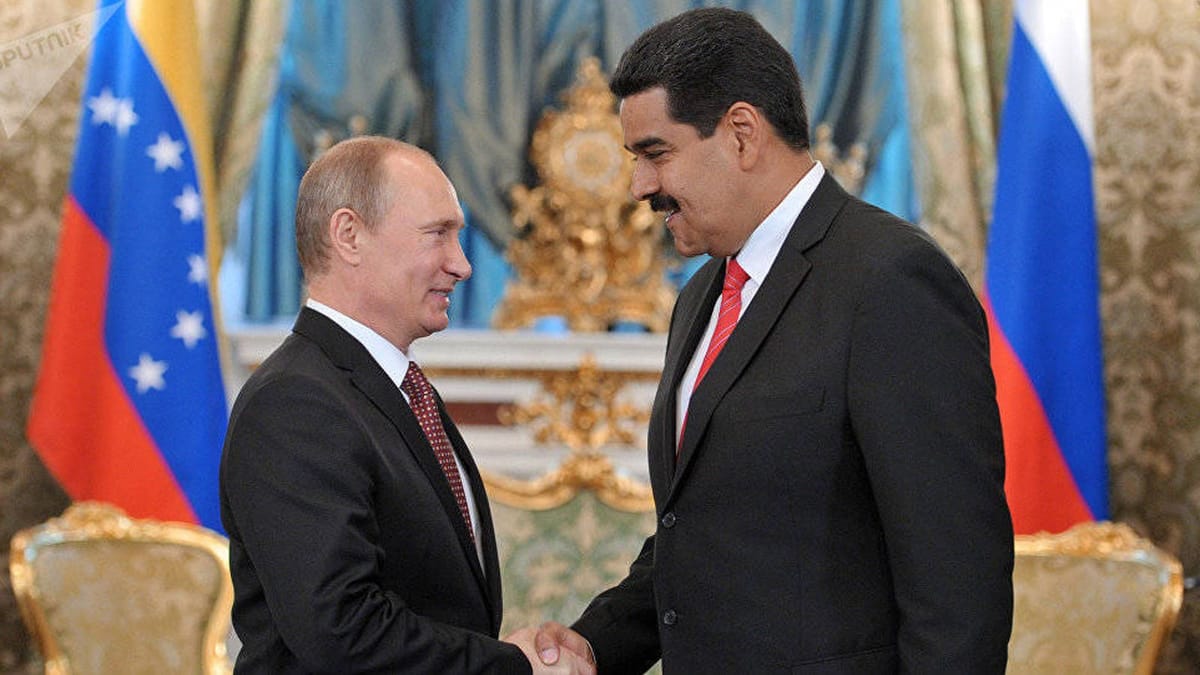
On December 11, 2025, U.S. forces seized the Venezuelan VLCC Skipper—a 332-meter tanker carrying ~1.0 million barrels of José Export crude—offshore, a move linking sanctions, kinetic action, and geopolitical signaling amid President Trump’s military rhetoric and ICC penalties against the Maduro regime.
What Drove the Seizure?
The operation used two MH-60S Seahawk helicopters from the USS Gerald R. Ford to deploy 10 Coast Guard and 10 Marine personnel. Legally, it relied on a pre-approved OFAC warrant (2022 SDN list) and ICC sanctions. The cargo, part of 13M barrels shipped annually since 2021, is valued at ~$5.5 billion ($70/bbl).
How Does This Fit U.S. Strategy?
The seizure follows a "sanctions-then-seizure" cycle: December 12 saw OFAC add three nephews of First Lady Cilia Flores and six shell vessels to the SDN list, freezing ~$250 million in assets. Multi-agency coordination—Coast Guard (maritime law), FBI (warrants), DHS (intelligence), DoD (naval support)—marked tactical sophistication. The Skipper had spoofed its AIS (turning it off 360nm offshore) and used a Cook Islands flag, tactics shared by ≥30 "shadow-fleet" tankers since 2023.
What Geopolitical Reactions Are Emerging?
Venezuela’s Maduro labeled the raid "international piracy" and called for mobilization. Russia, in a direct call to Maduro, deployed two Tu-160 bombers to a nearby base, framing the incident as U.S. aggression. China reaffirmed a 2023–2026 joint venture to raise Venezuelan output to 60k bpd and announced a 20% Q4 increase in PDVSA crude purchases. In the U.S., bipartisan war-powers resolutions (sponsored by Booker, Graham, Van Hollen) seek congressional authorization for future interdictions, while the House Defense Committee drafted a contingency plan for 2,200 Marines and 90 aircraft in the Caribbean.
What Economic and Strategic Impacts Will Follow?
Maduro’s Treasury faces ~$5–6 billion in lost revenue. Oil markets reacted modestly: Brent rose 27¢ to $62.21/bbl (0.4%), WTI 21¢ to $58.46/bbl, reflecting supply-risk sensitivity. The seizure removed just ~1% of Venezuela’s 2025 export volume—shadow fleets (AIS masking, flag changes) remain resilient. Great-power competition intensified: Russia’s bombers and China’s purchases signal coordinated countermeasures. Domestically, congressional scrutiny (war powers bills) and a $50 million bounty on Maduro raise risks of covert actions and intelligence leaks.
What’s Next in the Escalation Trajectory?
Near-term: ≥2 more VLCC seizures targeting Cook Islands, Marshall Islands, or Hong Kong-flagged vessels as OFAC expands its "shadow-fleet" watchlist. The House may pass a War Powers Resolution by January 2026, requiring explicit congressional approval for kinetic action. Russia could dispatch strategic bomber patrols; China may offer new PDVSA credit lines. Brent is likely to trade $61–$64/bbl, with Venezuelan crude carrying a +0.5% geopolitical premium. Long-term: The U.S. may institutionalize "financial-military" coordination, while Maduro’s regime could rely more on state shell companies, Chinese refineries, and shadow fleet shipments. Escalation to land/air strikes could draw Russian or Chinese direct involvement, risking a multilateral Western Hemisphere standoff.
Senate Subsidy Rejection: 43-Day Shutdown Risk, $83B Deficit, and 114% Premium Hikes Loom
What Caused the Senate to Reject Health Subsidy Extensions?
On December 12, 2025, the Senate failed to pass two subsidy-related bills: a Democratic 3-year ACA tax-credit extension (51-48 vote, short of the 60-vote cloture threshold) and a Republican HSA alternative (same 51-48 result). A prior 43-day federal shutdown (Oct 9–Nov 21) ended without addressing subsidies, reinforcing the 60-vote rule as a procedural barrier to action.
How Much Will Subsidy Lapse Cost Americans and the Budget?
If subsidies expire January 1, 24 million ACA enrollees face an average 114% premium hike ($888 to $1,904 annually), with 4 million potentially losing coverage. The Treasury will still spend ~$83 billion over three years via discretionary appropriations, undermining Republican claims of deficit reduction. The GOP’s HSA proposal—offering $1,000–$1,500 per adult—would offset less than 30% of projected premium increases. Republicans cited GAO data on $27 billion in annual ACA exchange fraud to oppose the extension.
Why Can’t Congress Resolve the Subsidy Deadlock?
Political divides persist: 4–5 moderate Republicans (Susan Collins, Lisa Murkowski, Dan Sullivan, Josh Hawley) supported the Democratic extension, but the GOP bloc blocked the HSA. A 43-day shutdown failed to force subsidy concessions, showing limited leverage for Democrats. Rhetoric remains polarized: Senate Majority Leader Chuck Schumer called the HSA “mean and cruel,” while Republicans labeled the extension “waste, fraud, and abuse.” Breaking the 60-vote barrier requires 12 more votes, likely from moderate Republicans.
What Are the Most Likely Outcomes for Health Care Subsidies?
- Bipartisan stopgap (35% likely): A 12–24 month extension funded through existing appropriations could limit deficits to $30–$45 billion and premium increases to ~30% for most enrollees.
- Budget reconciliation (20% likely): Bypassing the 60-vote threshold would reduce political risk for Democrats but risk GOP backlash over “partisan maneuvering”; deficit impact mirrors the stopgap.
- No action (30% likely): Subsidies lapse, doubling premiums for 24 million enrollees, pushing 4 million into uninsurance, and adding $83 billion to the deficit.
- Renegotiated HSA (15% likely): A larger GOP benefit ($2,500 per adult) might cap hikes at 50% but leave 2 million uninsured and cost $150 billion over a decade.
Trump Admin’s NVRA Voter Roll Purges: Legal Clashes and Privacy Risks Across 12 States
The Trump administration’s effort to purge voter rolls under the National Voter Registration Act (NVRA) has shifted from administrative nudging to aggressive litigation, sparking legal battles in 12 states and raising urgent privacy concerns. What began as policy guidance has evolved into a strategy that forces states to hand over sensitive voter data—with far-reaching implications for both election access and civil liberties.
How Did We Get From NVRA Guidance to Litigation-Driven Purges?
The timeline illustrates the shift:
- Dec 1: DHS settled with four Republican-led states (Florida, Indiana, Iowa, Ohio) to expand the State Address Verification and Enumeration (SAVE) program, enabling bulk access to driver’s license records.
- Dec 4: The DOJ filed six civil rights lawsuits demanding unredacted voter data from six states (including Colorado and Georgia), threatening federal injunctions over noncompliance.
- Dec 11: Assistant Attorney General Harmeet Dhillon threatened Georgia with litigation, leading to the cancellation of 580,000 registrations—escalating tension between federal officials and state secretaries. By December 12, the DOJ had filed six more lawsuits, linking SAVE to immigration-status checks and formalizing a move from “policy guidance” to “judicial compulsion,” as state officials warn.
Why Are 12 States Fighting Back Over Privacy?
Twelve state secretaries (from Nevada, Florida, Michigan, and others) submitted critical letters to federal officials, citing risks of exposing personally identifiable information (PII)—including driver’s license numbers and partial Social Security numbers. States like Georgia invoke state privacy laws (e.g., OCGA 21-2-225(b)) to block data sweeps, arguing the administration inverted the NVRA’s original purpose: the law was meant to facilitate voter registration via motor vehicle agencies, not expand collection of sensitive identifiers. The result is a “privacy paradox” where federal “clean-up” efforts risk violating state law and the NVRA’s spirit.
What Risks Does Merging SAVE with Nlets Pose?
The administration’s plan to integrate SAVE with Nlets—a nationwide law enforcement data network—could create a centralized “citizen-profile database,” raising fears of “mission creep” (e.g., immigration enforcement). This policy-to-technology linkage turns the NVRA into a tool for broad data aggregation, not just election integrity—something state officials warn could normalize systemic privacy violations.
What’s Next: Courts, Congress, or More Litigation?
The 30-day forecast is clear:
- High likelihood: More DOJ lawsuits targeting the remaining six states from the December 12 comment list.
- Moderate-high: Preliminary injunctions in Georgia or New York, where courts have recently favored privacy claims.
- Low-moderate: Congressional NVRA amendments—Senate gridlock makes bipartisan action improbable.
- Moderate: Federal rulings limiting Nlets-SAVE integration, per prior cases restricting agency data-sharing beyond explicit congressional authority. Public interest groups (e.g., the League of Women Voters) will likely file constitutional challenges, shifting the battleground to courts, not Capitol Hill.
If current trends hold, hundreds of thousands of registrations could be removed before the 2026 midterms, while courts reshape privacy law around federal data-collection authority. The fight is no longer about “cleaning” rolls—it’s about who controls the information that defines democratic participation.
Thailand Dissolves Parliament Amid Floods: 45–60 Day Election Timeline Explained
How Did Thailand’s Parliament Dissolution Unfold, and What Does the Timeline Imply?
Prime Minister Anutin Charnvirakul—appointed by King Maha Vajiralongkorn—dissolved Thailand’s House of Representatives, triggering a caretaker administration and mandating national elections within 45–60 days (by early February 2026). The King’s Royal Gazette sanctioned the move, ensuring constitutional legitimacy and blocking legal challenges. Opposition blocs (Bhumjaithai, People’s Party) have filed no-confidence motions, raising risks of pre-election parliamentary reshuffles.
Why Are Floods and Budget Freezes Straining Relief Efforts?
Southern Thailand’s flooding—driven by rainfall-induced river overflow—has killed over 160 people and displaced at least 200,000. The caretaker cabinet lacks authority to approve new budgets, forcing relief to rely on pre-existing funds. This squeeze could worsen humanitarian outcomes and erode voter confidence in the incumbent coalition.
How Do Border Clashes and International Pressure Weave Into the Crisis?
Escalated Thai-Cambodian border clashes have caused ≈20 deaths and 200 injuries, prompting U.S. diplomatic intervention (President Donald Trump). External pressure may be weaponized by Thai parties in domestic messaging, blending security concerns with election narratives to shape voter choices.
What Advantages Do Incumbents Hold in the Short Campaign Window?
A 45–60 day timeline limits newcomer campaign buildup, favoring resource-rich incumbent-aligned parties (e.g., Bhumjaithai). The narrow period also pushes opposition to pursue parliamentary motions to reshape the legislative landscape pre-election, increasing post-vote coalition volatility.
What Developments Are Likely in the Next 30 Days?
- Formal Election Schedule: Anutin may announce a timeline by early January to meet the 45-day deadline, fixing campaign periods and pressuring opposition to consolidate.
- Limited Relief Budget: Parliament could pass a narrow emergency appropriation for floods to avoid public backlash, offering modest relief but minimal reduction in displacement/mortality.
- Border Cease-Fire: A U.S.- or ASEAN-mediated truce could ease security tensions, shifting focus to campaigning.
- Opposition Merger: Blocs may unite into an anti-incumbent front to counter incumbent resources, potentially tightening the race and boosting post-election bargaining power.
Ukraine-Russia Standoff: U.S. Peace Plans vs. Military Escalation in Donbas & Caspian
What Are the Latest Key Developments in the Ukraine-Russia Clash?
- United States: Proposed a 20-point peace framework (down from 28) and a Free-Economic-Zone (FEZ) in eastern Donbas, linking economic incentives to Ukraine’s 20-point draft without immediate troop withdrawal demands.
- Kremlin: Reiterated a non-negotiable demand for full Russian withdrawal from all Donbas districts before any cease-fire, eliminating diplomatic middle ground.
- Ukrainian Forces: Conducted drone strikes on Russia’s Filanovsky oil platform (disrupting 100,000 tons of crude, ~€47M) and three Black/Caspian Sea “shadow fleet” tankers, reducing Russia’s illicit oil exports.
- Russia: Reported intercepting >90 Ukrainian drones, with air-defence casualties (7 injured) in the interior city of Tver, highlighting deep-penetration aerial threats.
- EU: Negotiated using ~$149B in frozen Russian sovereign assets for Ukrainian reconstruction, adding a parallel economic lever amid legal challenges.
How Are U.S. Economic Incentives Clashing with Kremlin Territorial Demands?
- The U.S. FEZ proposal aims to decouple economic relief from troop withdrawal, shifting bargaining away from immediate territorial concessions.
- The Kremlin maintains a “zero-sum” narrative, framing any territory-related compromise as a sovereignty loss—hardening its stance against negotiation.
- Ukraine mirrors the U.S. approach by rejecting territorial concessions, emphasizing security guarantees and using military pressure to reinforce economic leverage.
- Frozen asset talks (EU $149B, U.S. $100B potential) create layered financial pressure, independent of the FEZ, to nudge Russia toward concessions.
Why Is the Caspian Sea Becoming a New Front in the War?
- Ukraine’s offshore UAV campaign targets Russian war finance: Strikes on Caspian/Balkan oil infrastructure have disrupted ~$141M in revenue (3x €47M) and 1% of Russia’s monthly export volume.
- Russia is escalating air-defence activity deep inside its territory (e.g., Tver), increasing civilian risk to legitimize its “defensive” posture.
- The campaign serves a dual purpose: degrading Russian revenue streams and signaling willingness to expand battlefield pressure if diplomacy stalls.
How Are Military Actions Shaping Diplomatic Leverage?
- U.S. FEZ Proposal: Ukraine intensified Caspian UAV strikes to raise the cost of Russian stalemate, pressuring Moscow to consider economic trade-offs.
- Kremlin’s Withdrawal Demand: Russia’s air-defence response (Tver casualties) hardens its public stance, reducing flexibility on territorial negotiations.
- EU Frozen Assets: Ukraine’s continued shadow fleet attacks create parallel economic levers, broadening options to combine with the FEZ for diplomacy.
What’s the Outlook for Peace in the Next Two Weeks?
- 30% Likelihood: FEZ-driven breakthrough—if EU/U.S. coordinate on frozen asset loans, Russia may accept limited troop withdrawal from lightly held Donbas villages in exchange for economic gains.
- 55% Likelihood: Stalemate/escalation—Kremlin holds firm on full withdrawal, Ukraine escalates UAV strikes, provoking Russian air-defence retaliation (civilian casualties) and UN condemnation.
- 15% Likelihood: Hybrid compromise—NATO security guarantees + limited FEZ zones could spark short-term lulls, but core positions (territory/economics) remain unresolved.
Key Risks: Civilian casualties in Russia (e.g., Tver) could harden Moscow’s stance; EU frozen asset release might shift Russia’s cost-benefit balance toward limited de-escalation.

Comments ()