IndiGo Crisis Deepens with DGCA Probe & 10% Flight Cuts | Air India Grounding, SpiceJet Surge, Vertical Valo eVTOL Unveil
TL;DR
- IndiGo faces DGCA probe and 10% winter schedule cut after 5,000+ flight cancellations due to pilot and crew shortages
- Air India operated eight commercial flights without valid Airworthiness Review Certificate, prompting DGCA grounding and safety review
- Vertical Aerospace unveils Valo eVTOL aircraft targeting 2028 certification, with UK air taxi routes planned between London, Gatwick, and Oxford
- Russian An-22 transport aircraft crashes during test flight near Uvod Reservoir, killing all seven crew members amid fleet modernization concerns
- SpiceJet to add up to 100 daily flights to offset IndiGo disruptions, boosting capacity with 17 reactivated aircraft and rising stock price
- US and Australia conduct successful MQ-28 Ghost Bat drone test, achieving air-to-air target kill with AIM-120 AMRAAM in Trial Kareela 25-4 exercise
- Boeing delivers 44 commercial jets in November 2025, with 737 MAX accounting for over 70% of total deliveries and 777X orders surge at Dubai Airshow
IndiGo Faces DGCA Probe and 10% Schedule Cut After 5,000+ Flight Cancellations Due to Crew Shortages
What caused IndiGo’s recent operational collapse?
IndiGo cancelled over 5,000 flights between December 2–8, straining more than 200,000 passengers. Daily cancellations rose from 60 to over 200. The primary driver was a 2.7% deficit in available captains—2,357 available against a required 2,422. Outdated crew-rostering systems failed to adapt to stricter Indian Flight-Duty-Time-Limitation (FDTL) rules implemented in November 2025, which reduced weekly night landings from six to two and increased mandatory rest from 36 to 48 hours.
Why did the DGCA intervene?
The Directorate General of Civil Aviation (DGCA) issued show-cause notices to CEO Pieter Elbers and senior officials on December 9. On December 10, the Civil Aviation Ministry mandated a 10% reduction in IndiGo’s winter schedule, cutting daily flights from 2,200 to approximately 1,980. A four-member probe panel and an eight-member oversight team were deployed to IndiGo’s Gurgaon headquarters, requiring daily operational reporting by 18:00.
What immediate actions were taken?
- IndiGo processed full refunds for “lakhs” of passengers, amounting to approximately $100 million.
- The airline presented a corrective roadmap to DGCA, including recruitment targets and roster redesign.
- SpiceJet added up to 100 daily flights to capture displaced demand, increasing its market share by approximately 5%.
What are the key operational metrics?
| Metric | Value |
|---|---|
| Pilot deficit | 2.7% (2,357 available vs. 2,422 required) |
| Daily cancellations (peak) | >200 (December 5) |
| Daily cancellations (Dec 9) | ~70 |
| On-time performance (Dec 7) | ~75% (six metro airports) |
| Share price decline (Dec 1–10) | ~15% (₹4,800 → ₹4,100) |
| Refunds processed | ~₹750 crore ($9 million) |
What risks remain?
- Extended crew shortage (>5% deficit) could trigger further schedule cuts.
- DGCA may impose penalties if cancellations exceed 150/day after December 15.
- Competition law probe by CCI remains active over potential anti-competitive conduct.
- Consumer litigation risks persist if refunds exceed 48-hour SLA.
- Market share erosion is likely if on-time performance remains below 60% beyond February 2026.
What is the recovery path?
IndiGo’s operational recovery hinges on three actions: accelerating recruitment of 300 captains by January 31, 2026; deploying DGCA-compliant crew-roster software; and publishing daily cancellation and refund dashboards. Stabilization is projected by February 10, 2026, with on-time performance expected to remain between 70–80% if recruitment targets are met. Share price recovery requires sustained on-time performance above 80% and capacity restoration to pre-crisis levels.
Air India Flew Eight Flights Without Valid Airworthiness Certificate, DGCA Grounds Aircraft and Launches Audit
Why did Air India operate flights without a valid Airworthiness Review Certificate?
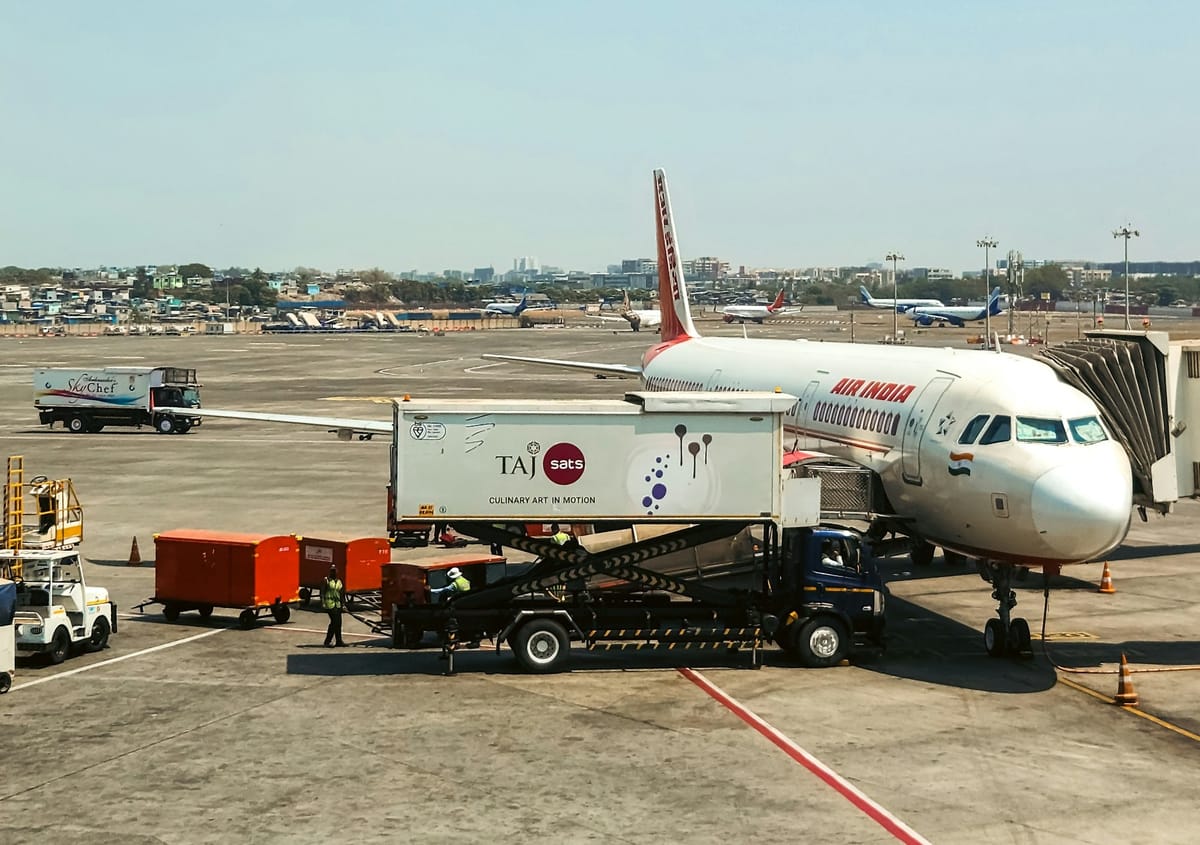
Air India’s Airbus A320 (VT-TQN) operated eight commercial flights between December 1 and early December 2025 without a valid Airworthiness Review Certificate (ARC). The flights connected New Delhi with Bengaluru, Mumbai, and Hyderabad. The DGCA confirmed the breach on December 6, 2025, and immediately grounded the aircraft.
What were the regulatory and operational responses?
- Grounding: VT-TQN was grounded on December 6, 2025.
- Penalty: A fine of ₹10 million (≈US$111k) was imposed.
- Audit: DGCA ordered a fleet-wide ARC compliance audit.
- Internal Action: Air India suspended personnel involved in flight release and maintenance on December 2, 2025, after internal detection of the lapse.
- Regulatory Reminder: DGCA Director Manish Uppal issued a directive to all pilots to verify ARC status before each flight.
What systemic failures contributed to the breach?
- Documentation Gap: ARC verification was omitted despite a DGCA reminder on December 1 and internal alerts on December 2.
- Single-Point Failure: No dual verification existed between maintenance staff and pilots.
- Reactive Culture: Compliance actions occurred after flights had departed, not before.
- Manual Processes: Reliance on paper-based checks without digital validation.
What are the broader implications?
| Dimension | Impact |
|---|---|
| Safety | Operating without ARC removes a mandatory safety assurance layer, increasing risk of undetected technical defects. |
| Operational | Grounding disrupts high-demand routes; potential for further fleet-wide grounding if systemic issues persist. |
| Financial | Penalty plus audit and compensation costs may exceed ₹15 million. Insurance premiums may rise. |
| Reputational | Public trust erodes amid heightened scrutiny following the June 2025 Boeing Dreamliner crash. |
| Regulatory | DGCA is enforcing zero-tolerance across the sector, as seen in concurrent actions against IndiGo. |
What corrective measures are required?
- Deploy a real-time electronic ARC registry linked to flight-deck systems.
- Implement mandatory dual digital sign-off by maintenance and pilot before dispatch.
- Conduct root-cause analysis of internal detection failures within 30 days.
- Integrate ARC status into DGCA’s live monitoring dashboard.
- Launch mandatory compliance training with 90%+ assessment pass rates.
- Establish an independent ARC Watch audit team reporting to the COO.
Failure to implement these measures risks escalating penalties, operational restrictions, and loss of public confidence.
Vertical Aerospace Targets 2028 Certification for Valo eVTOL on London-Gatwick-Oxford Routes
What is the Valo eVTOL’s technical specification?
- Maximum speed: 150 mph (241 km/h)
- Range: Up to 100 miles (160 km) per charge
- Passenger capacity: 6
- Battery system: Eight liquid-cooled under-floor packs; 12-minute rapid recharge
- Cargo capacity: 12 bags total (6 carry-on + 6 checked)
- Noise level: <50 dBA during cruise
- Composite structure: Syensqo-supplied carbon-fiber panels, validated for 5,000+ cycles
- Airframe: Aciturri-manufactured aluminum-lithium alloy, 7% improved weight-to-strength ratio
- Avionics: Honeywell flight-control computers with redundancy management
What is the certification and production timeline?
- Target certification: 2028 by UK CAA and EASA
- First commercial services: Q1 2029
- Production ramp-up: 225 aircraft per year by 2030
- Initial certification fleet: Seven aircraft built in the UK
- Supply chain partners: Syensqo (composites), Aciturri (airframe), Honeywell (avionics)
Which routes are planned for Valo operations?
- Primary corridors: London Canary Wharf ↔ Gatwick ↔ Oxford ↔ Cambridge
- Vertiport infrastructure: Developed by Skyports at Heathrow, Gatwick, Oxford, and Bicester
- Operators: Héli Air Monaco (premium services), Bristow Group (EMS and air-taxi network)
What economic and policy support exists?
- UK government funding: Over £200 million for eVTOL infrastructure and regulatory streamlining
- Projected UK economic contribution: £3 billion annually by 2035
- Company financing: £20 million allocated for UK production and certification
What are the key risks?
- Certification delay: Any slip beyond 2028 compresses production ramp-up and revenue timing
- Infrastructure readiness: Vertiports must be operational by Q1 2029 to enable route launches
- Market acceptance: Limited six-passenger capacity and premium pricing may constrain early load factors
- Investor sentiment: 94% share price decline since 2021 IPO reflects market skepticism
- Founder stake reduction: Stephen Fitzpatrick’s stake fell below 0.4% from 15% in early 2025, raising questions on long-term commitment
What milestones are projected?
- Mid-2026: Completion of transition flight testing
- Late-2026: First flight of pre-production Valo with Honeywell and Aciturri systems
- Mid-2027: Preliminary certification audit by UK CAA
- Early-2028: Full type approval granted; low-rate production begins
- 2029–2030: Vertiport commissioning and fleet scale-up to 225 aircraft annually
SpiceJet Adds 100 Daily Flights Amid IndiGo Disruptions, Driving Stock Surge
What triggered SpiceJet’s capacity expansion?
SpiceJet is adding up to 100 daily flights by reactivating 17 aircraft—13 via damp-lease and 4 from its own fleet—increasing its daily flight count from 124 to approximately 224. This follows IndiGo’s operational disruptions beginning December 1, which led to over 5,000 flight cancellations and a government-mandated 10% reduction in its winter schedule.
How has the market responded?
SpiceJet’s share price rose 19% over four trading sessions, reaching ₹36 on December 10. The increase reflects investor confidence in capturing demand from IndiGo’s reduced capacity, with the airline positioned to gain incremental market share on key domestic routes.
What regulatory support enabled this expansion?
The Directorate General of Civil Aviation (DGCA) granted a one-time 24-hour operational extension on December 6, allowing airlines to temporarily exceed slot limits. This provided the necessary bandwidth for SpiceJet to deploy additional flights without penalty. The Civil Aviation Secretary also issued a directive facilitating aircraft return to service.
What is the financial impact?
- Incremental weekly revenue: Approximately ₹430 million, based on 100 flights × 150 seats × 78% load factor × ₹5,500 average fare.
- Incremental weekly cost: Estimated at ₹65 million due to higher damp-lease rates (15% above owned aircraft).
- Net weekly contribution: Approximately ₹365 million, translating to an annualized earnings uplift of ₹1.9 billion.
What are the risks to sustainability?
- The DGCA’s 24-hour extension is temporary and expires soon.
- Damp-lease costs may compress margins if IndiGo recovers faster than expected.
- Fare caps (₹7,500–₹18,000) imposed by the Ministry of Civil Aviation limit pricing flexibility on high-demand routes.
What is the outlook?
- 0–2 weeks: Full deployment of 100 additional flights expected.
- 1–3 months: SpiceJet must decide whether to convert damp-lease aircraft to permanent fleet additions or return them.
- 6+ months: If IndiGo restores its schedule, SpiceJet may face capacity overhang and downward pressure on fares, requiring strategic route optimization.
SpiceJet’s move is a tactical response to a temporary market gap, supported by regulatory flexibility and strong demand. Long-term profitability depends on managing costs and aligning capacity with future demand patterns.

Comments ()