Tesla Optimus Robot Falls During Miami Demo, Exposing Heavy Reliance on Teleoperation Amid Competitor Advancements
TL;DR
- Tesla's Optimus robot crashes during public demo in Miami, raising questions over teleoperation vs. true autonomy in humanoid robotics
- Waymo reports 450,000 weekly paid robotaxi rides as Tiger Global launches $250M fund targeting 10x safer autonomous driving
- Horizon Robotics unveils fourth-gen BPU 'Riemann' architecture with fivefold energy efficiency gain for LLMs in autonomous driving systems
- Pony.ai and SANY deploy first fully automated heavy truck platooning system in China, targeting 60-ton annual CO2 reduction per vehicle
- Zoox crosses 1 million autonomous ride miles, plans paid passenger service in Las Vegas with expansion to San Francisco Bay Area in 2026
- DJI launches FlyCart 100 delivery drone with 80kg payload capacity, expanding autonomous logistics capabilities for emergency and industrial use
- Waymo and Tesla face regulatory scrutiny in Netherlands and France over FSD marketing claims and in-cabin monitoring safety concerns
Tesla Optimus Robot Falls in Miami Demo, Highlighting Teleoperation Gap in Humanoid Robotics
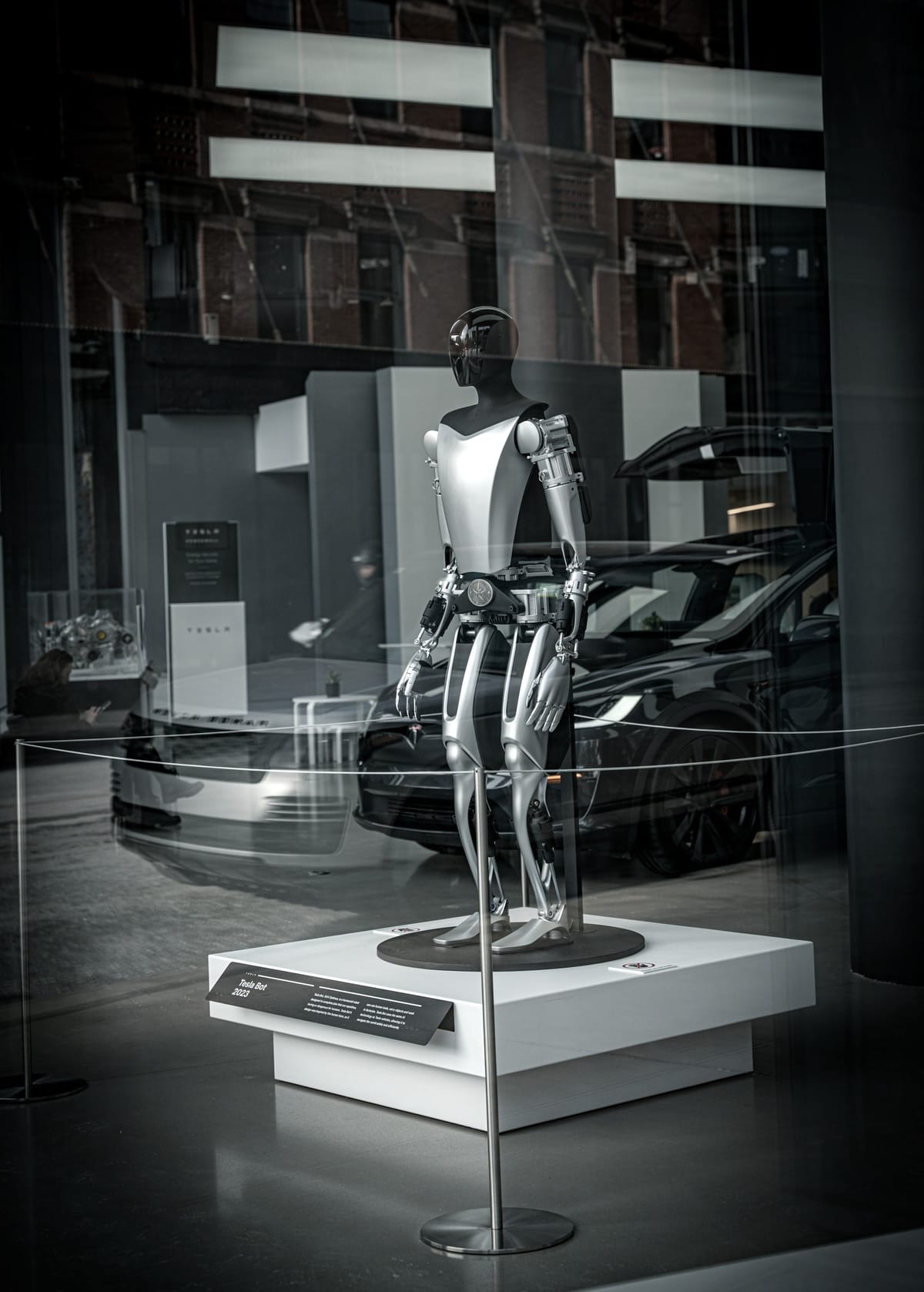
On Dec 08, 2025, Tesla’s “Autonomy Visualized” event in Miami featured Optimus delivering a water‑bottle service. The robot lost balance, tipped backward, and struck the floor. Video frames show a human operator removing a VR headset from the robot’s head moments before the fall, confirming remote control of the motion command.
Technical Findings
- Failure mode – Gait controller did not counter a 0.12 g lateral acceleration spike caused by the bottle placement, leading to tip‑over.
- Control architecture – Presence of a VR headset and its manual removal reveal a supervisory tele‑operation layer overlaying the on‑board autonomy stack.
- Task performance – Optimus completed 3 of 5 scripted tasks (hand‑over, arm lift, object placement) before the incident, yielding a 60 % task‑completion rate under mixed‑autonomy conditions.
Industry Comparison
- Teleoperation reliance – Optimus: 2 / 5 tasks (40 %) vs. competitors (EngineAI T800, Spirit AI, Shenzhen Mio U): 1 / 4 tasks (25 %).
- Autonomous gait stability – Optimus: 0 % success on first disturbance vs. competitors: 70 % stability on comparable perturbations.
- Market projection – Tesla projects $10 trillion revenue and 1 M units by 2030; aggregate competitor outlook is $5 trillion and 500 k units by 2030 (Robo‑Tuo mapping).
Autonomy vs Teleoperation Assessment
- ISO 10218‑1/2 level – Optimus operates at Level 2 for manipulation (partial automation) and Level 1 for navigation and balance correction.
- Safety implication – The tip‑over fails the “safe stop” requirement for Level 2 systems in unstructured public spaces.
- Scalability concern – Tesla’s forecast of 20 billion units assumes Level 4 autonomy, yet current telemetry shows a 40 % teleoperation share for basic tasks, indicating a scalability gap.
Emerging Trends
- Hardware scaling – Multi‑armed wheeled designs (e.g., Shenzhen’s Mio U) achieve higher task‑completion rates with fewer teleoperation inputs.
- Extraterrestrial robotics influence – Precision actuation standards from lunar construction projects (SpaceX mass‑driver concepts) are filtering back to terrestrial humanoids.
- Regulatory momentum – ISO 10218‑2 revision (2025) now mandates documented teleoperation fallback procedures for all public demonstrations, a compliance point underscored by the Miami incident.
Implications and Next Steps
- Sensor‑fusion latency – Closing the loop on balance‑control data streams is required to prevent lateral‑acceleration‑induced tip‑overs.
- Teleoperation bandwidth – Reducing human‑in‑the‑loop interventions below 15 % for routine tasks aligns performance with competitor benchmarks.
- Standard compliance – Certifying adherence to the 2025 ISO 10218‑2 fallback requirement will be essential for future public demos and market acceptance.
- Regulatory outlook – Industry regulators have signaled heightened oversight of humanoid demonstrations; Tesla is expected to submit updated safety documentation within the next quarter.
The Miami Optimus fall provides concrete evidence that Tesla’s current humanoid platform remains dependent on teleoperation for stability and manipulation. Comparative data show peer systems achieving higher autonomous performance with less human oversight. Addressing sensor latency, reducing teleoperation reliance, and meeting updated ISO standards are critical pathways for transitioning Optimus from a tele‑operated showcase to a commercially viable autonomous humanoid.

Comments ()