Nvidia H200 Export Approved for China Amid 25% Blackwell Levy; Skild AI Secures $1B Funding with SoftBank and Nvidia
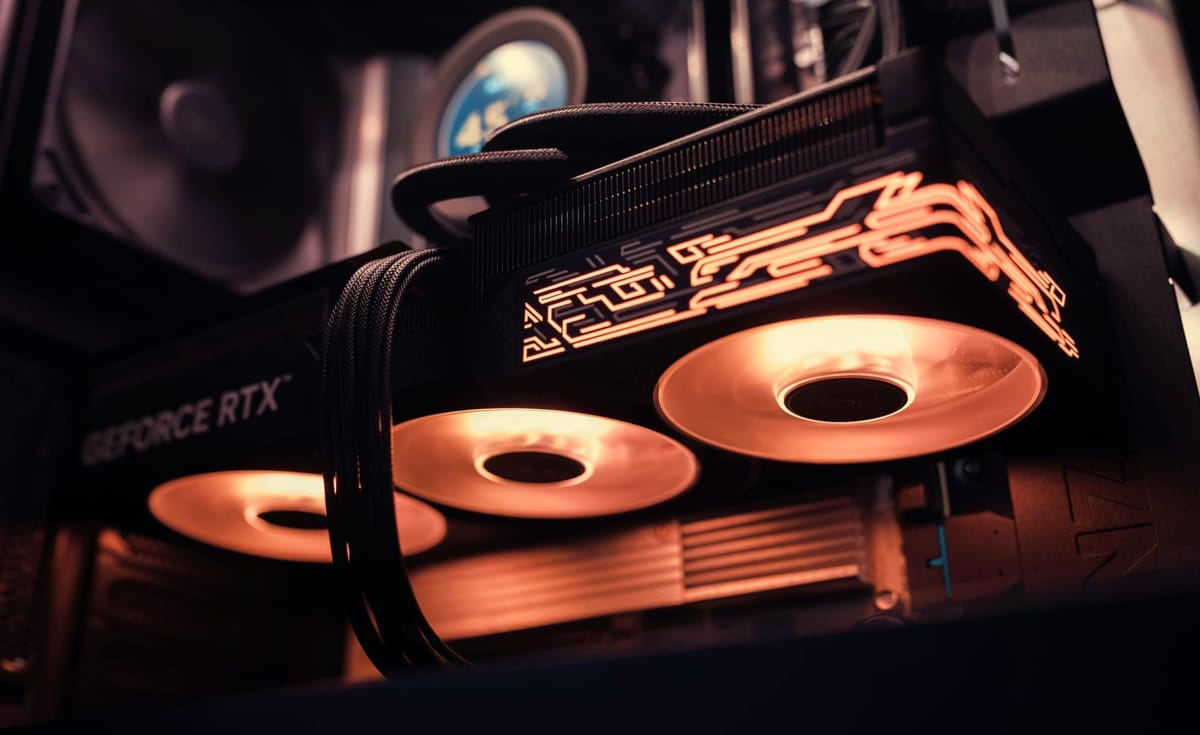
TL;DR
- Nvidia H200 AI chips approved for export to China under Trump administration, with 25% fee on Blackwell chips, shifting global AI chip dynamics
- Microsoft and Broadcom in talks to co-design custom AI chips, while AWS launches Trainium3 and Meta develops custom silicon with Marvell for 2027 deployment
- OpenAI’s ChatGPT Enterprise users report 40–80 minutes daily productivity gains in data science, engineering, and communications, driving 9x YoY enterprise seat growth
- Horizon Robotics unveils fourth-gen BPU 'Riemanne' architecture with fivefold energy efficiency boost for LLMs, enabling autonomous driving solutions at scale
- Skild AI secures $1 billion funding talks with SoftBank and Nvidia, targeting $14 billion valuation for its robot-agnostic foundation model in humanoid robotics
- Google and Samsung partner on Project Aura AR glasses for 2026 launch, integrating system-level autospatialization and hand-gesture controls for consumer AI wearables
- AI-powered video descriptions roll out on Blink cameras via Gemini for Home, offering free real-time event analysis to Basic/Plus subscribers without searchable indexing
Nvidia H200 Export Approval and 25 % Blackwell Fee Reshape Global AI‑Chip Landscape
Policy Shift and Immediate Market Reaction
- Dec 2025 – The Commerce Department, at President Trump’s direction, authorises export of Nvidia’s H200 AI processors to vetted Chinese customers.
- Simultaneous levy – A 25 % revenue fee is imposed on every Blackwell‑chip sale to China; the same fee is extended to comparable AMD and Intel AI silicon.
- Market response – Nvidia shares rose 2 % in after‑hours trading, echoing a 3 % jump after the initial leak on Semafor.
Data‑Driven Implications for Supply Chains
| Metric | Value |
|---|---|
| Levy rate | 25 % of Blackwell revenue (≈ $25 M per $100 M transaction) |
| Potential levy revenue | Up to $1.5 B per large Chinese customer |
| Export‑control seizures | > $50 M in GPUs seized; $160 M of H100/H200 units intercepted in 2024‑25 |
| Performance hierarchy | H200 ≈ 6× compute of legacy H20; Blackwell ≈ 1.5× H200 (Blackness variant 5×, Blackburn 10×) |
| AI‑chip market size | > $50 B globally; Nvidia alone accounts for > $4 T market cap |
The approval grants Chinese AI developers access to H200‑class compute, enough to accelerate domestic model training but still short of Blackwell‑level performance. The levy creates a direct fiscal stream for the U.S. Treasury while preserving a performance gap that limits the most demanding Chinese workloads.
Conflicting Perspectives
- Pro‑liberalisation camp – Argues that opening the H200 channel eases supply‑chain bottlenecks for Chinese data‑center builders, potentially narrowing the research gap highlighted by recent NeurIPS submissions (U.S. 2 450 papers vs. China 2 370).
- Strategic‑control camp – Views the levy and the performance ceiling as a calibrated “monetised embargo,” extracting revenue while keeping the most advanced AI silicon out of Beijing’s reach. The levy’s extension to AMD and Intel reinforces a unified fiscal barrier across the U.S. AI‑chip ecosystem.
- Legislative watchdogs – The House AI commission and bipartisan SAFE CHIPS proposals signal a push to codify export limits, reducing discretionary volatility. Critics warn that heavy‑handed fees could provoke retaliatory measures, such as accelerated domestic production by Cambricon and Moore Threads, which recently announced a 500 k‑chip rollout.
Outlook: What Comes Next
- Legislative entrenchment – Expect the SAFE CHIPS Act and the GAIN AI Act to move from discussion to vote within the next 12 months, likely codifying the 30‑month export‑license window and formalising levy mechanisms.
- Enforcement escalation – Operation Gatekeeper’s recent $50 M seizure suggests a dual‑track regime: sanctioned licences for H200 alongside aggressive crackdowns on illicit H100/H200 pipelines.
- Chinese counter‑measures – Domestic AI‑chip firms (Cambricon, Moore Threads, Biren) are scaling production, aiming to offset the H200 influx and eventually replace Blackwell‑class performance with home‑grown alternatives.
- Revenue impact – If the levy is applied uniformly, the U.S. Treasury could collect upwards of $5 B in the next fiscal year from AI‑chip sales to China, reshaping the economics of Nvidia’s “$500 B in five quarters” growth narrative.
- Market dynamics – Nvidia’s share price may stabilise around the current modest gains, while AMD and Intel will watch closely for any spill‑over effects on their own AI‑silicon roadmaps.
The combined export approval and Blackwell levy represent a nuanced pivot from outright restriction to revenue‑driven access control. By granting H200 chips while throttling Blackwell performance and monetising the latter, the Trump administration seeks to balance geopolitical pressure, fiscal gain, and technological superiority. The next year will reveal whether this calibrated approach sustains U.S. leadership or accelerates China’s drive toward self‑sufficiency in high‑end AI hardware.
Skild AI Secures $1 B Funding Talks with SoftBank and Nvidia, Targeting $14 B Valuation for Robot‑Agnostic Foundation Model
Market Context
- Recent analyses (Morgan Stanley, Citi) project a global humanoid‑robot market worth $5 trillion by 2050, with over 1 billion units expected in service.
- More than 150 companies are active in humanoid robotics, ranging from startups to incumbents such as Tesla, Unitree, and UBTECH.
- Industry reports note a shift from single‑purpose bots to multi‑task platforms, increasing demand for reusable software stacks.
- Regulatory guidance in the U.S. and EU now requires on‑device processing of biometric data, influencing architecture choices for robot AI.
- Parallel AI‑enabled consumer devices, exemplified by Google‑Samsung’s Project Aura AR glasses, demonstrate the feasibility of edge inference for immersive applications.
Funding Landscape
- SoftBank’s AI portfolio expanded in 2025 through the People‑First AI Fund ($50 M grants) and a renewed partnership with OpenAI, while the group sold its Nvidia stake for $5.8 B but retained a strategic focus on AI hardware.
- Nvidia announced a $2 B investment in Synopsys and released open‑source VLA models for robotics, reinforcing its role as a primary compute supplier for humanoid platforms.
- Skild AI’s current funding talks involve SoftBank and Nvidia, with a target raise of $1 B and a projected post‑money valuation of $14 B.
- Comparable capital flows include Physical Intelligence’s $600 M raise for robot foundation models and Flexion Robotics’ $50 M Series A for reinforcement‑learning platforms.
- The convergence of telecom capital (SoftBank) and semiconductor resources (Nvidia) mirrors earlier large‑scale AI funding cycles in cloud and data‑center sectors.
Technical Implications
- The Skild AI model is described as robot‑agnostic: a multimodal vision‑language‑action (VLA) architecture that can be instantiated on diverse humanoid chassis without per‑robot code changes.
- Training data reportedly exceed 1 million interaction hours, sourced from simulated environments and limited field trials, leveraging Nvidia GPUs for both pre‑training and edge inference.
- On‑device inference targets sub‑30 ms latency, comparable to the hand‑gesture pipeline demonstrated in Project Aura’s AR glasses, indicating feasibility of real‑time control loops on edge hardware.
- The model supports both edge deployment (e.g., Nvidia Jetson AGX) and data‑center scaling, enabling a unified software stack across development and production phases.
- Integration pathways include existing robot operating systems (ROS 2) and emerging standards for safe AI‑driven actuation, aligning with recent regulatory emphasis on privacy‑by‑design.
Projected Timeline
- Dec 2025 – SoftBank finalizes sale of Nvidia shares while maintaining AI investment commitments.
- Dec 2025 – Nvidia completes $2 B Synopsys investment and releases open‑source robotics AI tools.
- Dec 2025 – Skild AI enters $1 B funding negotiations with SoftBank and Nvidia.
- 2026 – Prototype of the robot‑agnostic foundation model expected for internal validation.
- 2027 – First commercial integration announced for mid‑tier humanoid platforms (e.g., Unitree G1, emerging Chinese manufacturers).
Outlook
- If the Skild AI model achieves the projected latency and cross‑platform compatibility, development cycles for new humanoid robots could contract relative to current bespoke software approaches.
- Market analysts anticipate that reusable AI stacks may contribute to a 10‑15 % reduction in total cost of ownership for service‑oriented humanoids.
- Ongoing privacy regulations will require continued on‑device processing, a design choice already reflected in the model’s architecture.
- The $14 B valuation target aligns with recent valuations for AI‑enabled robotics firms that have secured comparable capital and technology partnerships.
- Successful deployment could influence subsequent funding rounds, encouraging additional telecom and semiconductor investors to target robot‑agnostic AI infrastructure.
Google‑Samsung Project Aura: Data‑Driven Assessment of the 2026 AR Glasses Launch
Market Context and Event Progression
- 2024‑2025: Major players shift from metaverse‑focused headsets to consumer‑grade AR glasses. Meta delays Phoenix to 2027, Snap targets 2026, Apple pivots to lighter AI glasses.
- 2025 Q2: IDC reports a 200 % YoY increase in smart‑glass shipments; total volume triples versus 2024.
- May 2025: Xreal demo of Project Aura with Google confirms early hardware integration.
- Dec 2025: Bloomberg highlights rising competition from Xreal and price pressure on premium segment.
Technical Distinctions
- Autospatialization: System‑level conversion of 2‑D media to spatial overlays, eliminating per‑app adaptation.
- Hand‑gesture UI: Sub‑30 ms gesture‑recognition latency; 60 fps rendering at 70° field of view.
- Processor: Qualcomm Snapdragon XR2, standard for Android XR devices.
- AI Engine: On‑device Gemini inference, consistent with Android 16 Gemini integration.
- Form factor: Lightweight prism‑lens design resembling sunglasses; MSRP $2,099.
Competitive Landscape
- Meta: Phoenix delayed to 2027; budget cuts up to 30 % in Reality Labs; loss of first‑mover advantage.
- Apple: Vision Pro redesign paused; focus on lighter AI glasses with release beyond 2026.
- Snap: Consumer specs slated for 2026 but hardware maturity remains limited.
- Amazon: Development of AR glasses for delivery drivers, target launch 2026.
- Xreal: Demonstrated Project Aura; reports faster discount cycles, increasing price pressure on premium devices.
Regulatory and Privacy Alignment
- On‑device processing of biometric data satisfies emerging US and EU guidance for wearables.
- Early‑adopter surveys indicate corporate IT policies will require opt‑out mechanisms for continuous visual capture.
Outlook and Implications
- 2026: Project Aura’s launch aligns with a market experiencing >200 % YoY shipment growth; price positioning targets early adopters above entry‑level but below Vision Pro tier.
- 2027‑2028: Anticipated SDK updates and broader developer participation are expected to reduce entry costs; competitive pressure is expected to drive MSRP toward $1,000 range.
- Long term: System‑level autospatialization is positioned to become a baseline capability in AR operating systems, reducing developer friction and expanding content ecosystems.
Key Data Summary
- IDC 2025 smart‑glass shipments: +200 % YoY, total volume threefold vs 2024.
- AR/VR shipments 2025: 14.3 million units, +39.2 % YoY.
- Project Aura specs: 70° field of view, Snapdragon XR2, Gemini on‑device AI, $2,099 MSRP.
- Competitor pricing: Meta Ray‑Ban Display $799; Snap specs TBD; Apple Vision Pro $3,499.



Comments ()