Urda AVE crash kills 68 as LZB failure questioned
Transport minister Óscar Puente attributed the Urda collision, which killed at least 68 people, to an LZB signalling failure around 08:30; trains were authorised to move at 40 km/h. Why movement then occurred at speed remains under investigation, and ERTMS substitution is reported as ongoing.
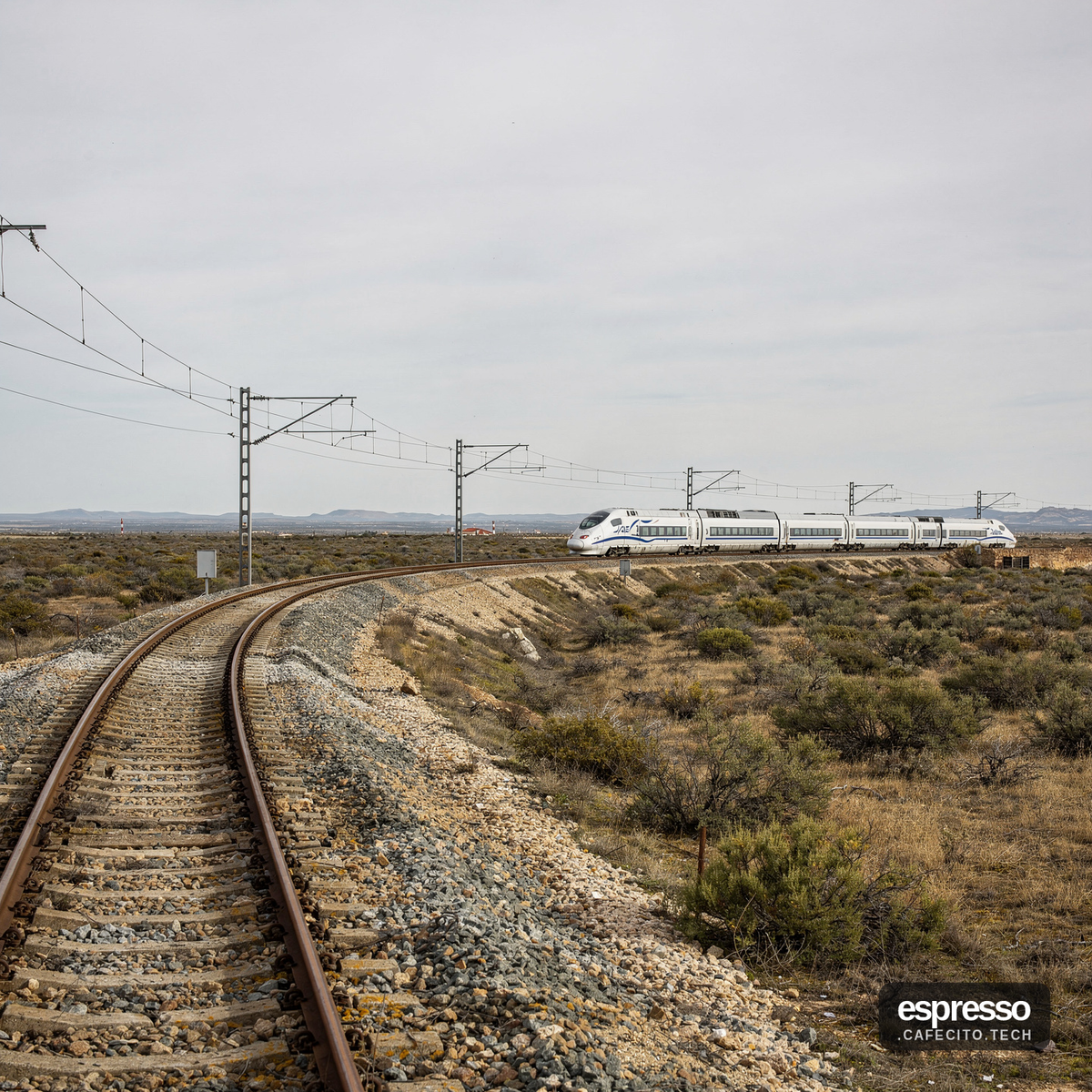
A Renfe AVE train struck a stationary Iryo train near Urda, in Toledo province, on the Madrid–Andalucía high-speed line. Transport minister Óscar Puente said at least 68 people were killed, attributed the sequence to an LZB signalling failure around 08:30, and described a subsequent order permitting trains to resume at 40 km/h.
The open question is the gap between degraded-mode procedure and observed behaviour. Two official documents in reporting — the Reglamento de Circulación Ferroviaria (Real Decreto 664/2015) and consigna COI 01/25, applicable from 1 February 2025 — describe barriers requiring lateral signalling block, "marcha a la vista," and confirmation the block section is clear before restarting. Whether those barriers applied, and why movement occurred at speed, remains under investigation.
Mechanics: trigger, weakness, amplifier
Puente's account puts the trigger at an LZB computer failure at Urda around 08:30, with six trains stopped across a 69 km section. At 08:36 the Adif control centre authorised movement under a 40 km/h maximum. The AVE driver reportedly accelerated to more than 200 km/h before striking the Iryo around 08:53; the Iryo did not restart at 08:41.
Puente identified the amplifier himself, acknowledging that no safety system would have stopped a human error from ending in a collision. The structural weakness under scrutiny is LZB, in service since 1992, with ERTMS substitution reported as ongoing but not completed. Reporting lists the LZB failure cause, the validity of the control centre's orders, and the braking protocols in force as open questions.
- ~08:30 — LZB fails at Urda; six trains stop across 69 km
- 08:36 — control centre authorises movement at 40 km/h
- 08:41 — the Iryo does not restart
- ~08:53 — AVE accelerates above 200 km/h and collides
Scope and correlated, not shared, causes
Impact concentrates on one line and its operators; reporting cites roughly 6 million passengers a year on the corridor using this infrastructure. The Guardia Civil is investigating. Spanish media and transport-policy coverage link the event to a January collision at Adamuz, Córdoba, that killed 46 people and injured more than 120, attributed in reporting to an LZB braking-system fault and deficient track and weld maintenance.
That is a parallel, not a proven shared cause. Investigators have not linked the incidents, and the Urda failure's cause is unresolved. Nothing in the supplied account establishes a systemic LZB defect; the second event's recency explains the attention, not the mechanism. The event carries an "investigación en curso" outlook and is filed under transport safety.
Response, exposure, unresolved outcome
Puente defended the rail system as safe and insisted procedures were clear, while not resigning. The government declared three days of official mourning, and Prime Minister Pedro Sánchez said causes would be investigated thoroughly. Casualty figures were reported as pending while work continued under the wreckage.
Two adjacent robotaxi safety stories bracket this one. Waymo reported 11 in-vehicle test-driver incidents in 2025 against five in 2024, with one Phoenix case involving 157 days off work. Zoox logged up to eight injuries from abrupt braking and "nogo" system shutdowns, and NHTSA recalled 258 vehicles after a braking-behaviour investigation closed in April 2025; a July 2026 Zoox recall followed a separate NHTSA investigation into abrupt braking.
These are distinct cases with different fleets, jurisdictions and reporting rules; no shared mechanism with Urda is established. The U.S. counts also rest on lagging regulatory reporting, so actual injury totals may exceed those disclosed.
The unresolved outcome for Urda is the official causal finding — and whether ERTMS substitution proceeds as the operative fix.


Comments ()