Tennessee prisons chief resigns after botched execution
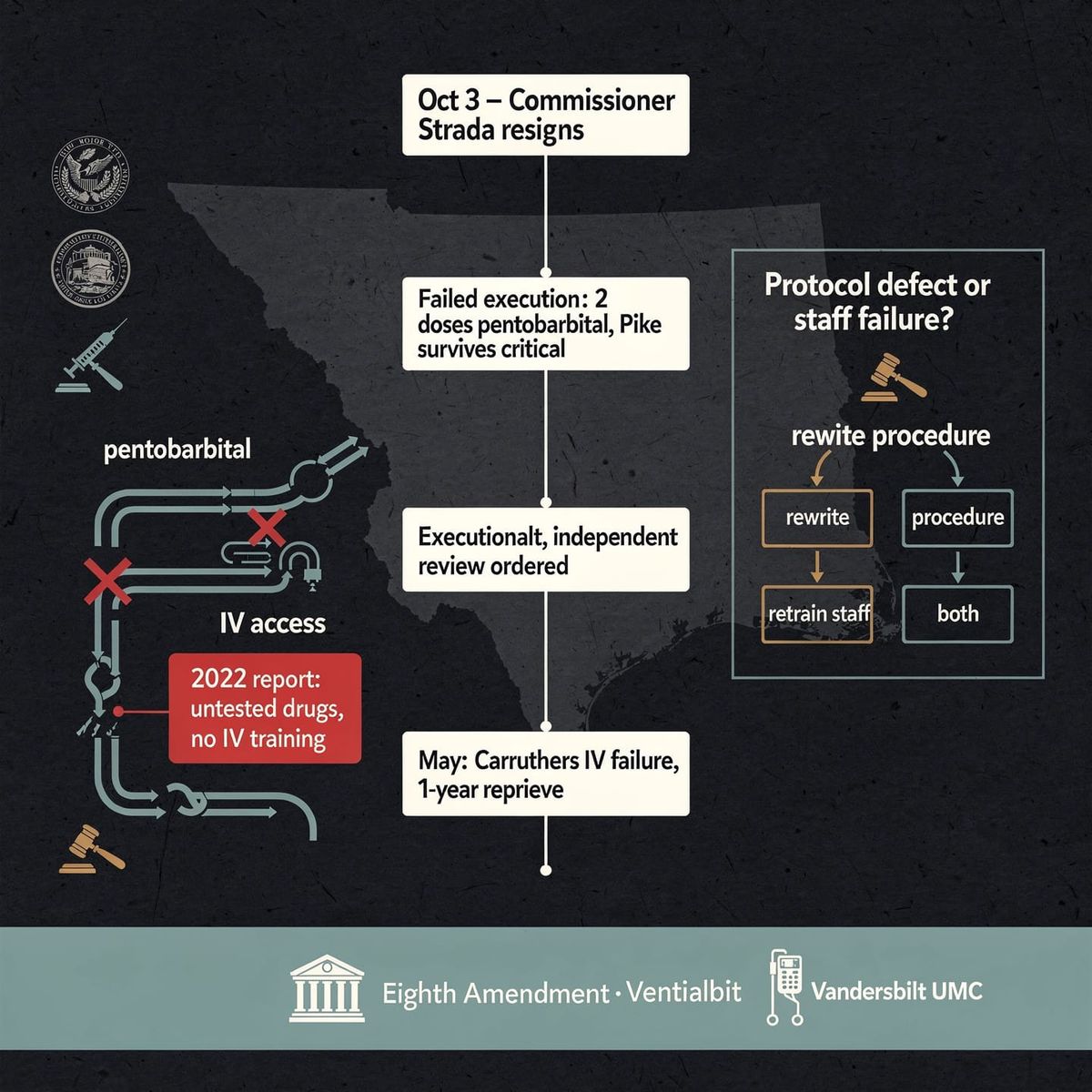
Tennessee Commissioner of Correction Frank Strada resigned Oct. 3 — a day after the state's attempt to execute Christa Pike failed when two doses of pentobarbital left her alive but critical. Gov. Bill Lee has ordered an independent review and halted further executions. It's Tennessee's second failed execution this year at Riverbend. The review must decide whether the breakdown was in the protocol or how staff carried it out.
Tennessee Department of Correction Commissioner Frank Strada resigned, and Governor Bill Lee confirmed the move on October 3, the day after the state's attempt to execute Christa Pike failed when two doses of pentobarbital left her alive but in critical condition. Lee has ordered an independent review and halted further executions pending its outcome. A second execution scheduled for the year has been paused, and state officials plan to appoint an interim commissioner.
Pike, sentenced to death in 1996, was the first woman Tennessee would have executed in more than 200 years. At Riverbend Maximum Security Institution, medical staff administered two doses of pentobarbital, the drug in Tennessee's one-drug lethal-injection protocol. The procedure did not kill her; witnesses reported she choked and struggled after the initial injection. She remains unconscious and on a ventilator at Vanderbilt University Medical Center, according to reports citing her attorneys, including Colleen Slemmer, who have asked Lee to commute her sentence. State officials maintain the execution protocol was followed despite the outcome. Strada said he was leaving because it was "in the best interest of Tennesseans."
What the protocol does—and where it broke
Tennessee's lethal-injection protocol relies on pentobarbital reaching a sufficient blood concentration to suppress the central nervous system. A state commission report from 2022 found Tennessee failed to follow its own protocols and did not test its lethal-injection drugs. Strada's tenure also saw training changes that removed IV insertion practice for execution team members, according to reporting. That matters because the procedure's critical step depends on viable intravenous access.
This is the second failed execution this year at Riverbend. In May, an attempt to execute Tony Carruthers was abandoned after more than an hour when medical staff could not establish a viable IV line; Lee granted him a one-year reprieve and suspended executions pending a protocol review.
The central question for the independent review is whether the failure lies in the protocol itself or in how staff carried it out that night. The answer determines whether the state rewrites its procedure, retrains staff, or both before resuming executions.
What the review can and cannot settle
The review can establish what was done and whether it matched the written procedure. It cannot, on its own, resolve broader legal questions in the case, including whether the failed attempt amounts to cruel and unusual punishment under the Eighth Amendment. Those decisions rest with courts.
What is documented is a chain of public-authority consequences that began with a medical failure and ended with a resignation and a statewide halt to executions. Whether Tennessee's capital-punishment protocol survives scrutiny now depends on the review distinguishing a defective procedure from a broken execution—and on what a successful fix would look like.



Comments ()