Netflix plans first large layoff since 2022
Netflix is preparing to cut about 800 positions, roughly 5 percent of its workforce, its largest reduction since 2022. Leadership cited softer-than-targeted growth and competition from YouTube, though the plan isn't final as of the October 9–10 briefing.
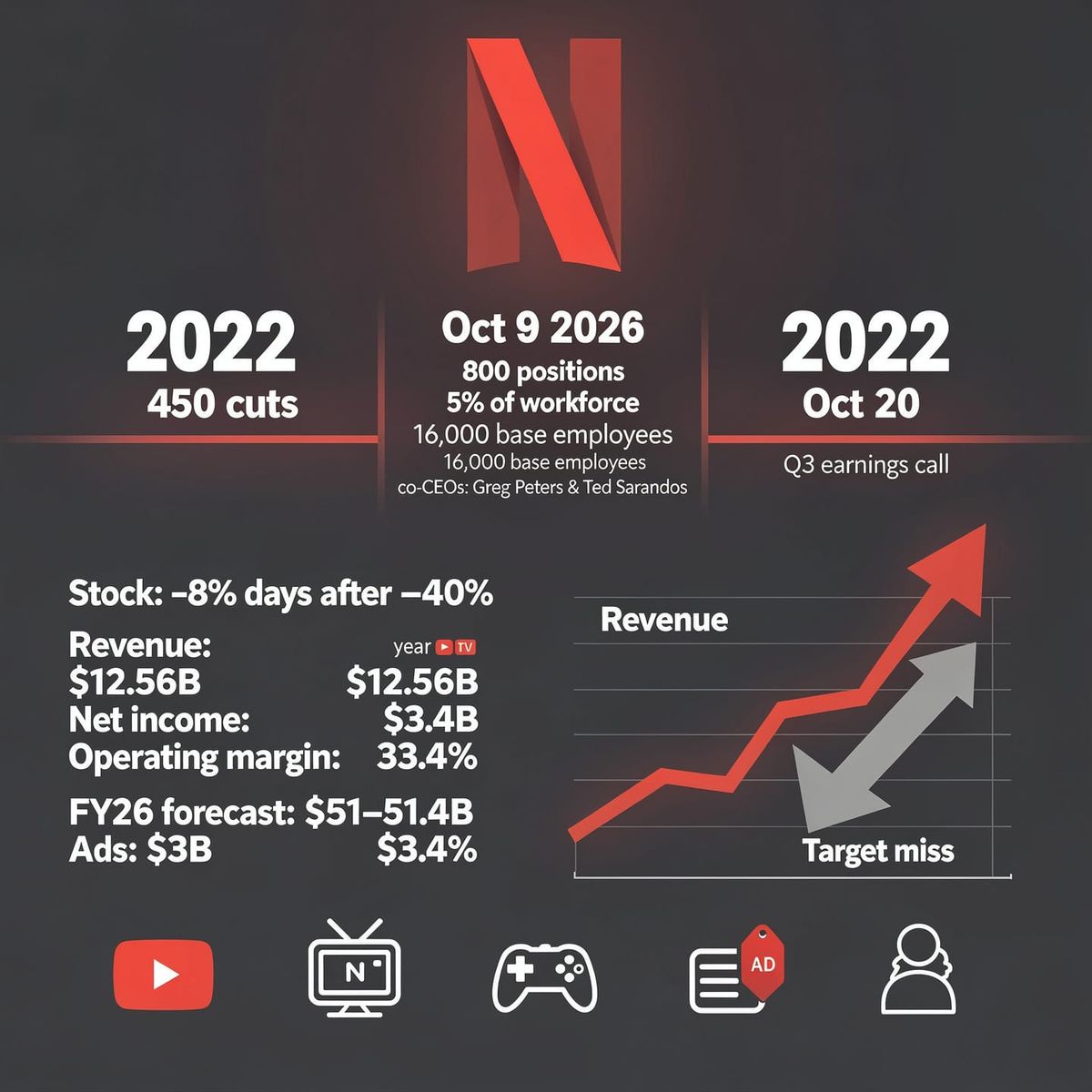
Netflix is preparing to cut roughly 5 percent of its staff—about 800 positions against a base of roughly 16,000 full-time employees—according to a briefing that co-CEOs Greg Peters and Ted Sarandos gave staff on October 9, 2026, as first reported by Puck News. The reductions are expected to land mostly in U.S.-based units, and this would be the company's first scale-back of this size since 2022, when a previous round affected about 450 people. The plan is not final; the announcement was expected as early as the following week.
Ted Sarandos told staff the company isn't growing as fast as desired. And investors have already been voting with their feet: the stock fell more than 8 percent in the days after the report, and it's down roughly 40 percent over the past year. The Q3 earnings call, now scheduled for October 20, is where the company's revised revenue forecast lands.
Why now
The layoffs sit inside a bigger realignment of how Netflix spends and where it bets next. Leadership is pushing new formats—live programming, podcasting, gaming, and an advertising-supported tier—while competing with YouTube for viewer time. The driver leadership cites is competition from YouTube and other smaller services, whose free, user-generated short-form video keeps pulling engagement away from subscription streaming.
Management's stated reason for the cuts is competition and growth short of targets. What's settled from the reporting is the sequence: a full-year revenue forecast that came in below analyst estimates and a workforce response on the heels of it.
How the cut lands
Inside a 16,000-person operation, an 800-position reduction touches every team that runs on staffed headcount: content development, production support, and the newer units chasing live events and games. When Netflix trims staff while restructuring around new formats, the people losing jobs aren't an abstract efficiency target—they're the workers building the ad tier and gaming pipelines that leadership keeps describing as the path back to growth.
The reported pressure on engagement is consistent with what Netflix has been up against all year. Back in June, the company tightened its account rules, mandating a single email per profile globally, part of a push to force individual subscriptions and prop up ad targeting. Executives framed the personalization changes around user autonomy, but the underlying move was the same dependency that now shapes the layoffs: Netflix needs to extract revenue from attention rather than just count shared logins. Whether that thread runs through to this week's headcount plan is interpretation, not a confirmed mechanism—but the engagement shortfall is the backdrop against which leadership is cutting staff.
The financial picture behind the cuts
The October 10 reporting adds context that matters for scale. The most recent quarter reported $12.56 billion in revenue, $3.4 billion in net income, and a 33.4 percent operating margin. Full-year 2026 revenue is now forecast at $51 billion to $51.4 billion, with advertising expected to bring in about $3 billion. That's not a company in distress on its income statement—it's a profitable operation telling investors it won't grow as fast as they hoped, and trimming staff to match.
What's still open
The decisive unknown is timing and the actual number. The layoffs are described as up to 800 positions, roughly five percent, still unofficial as of October 9–10. Whether the cuts arrive before the October 20 earnings call or after, and what the revised guide says about the gap leadership is already internalizing, will determine whether this reads as rebalancing or as the first installment of a longer correction. The job losses are the visible part; the revenue forecast is where the extent of the squeeze shows up.

Comments ()