LG ESS and North American Cell Expansion Shape Q3 2026 Earnings
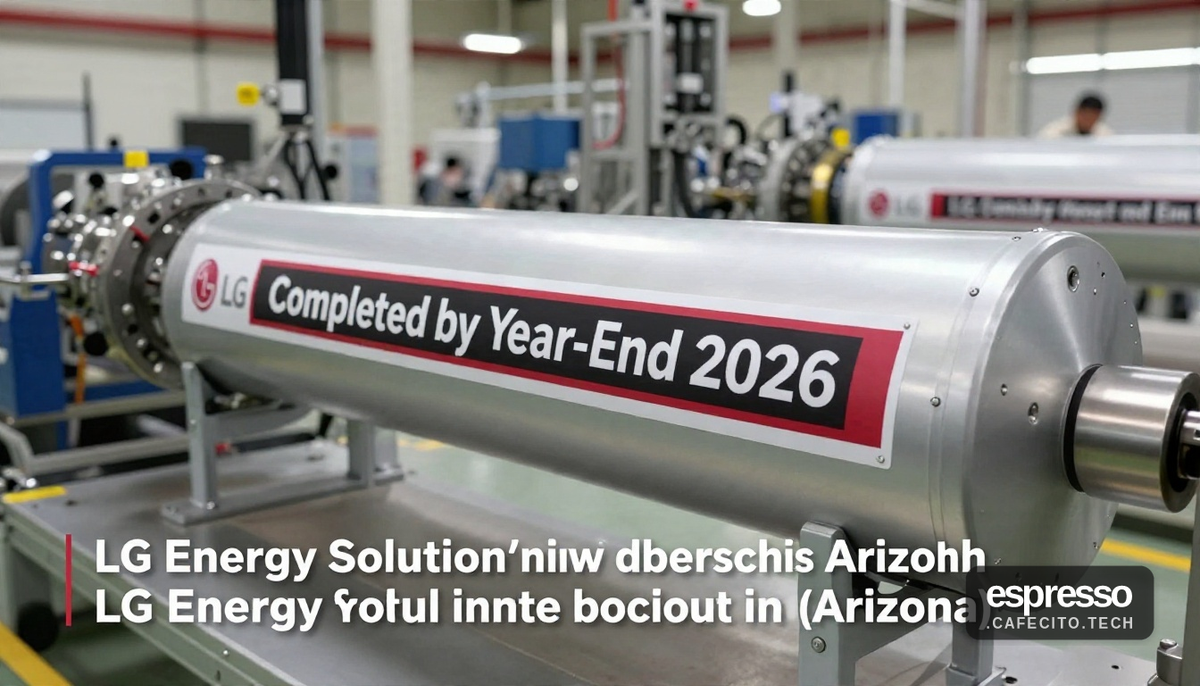
LG Energy Solution’s Q3 2026 earnings are tied to ESS demand and North American cell expansion, with Arizona scheduled to complete its first cylindrical production site by year-end and a 70 GWh-plus ESS target planned. Specific contract volumes and delivery timing are not yet quantified.

LG Energy Solution’s Q3 2026 revenue reached 9.6434 trillion won, up 59% quarter on quarter, and operating profit was 0.756 trillion won, up 567.3%, according to Business Korea [https://www.businesskorea.co.kr/news/articleview.html?idxno=280323]. ESS production and North American cell capacity set the earnings baseline, while upstream material agreements shape the next phase of supply.
What changed, and who is affected: The supply chain shifts from regional ESS demand to North American cell manufacturing. Automotive OEMs, data-center energy partners and European mid-nickel customers all depend on the reported ramp in cylindrical and LFP battery lines, with upstream suppliers affected by contracted lithium and cathode material commitments.
Drivers: ESS contracts and North American support
Business Korea says the main revenue drivers are increased ESS shipments and broader EV pouch and cylindrical output. President Lee Chang-sik of LG Energy Solution is cited as identifying those ESS and EV battery volumes as the primary revenue drivers. The company reported $416.9 billion in North American production support payments.
Mechanics: capacity, contracts and substitution limits
The dependency chain runs from production-support payments and direct BESS contracts into physical cell capacity. LG reports a new Arizona operation completing its first North American cylindrical production site by year-end and a 70 GWh-plus ESS cell capacity expansion targeted for the end of the following year. A new tab-less 2170 cylindrical cell line and a U.S. joint-venture restart with GM were also cited.
Commercial agreements add another dependency: LG was named a partner in NVIDIA’s DSX Ready BESS program and secured a European contract for next-generation high-voltage mid-nickel products. The evidence does not specify the European contract’s volume, delivery date or expected revenue. Longer-term lithium supply contracts with Canada and the U.S., plus expanded LFP cathode-material partnerships, constrain how far production can scale without new upstream capacity.
Constraints and what is unresolved
Actual utilization against the 70 GWh target is not reported. European product supply has not been quantified, and fiscal-year revenue timing is unclear. Arizona’s planned production capacity and initial output remain unspecified. The 46-series local production plan is scheduled only from 2029, and North American sodium-ion test shipments are scheduled for the following year. These conditions keep next-generation output dependent on contracted supply and continued capacity expansion.
UK-EU phytosanitary friction
Separately, UK fresh-produce imports face anticipated increased phytosanitary inspections after the UK-EU SPS reset. The Grocer reports importers could face higher compliance costs and logistical hurdles [https://www.thegrocer.co.uk/news/fresh-produce-imports-to-face-more-not-less-red-tape-under-sps-deal/719493.article]. This is a food-trade constraint rather than an LG-specific supply issue, but it adds to short-term pressure on fresh-goods availability if compliance costs rise.