INEC Admits AI Photos in Preliminary Voter Register, Defect Unquantified
Nigeria's INEC confirmed AI photos made it into the preliminary 2027 voter register after officers abused access credentials. The defect is verified but unquantified, and the Abubakar campaign is demanding an independent forensic audit.
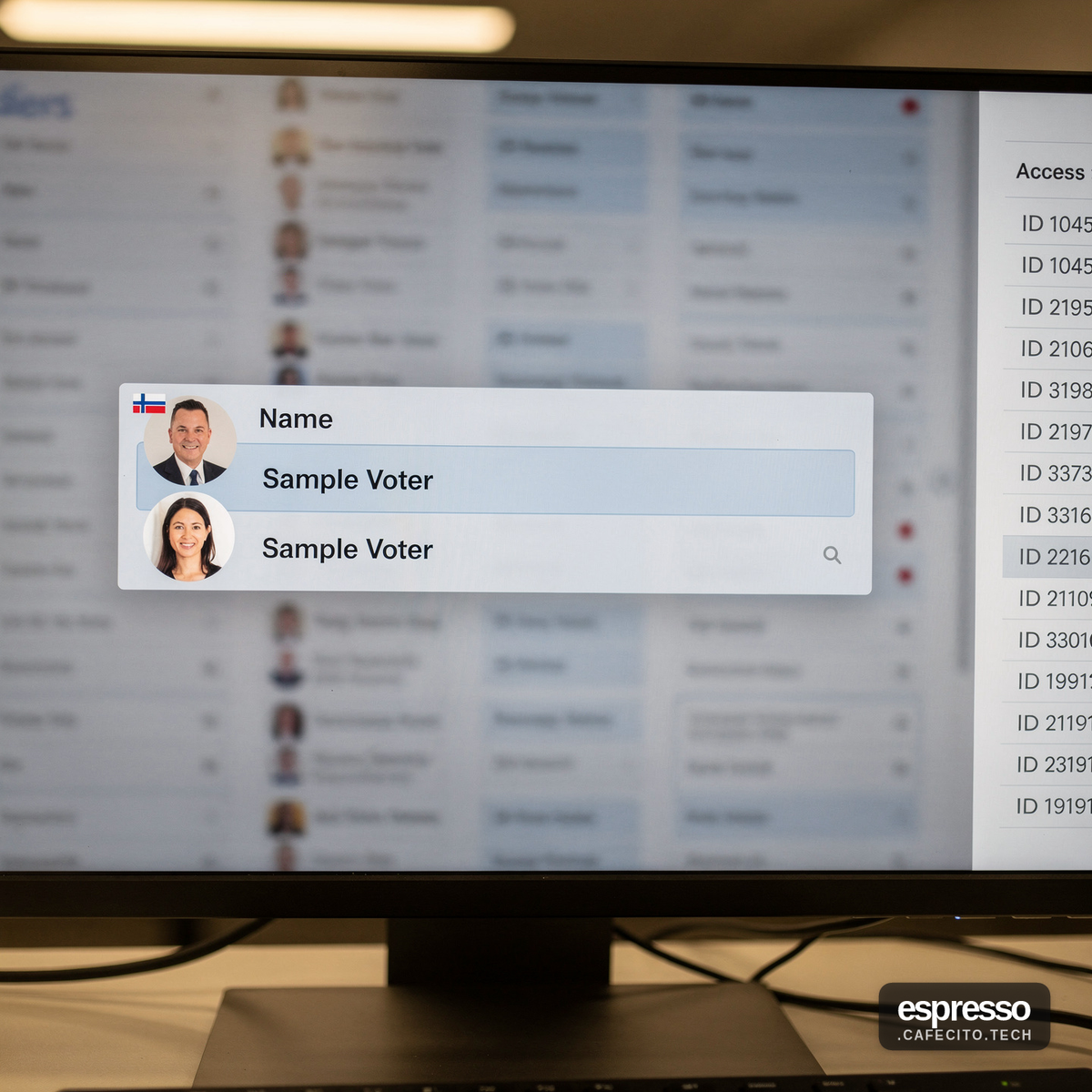
Nigeria's Independent National Electoral Commission (INEC) has confirmed that AI-generated photographs appear in the preliminary voter register for the 2027 general elections. The flaw was first flagged by the campaign of presidential candidate Atiku Abubakar, with irregularities surfacing in Edo State. The register, which will underpin the 2027 electoral cycle, now carries a verified but unquantified defect.
The analytical finding: this is not a simple database glitch. The failure sits at the boundary between human data entry and machine-generated output. A machine produced the synthetic image; a human — or an abuse of credentials — inserted it; and the pipeline failed to catch the mismatch. That's a chain with two distinct breaks, and only one has been explicitly admitted by the commission.
The credential-abuse path and the campaign's demand
INEC's ICT director Dr. Lawrence Bayode confirmed that AI-generated images are on the register and that registration officers abused access credentials to introduce the irregularities. The mechanism is a credential-abuse path feeding synthetic media into the same pipeline as verified records, with no independent validation step flagged as catching the mismatch.
Atiku Abubakar's ADC Presidential Campaign Council demanded, in a Friday statement from Abuja issued by strategic communications director Phrank Shaibu, that INEC identify and prosecute the officials responsible. The campaign has pressed for an independent forensic audit of the register, preservation of all voter records, image files, access logs, and audit trails, plus disclosure of the companies that won contracts for those election materials.
That audit demand matters because the current evidence is a single admitted defect, not a measured exposure rate. We don't know how many synthetic images are in the register, what fraction of entries are affected, or whether a detection tool already exists in production.
- Dr. Lawrence Bayode (INEC ICT director): AI images present; officers abused access credentials
- Abubakar campaign: demand prosecution of responsible officials, issued Friday from Abuja via Phrank Shaibu
- Audit demand: independent forensic audit, preservation of records, disclosure of contracting companies
What's at stake and what changes now
The stated driver is trust: without independent verification, the register's integrity — and by extension the 2027 electoral process — is at risk for the public that will rely on it. Abubakar has threatened legal action and judicial intervention if INEC does not disclose the identities of the officials and contracting companies involved. This is a confirmed-but-unquantified defect: one admitted instance, one threatened lawsuit, and an unresolved audit.
There's no measured exposure rate here, and no published scope. The failure is verified at the point of confirmation but remains unquantified across the full register. The 2027 cycle depends on this document, so the gap between "confirmed in one state" and "cleared everywhere" is the entire unresolved problem.
Where it stands as of Monday
Until INEC discloses the names of the implicated officials and contracting companies, commissions and publishes the scope of an independent forensic audit, or releases a measured count of affected image entries in the preliminary register, the failure remains what it is: verified, unquantified, and unresolved. The next observable milestone is whether such an audit scope or count actually appears in public. Until then, the register carries a known defect with an unknown width.


Comments ()