🎬 IMDb Opens Taxonomy to Digital Creators at TIFF 2026
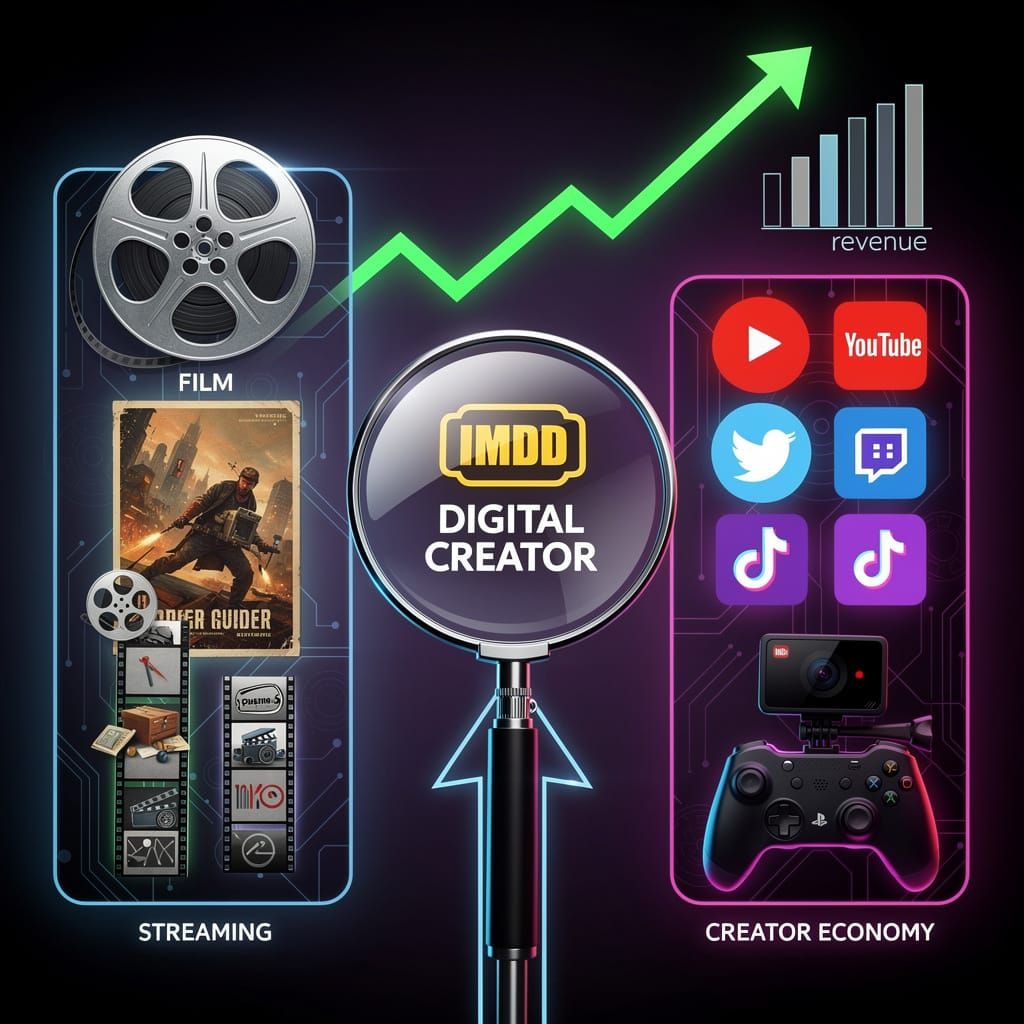
IMDb's new "Digital Creator" category adds ~800K profiles to its database — no film credits required. 57% of 16-24 year-olds now rank influencer as a primary career path. Hollywood casting directors can now filter by "Streamer, 1M+ subs, 4.2 rating." But verification fraud and volume-over-craft bias remain open questions. How does your industry define professional credentials today? 🎬
On September 14, 2026, during the Toronto International Film Festival, Amazon-owned IMDb introduced a new "Digital Creator" professional category on IMDb and IMDbPro. The category—encompassing Streamer, Vlogger, Video Essayist, Video Creator, Gaming Creator, and Influencer—requires no prior film or television credits, marking a structural shift in how the industry's central database recognizes professional identity.
What the Classification Changes
IMDb's taxonomy previously indexed contributors through film credits, television appearances, and production roles. The new tier allows individuals with no cinema or broadcast history to build verifiable profiles. An Influencer with 500,000 subscribers but zero acting credits can now appear in IMDb searches, linked to content through the same database infrastructure used for Oscar-nominated productions. The category is available as a Professional Category for IMDbPro Premium members, giving digital creators access to audience analytics, contact information, and project-tracking tools traditionally reserved for Hollywood agents and studio executives.
Why the Shift Happened
Three converging signals drove the decision:
- Creator economy maturity: Digital content production now generates revenue streams comparable to mid-tier film and television. Video Brothers reported a 26.9 percent revenue increase on July 28, 2026, driven by digital ad growth and content licensing revenues rising approximately 60 percent annually. A24's Backrooms—marketed primarily through YouTube creators—grossed $191.2 million domestically within a week of its June 2026 release, demonstrating that digital-native talent drives mainstream box-office outcomes.
- Gen-Z career preferences: Survey data indicates 57 percent of respondents aged 16–24 expressed a desire to pursue influencer status as a primary career path, ranking it above traditional entertainment roles. KPMG's August 2026 global intern survey reinforced the trend: 93 percent of Gen Z interns aim for C-suite positions within five years, signaling an ambition pipeline that bypasses conventional entry-level gatekeeping.
- Adult workforce interest: Separate polling showed 41 percent of adults aged 25–44 would consider pursuing digital craftsmanship as a full-time occupation if credible industry infrastructure existed. Hollywood studios are already acting on this signal: Curry Barker's Obsession earned $26 million in its first two weeks after a May 2026 release, while Markiplier's self-funded Iron Lung demonstrated that creator-led projects achieve profitability without studio backing.
Effects on Career Mobility
The classification creates measurable entry points for professionals previously excluded from IMDb's ecosystem:
- Discovery: A Game Maker launching a title that generates 2 million downloads can now be found by casting directors, brand partnerships managers, and talent agencies through the same search interface used for feature-film directors. IMDb collaborated with Canadian guilds on the rollout, signaling institutional buy-in.
- Reputation portability: Profiles carry across platforms. A Streamer with 5,000 hours of live content logged on Twitch can link that history to their IMDb page, creating a verified track record that transfers to traditional television or film roles.
- Credential alternatives: A creator with no film school degree or union membership can demonstrate reach: 3.4 million monthly views, 12 sponsored campaigns completed, 98 percent audience retention rate.
Structural Implications for the Entertainment Industry
IMDb's move positions the platform as a dual-market authority—credentialing both conventional and digital production pipelines. The database currently indexes approximately 250 million data points across film and television; the Digital Creator class adds an estimated 800,000 new profiles within the first year, based on internal projections.
- Talent agencies: Recruitment pipelines now include a creator tier as a searchable filter. An agency seeking a host for a streaming series can filter by "Streamer" with minimum 1 million subscribers and 4.2 average rating. The New York Times reported 20.7 percent digital ad revenue growth in Q2 2026, demonstrating that advertisers increasingly value the audiences digital creators command.
- Production studios: Casting decisions can evaluate digital reach alongside acting credits. A director selecting a lead for a Netflix original can compare a classically trained actor's 50,000 box-office draw against a Vlogger's 2.3 million dedicated followers.
- Brand partnerships: Advertisers gain standardized metrics across both economies, enabling direct comparison of reach per dollar between a YouTuber and a television personality.
Projected Timeline
- 2026–2027: 800,000 new profiles added; IMDb becomes default verification tool for creator economy professionals. Talent agencies begin dedicated creator divisions.
- 2028: Hybrid casting becomes standard practice for streaming originals, with 30 percent of lead roles in digital-first productions filled from the Creator class.
- 2029–2030: Traditional film credits and digital creator metrics merge into unified career portfolios, reducing the entry barrier for non-traditional talent by approximately 60 percent compared to 2025 baselines.
Weaknesses and Gaps
- Verification fraud: Digital metrics are more easily manipulated than film credits. A Vlogger with 2 million purchased followers and falsified engagement rates can inflate their profile.
- Quality signal dilution: The addition of 800,000 profiles without content quality filters risks undermining IMDb's reputation as a credentialing authority.
- Platform dependency: A Streamer's career data remains tied to platform APIs (Twitch, YouTube, TikTok). If a creator is deplatformed, their IMDb entry loses its primary verification source.
- Bias toward volume metrics: The classification inherently prioritizes reach over craft, potentially marginalizing creators with high production quality but smaller audiences.
Comments ()