Army Seeks DCA Training Return as FAA Approval Stays Pending
The Army wants to resume helicopter training near Reagan National in early December, but FAA approval is pending. Its internal fixes address training and equipment practices, while the NTSB’s separate dispute over ADS-B In and FAA responses remains unresolved.

The Army wants to resume helicopter training near Ronald Reagan Washington National Airport in early December, with reporting giving dates from Dec. 1 to Dec. 8, 2026. FAA approval is still pending. The dispute matters because the flights sit in the same mixed military-civilian airspace where a 2025 collision killed 67 people.
What stands out to me is that the Army’s own findings and the NTSB’s regulatory fight are being treated as one undifferentiated “safety review.” They are not. One is an internal Army look at training and operations; the other is a separate federal push over whether the FAA’s responses go far enough.
What broke, and what the Army found
The January 29, 2025 collision involved an Army UH-60L Black Hawk and a PSA Airlines CRJ700 flying as American Airlines Flight 5342. All 67 people aboard both aircraft were killed, according to Simple Flying’s report on the NTSB response.
Military.com and Fox 5 DC reported on October 8 that the Army had identified systemic failures behind the collision, covering training oversight, route compliance, communication and equipment use. AvWeb reported the next day that the Army reviewed 3,585 helicopters, planned wider training and recurring ADS-B configuration checks, and said it would share safety data with the FAA.
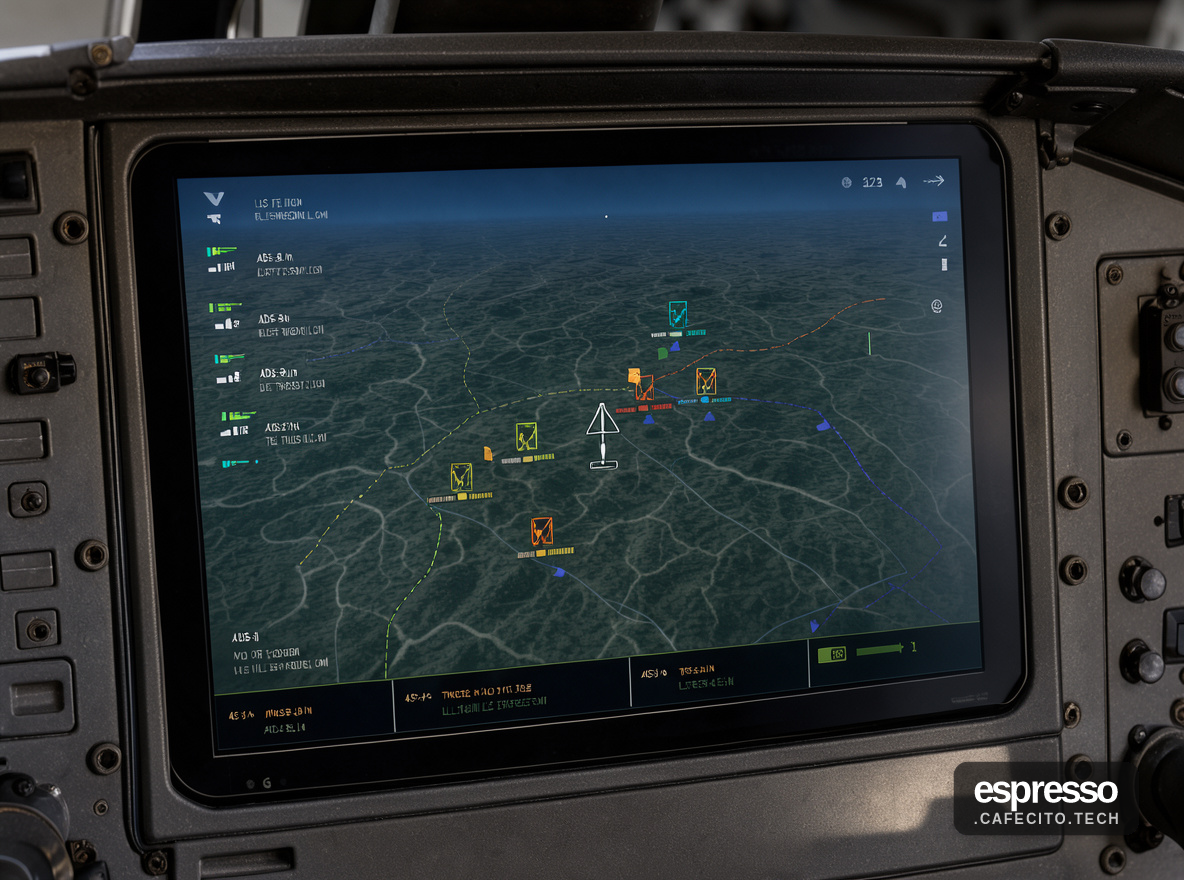
ADS-B is worth a quick unpacking. Broadcast capability, often called ADS-B Out, lets an aircraft transmit its position. ADS-B In lets a crew receive other aircraft’s transmissions. The Army’s inspection plan concerns configuration; the NTSB’s concern is whether crews get enough warning in crowded airspace.
The protection gap still under dispute
Simple Flying reports that the NTSB called 11 of 33 FAA responses to crash recommendations “unacceptable.” AvWeb gives the same count and adds the useful detail: ADS-B In could have provided about 59 seconds of warning for the passenger aircraft and 48 seconds for the helicopter crew.
I would not turn that estimate into a claim that the crash was preventable. A warning has to be installed, displayed, understood and acted on. But it does identify a plausible missing layer between “two aircraft in the same patch of sky” and “crews have time to separate.”
The NTSB’s recommendation A-26-31, as described by Simple Flying, seeks ADS-B In with cockpit displays wherever ADS-B Out is mandatory. The FAA has not committed to that requirement in the material supplied, which is why the regulator’s answer remains contested.
Why the return is constrained
The Army’s findings point to things it can change internally: training, route discipline, communication and equipment practices. Those are real levers. They do not by themselves answer whether the route structure and mixed traffic procedures around DCA should return to the old pattern.
That is the practical stake for passengers, airport workers and people under approach paths: separation should not depend on every crew and controller making the right call at the right second. Fox 5 DC reports continuing Virginia lawmaker concerns about flights near civilian runways, while AvWeb notes delayed military flight operations and an ongoing NTSB investigation.
A separate Army stand-down shows why “grounded” is not one generic safety signal. ABC7 Chicago reported that the Army suspended Apache flights after an August 12, 2026 maintenance-test crash near Fort Hood, Texas, that killed two soldiers. Different aircraft, different chain; I would not staple it to DCA just because both involve helicopters.
The observable milestone is the FAA’s decision on the Army’s proposed early-December resumption and any conditions attached. If approval keeps separation limits in place while route review and recommendation responses continue, the restriction remains the active protection, not the chosen date. And dates, unlike radar, are famously bad at seeing other aircraft.