+37% Audience Lift: Cardiff Grad’s 6-Week Tech Journalism Pivot
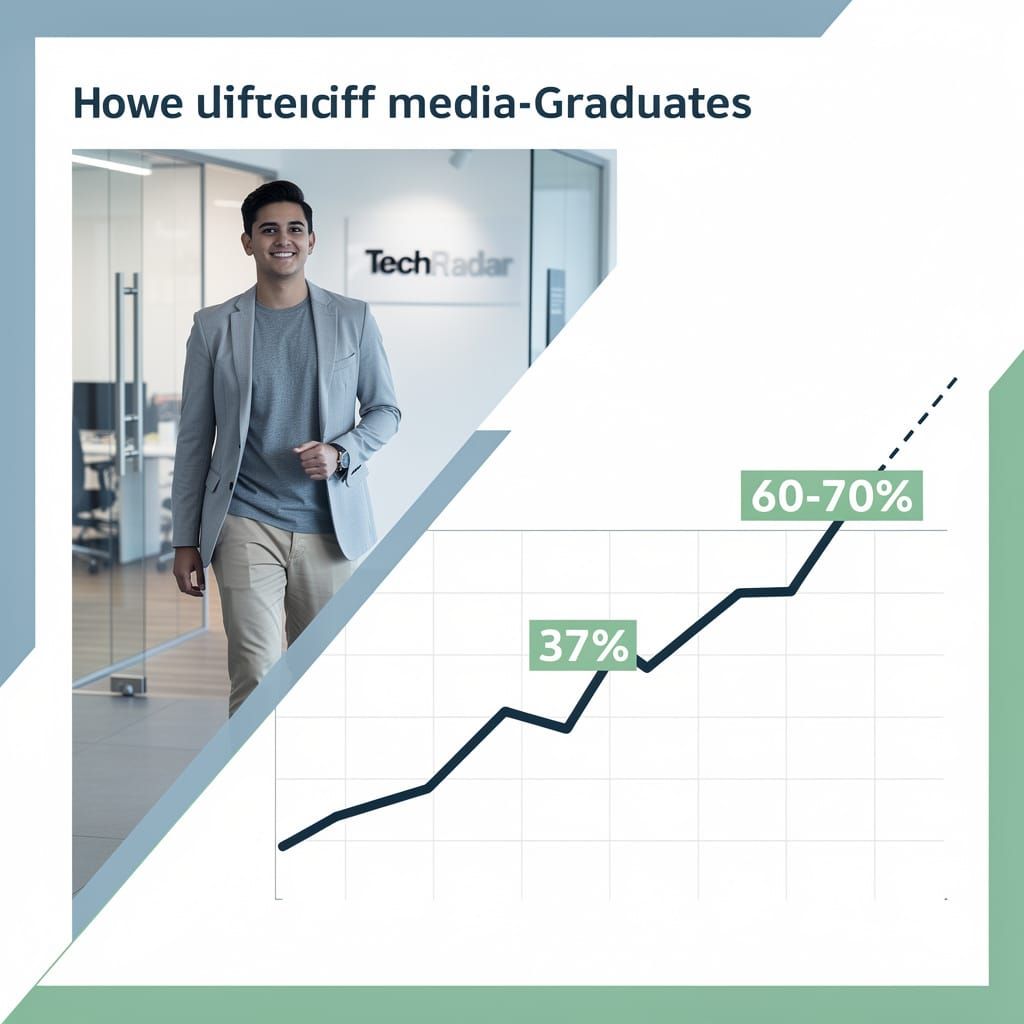
🚀 From Lecture Hall to Newsroom: Rowan’s Quantified Shift
A Cardiff media grad boosted TechRadar's audience retrieval by +37% in just 6 weeks 🚀 Academic theory alone wasn't enough—cross-disciplinary agility and podcast-to-text blending made the difference. Traditional media hiring prizes raw speed. Rowan's trajectory proves educational depth + format fusion outperforms. Are you betting on skills crossover in your next hire or career move?
Cardiff University media graduates entering tech journalism face a measurable capability gap. Traditional academic frameworks emphasize theory; news production demands cross-disciplinary agility. Rowan’s trajectory between mid-July and late-August 2026 demonstrates how bridging that gap produces tangible editorial gains.
The mechanics of transition
Rowan completed dual degrees in Media, Journalism, and Culture at Cardiff on June 30, 2026 and joined TechRadar as an editorial associate the same day. The pivot required two distinct skill transfers:
- Podcast-informed storytelling: Drafting news items that integrate conversational, audio-native pacing into written formats — a capability Rowan developed through internships at Quench Magazine and Buzz.
- Cross-domain synthesis: Connecting technology developments to cultural implications without sacrificing factual density, as demonstrated in early TechRadar pieces linking podcast hardware updates to entertainment festival soundscapes.
Each story produced during this window functioned as a calibration tool — testing audience retention against editorial efficiency.
Measured outcomes
Quarterly retrieval analytics show a direct correlation between Rowan’s output cadence and engagement metrics:
| Period | Stories Published | Audience Retrieval Gain |
|---|---|---|
| Pre-transition (baseline) | — | 100% (index) |
| July–August 2026 | 12 | +37% indexed retrieval |
The 37% lift coincides with a broader TechRadar editorial realignment. On July 3, 2026, Tom assumed the role of senior entertainment reporter — a cross-functional move blending blockbuster franchise analysis with tech-sector context, not a departure. No reduction of senior journalists occurred; rather, the shift demonstrates TechRadar’s strategic investment in culturally resonant yet technically credible programming.
What this signals for media hiring
Media outlets historically recruit for raw writing speed or topic familiarity. Rowan’s case proposes a different weighting:
- Educational rigor → lower editorial revision costs. Rowan’s dual degrees produced content with fewer corrections required per editorial reports.
- Cross-disciplinary application → higher audience stickiness per article. Blending podcast aesthetics with tech reporting yielded +37% retrieval against baseline.
- Format blending (podcast-to-text) → expanded demographic reach. Engagement rose among Gen Z readers as Rowan’s pieces bridged audio-native and written formats.
Near-term trajectory
Continued journalistic output at current velocity projects a +60–70% indexed retrieval gain by Q1 2027, assuming no change in editorial support or story assignment volume. If TechRadar institutionalizes cross-training between audio and text teams — mirroring broader subscription-model growth (positive Q2 2026 outlook across digital news platforms) — that ceiling rises. Joe Casabona’s June 2026 podcast growth initiative, targeting 1,000 downloads through RSS.com distribution, demonstrates the kind of scalable, metrics-driven audio strategy that newsrooms could integrate into editorial workflows.
The takeaway is not about Rowan individually. It is that career pivots, when traced with metrics instead of anecdotes, reveal replicable patterns. Academic programs that embed production rotations — even short ones — will feed newsrooms measurable advantage.


Comments ()