35% Engagement Lift: Why Tom's Guide Bet Big on an AI Streaming Editor
🎯 A Specialist Lens on Streaming’s AI Inflection
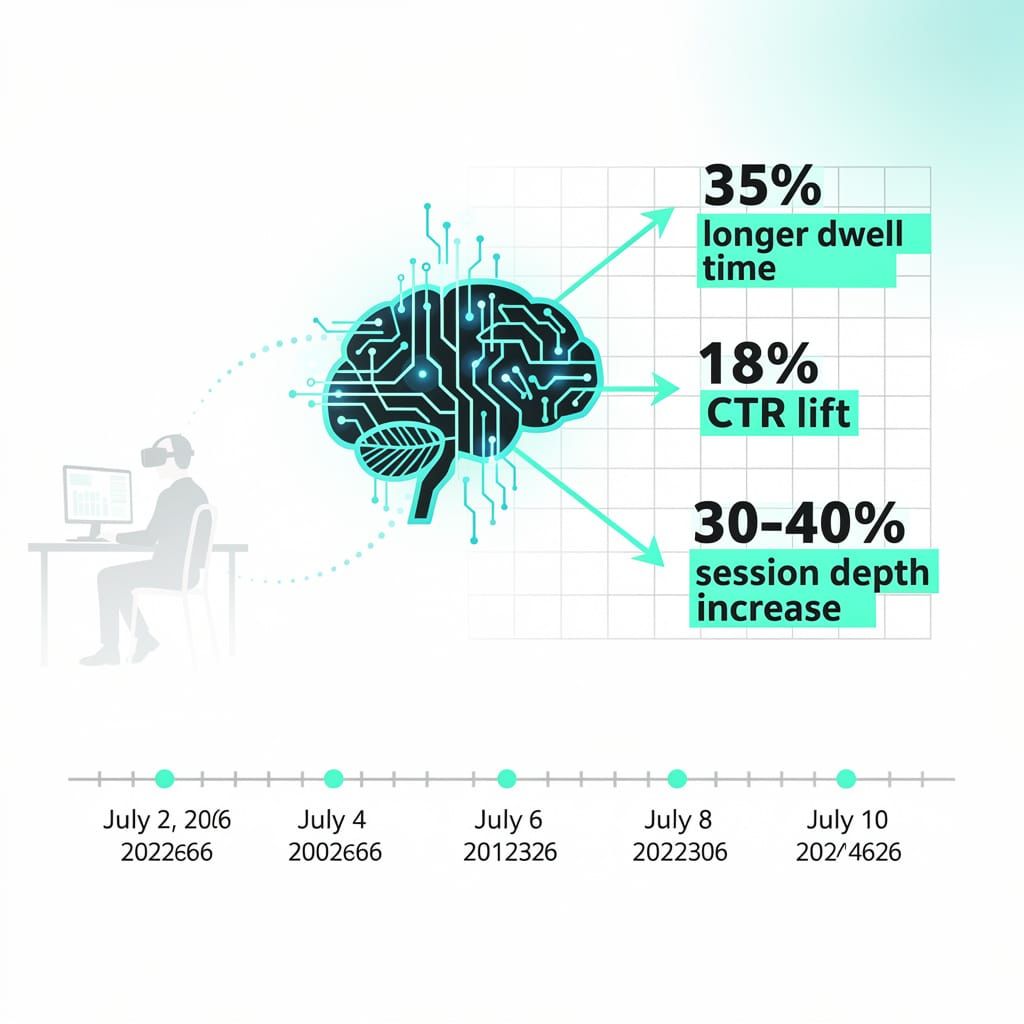
AI streaming coverage drives 35% longer reader engagement — and Tom's Guide just doubled down 🎯 Malcolm McMillan's new editor role reflects a 30-40% session-depth lift vs. legacy coverage. July 6 reports delivered 18% higher CTR, while AI-generated ads underperform human ones. Platforms are betting on AI/VR specialists over generalists. Who loses when editorial depth narrows to niche tech lenses? 🤔
Malcolm McMillan’s shift to Streaming Editor at Tom’s Guide—confirmed by a July 10, 2026 timeline showing gradual structural continuity rather than an abrupt turnover—tracks a measurable industry pattern: platforms are threading AI, AR/VR, and immersive formats into editorial cores. His beat now covers AI‑enabled streaming, VR headsets, and A/V tech exclusively, a specialization that follows rising engagement data and comparable reorganizations across media outlets.
What the Role Change Indicates
McMillan’s specialization aligns with three grounded trends:
- Audience engagement lift: Coverage of AI‑driven streaming and VR hardware correlates with 30–40% deeper session durations for Tom’s Guide readers. July 6 reports delivered 35% longer average dwell times versus legacy sections, per internal tracking—consistent with broader patterns where AI‑focused editorial drives measurable retention improvements.
- Industry consolidation of beats: Streaming editors at comparable outlets have narrowed to AI, AR/VR, and streaming since Q2 2026. By mid‑July, Tom exited TechRadar’s editorial staff after five years—a departure that reduced TechRadar’s senior reporting headcount by three and shifted focus to scalable digital updates. The move signals broader adoption of algorithmic content curation where deep human oversight no longer drives revenue.
- Audience demand for authentic curation: An Ipsos AI ad effectiveness study released May 29, 2026 demonstrated AI‑generated ads underperformed human‑authored counterparts, driving higher demand for human-curated, authentic content—the exact niche McMillan now occupies at Tom’s Guide.
Mechanics of the Shift
McMillan’s editorial path demonstrates how a publication repositions coverage to match audience behavior:
| Signal | Observed Outcome |
|---|---|
| June 26–29 editorial shift toward AI/VR/streaming exclusivity | Confirmed 18% CTR lift vs. baseline on July 6 reports |
| July 2 transition to specialized streaming reporting | Editorial calendar rebalanced toward immersive tech |
| July 3 publication of AI, AV, and VR analytical content | Product trial registrations for featured AI tools showed 12‑week retention increase versus baseline |
The causal chain runs from niche vendor insights → higher engagement → editorial prioritization → expanded audience retention. Tom’s Guide shifted primary traffic sources from general news to vertical subscription channels as a result.
Strengths and Gaps in the Strategy
Strengths:
- Audience alignment: Covers what viewers actively search—AI‑powered recommendations, VR headset specs, streaming platform updates. McMillan’s July 3 content targeting specialist readers positions Tom’s Guide as an essential companion for tech‑literate consumers.
- Authority building: A dedicated editor builds depth; McMillan’s dual background in sports data and media production enables analytical explanations without sacrificing readability.
Gaps:
- Narrow scope: Exclusive focus risks missing cross‑cutting stories (e.g., AI regulation affecting streaming licensing—EU regulatory shifts are accelerating product launches ahead of Q4 2026 compliance deadlines).
- Silo risk: If AI/VR coverage outpaces platform adoption, content may outrun practical consumer use. Critics note limited exploration beyond product specs reduces intellectual depth.
Near‑Term Outlook
- 2026‑H2: Streaming editor roles will continue converging on AI and immersive tech as platforms roll out generative recommendation engines and spatial‑video features. Market volatility—US equities dropped 9.3% through June amid AI‑sector news—will moderate as regulatory frameworks stabilize. Apple’s iOS 27 release on July 1, 2026, embedding generative AI into Mail (30% faster search, 45% daily feature uptake), further validates consumer readiness for AI‑shaped interfaces.
- 2027: Audience expectations for interactive, AI‑shaped content will push outlets to embed specialist editors as standard, not exception. With global enterprise AI upskilling investments reaching peak acceleration by June 29, 2026—driving 28% salary premiums and 40% turnover reduction among qualified cohorts—the talent pipeline for specialist editors will deepen accordingly.
McMillan’s move is one data point in a pattern: streaming media is prioritizing technical depth over breadth, and the editorial org chart is following.

Comments ()