29% Decline in US Entry-Level Tech Hiring: AI Shift Forces Move Toward Skill-Based Acceleration
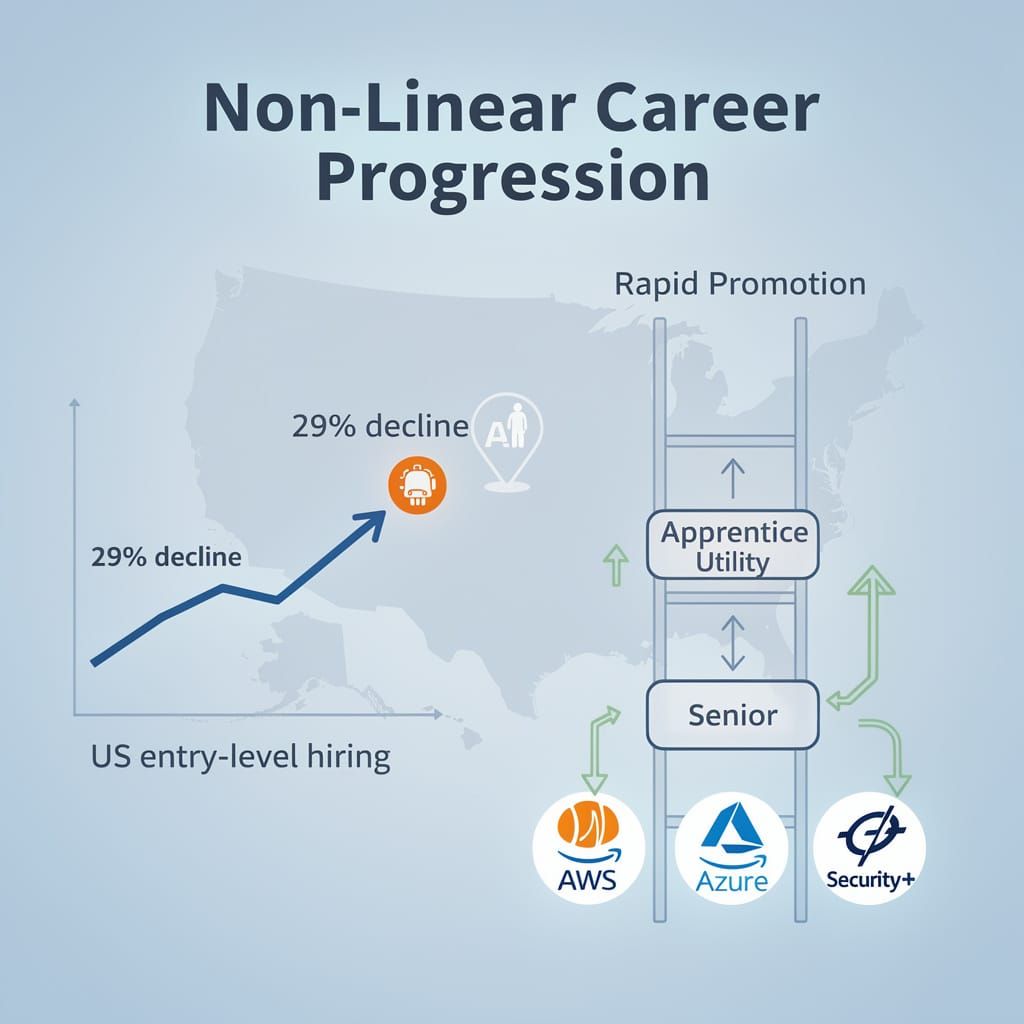
📉 The Rapid Ascent: Analyzing Non-Linear Career Progression
29% drop in US entry-level tech hiring is staggering—nearly a third of the starting gate gone 📉. Entry-level roles are vanishing as AI automates junior tasks. Can skills-based acceleration save the new grad? Tech professionals — how are you bypassing the 'Junior' plateau in your city?
Traditional professional growth typically follows a linear trajectory where tenure correlates with promotion. However, hiring patterns in North America indicate a decisive shift toward skill-based acceleration. While specific firm percentages fluctuate, current trends demonstrate a move toward removing degree filters in favor of proven competency and behavioral agility.
The case of Rowan at TechRadar demonstrates this compressed cycle. After completing a BA in Media, Journalism & Culture and an MSc in Creative Writing, Rowan joined TechRadar as an apprentice editor and Editorial Assistant on June 26, 2026. By July 1, 2026, Rowan was contributing to the editorial pipeline, applying the hybrid humanities-technological narrative approach—similar to strategies used at Tom's Guide AU—to bridge technical ecosystems with cultural familiarity to sustain audience loyalty.
How Does Rapid Promotion Occur?
This acceleration results from the decoupling of seniority from years of experience. Organizations now seek predictive performance indicators—such as learning velocity and error resilience under ambiguity—rather than static checklists. A July 21 survey of 600+ global employers by Drexel University's Le Bow Center indicates that interpersonal proficiency and professional demeanor often rank higher than formal qualifications.
When firms prioritize immediate technical utility and "learning agility" over tenure, it enables "hyper-growth" paths. This is further supported by the rise of digital credentials (AWS, Azure, Security+) acting as skill proxies. For Rowan, the ability to integrate cultural insights into technical content provided immediate utility, bypassing traditional entry-level stagnation.
Impacts of Non-Linear Growth:
- Organizational: Faster leadership pipelines → increased agility in content production.
- Individual: Rapid salary benchmarking → higher market value in shorter timeframes.
- Cultural: Shift in peer dynamics → tension between tenure-based and merit-based promotions.
What Are the Future Projections?
AI-driven automation is aggressively compressing the entry-level market. Data from May 2026 shows U.S. entry-level tech hiring fell 29% post-2022, while job postings for entry-level roles dropped 15% specifically due to AI adoption. As AI automates drafting and basic coding, the standalone "Junior" role diminishes, forcing a shift toward "Hybrid Entry" roles that demand strategic oversight immediately.
- 2026–2027: Growth in "Hybrid Entry" roles; however, youth unemployment rose 20% (2017–2024) as firms favor experienced hires.
- 2028: Market shift toward "Skill-Clusters," where experiential validation and structured apprenticeships replace the traditional 3–5 year experience requirement.
Strategic Comparison
Linear Path: Consistent increments → predictable growth → lower risk of burnout. Accelerated Path: High-intensity responsibility → rapid visibility → extreme skill compounding.
This trend indicates that professional networking and the acquisition of interdisciplinary skills result in faster vertical movement than longevity. For job seekers, demonstrating ethical AI discretion and the ability to navigate emerging technology adoption accelerates the transition to senior roles more effectively than content volume alone.



Comments ()